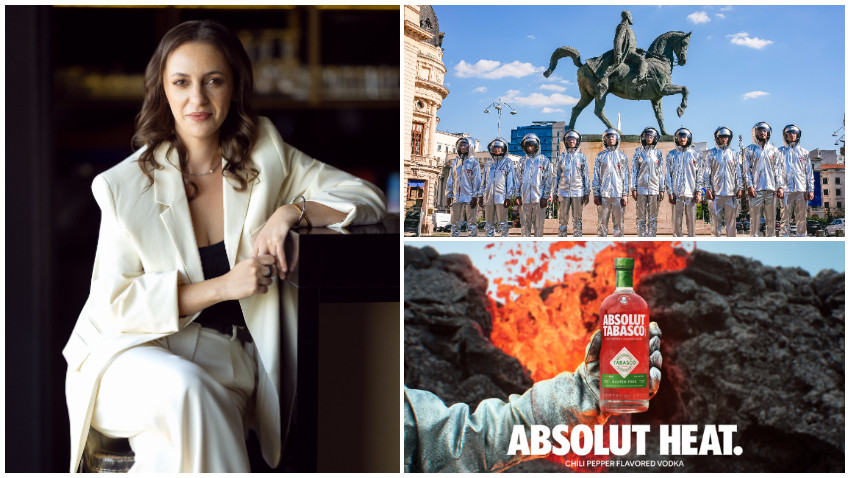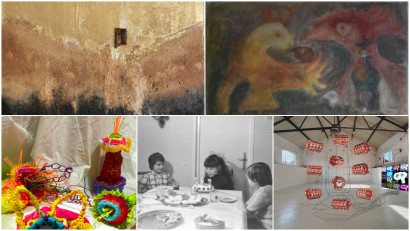

Deidré Matthee is an artist, an activist, a facilitator of workshops for artistic expression and… the biggest fan of stationery and paper you’ll meet. Her works are enjoying more and more visibility on the Bucharest art scene, but she’s just as happy that the ideas she’s been championing for almost two decades are increasingly being embraced: community, feminism, activism, creativity, resilience, empathy.
"I have a liking that borders on reverence for the forgotten sentiments held in ephemera, the echo of memories in discarded objects", says Deidré.
Deidré Matthee’s collages will be exhibited during Collage Festival 2025, until November 25. We talked with her about feminism, history, art, how collage is transforming in the Instagram era, as well as about poetry and immediate practice.
Images sprouted from literature
I am a passionate lover of stories, and I am particularly intrigued by the old ones, the ancient mythologies that powerfully shaped our histories and still reverberate in the present; and the ones from our childhoods, the fairytales and folklore that admonished us to be good girls but also taught us about witches and the wonder of darkness.
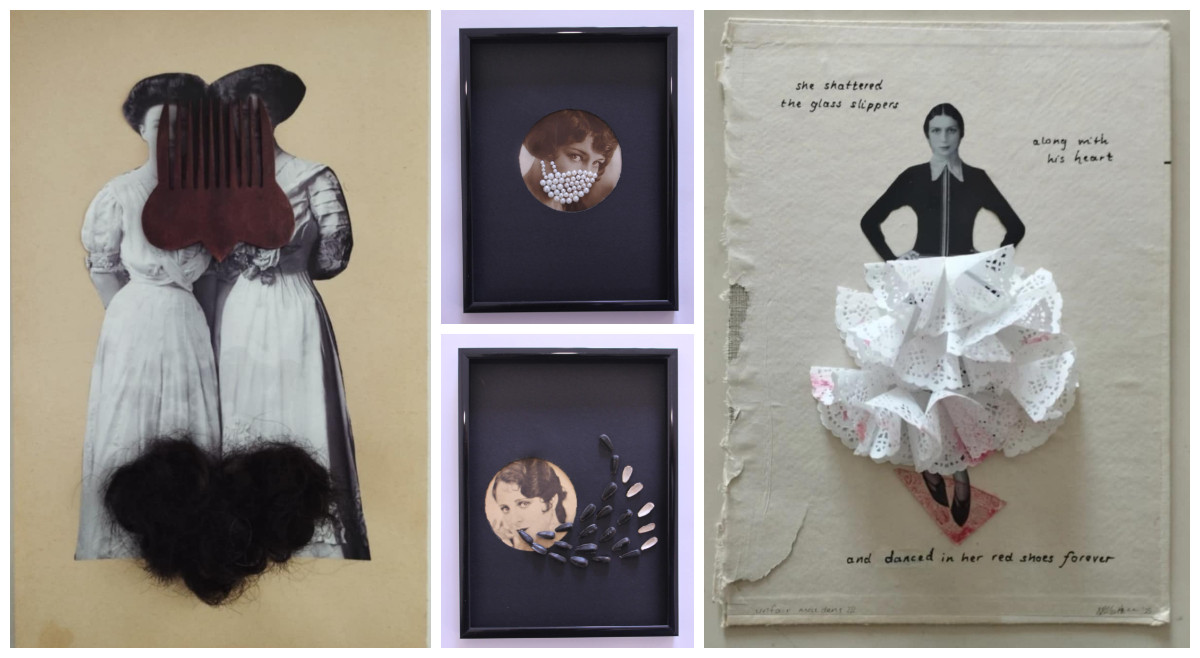
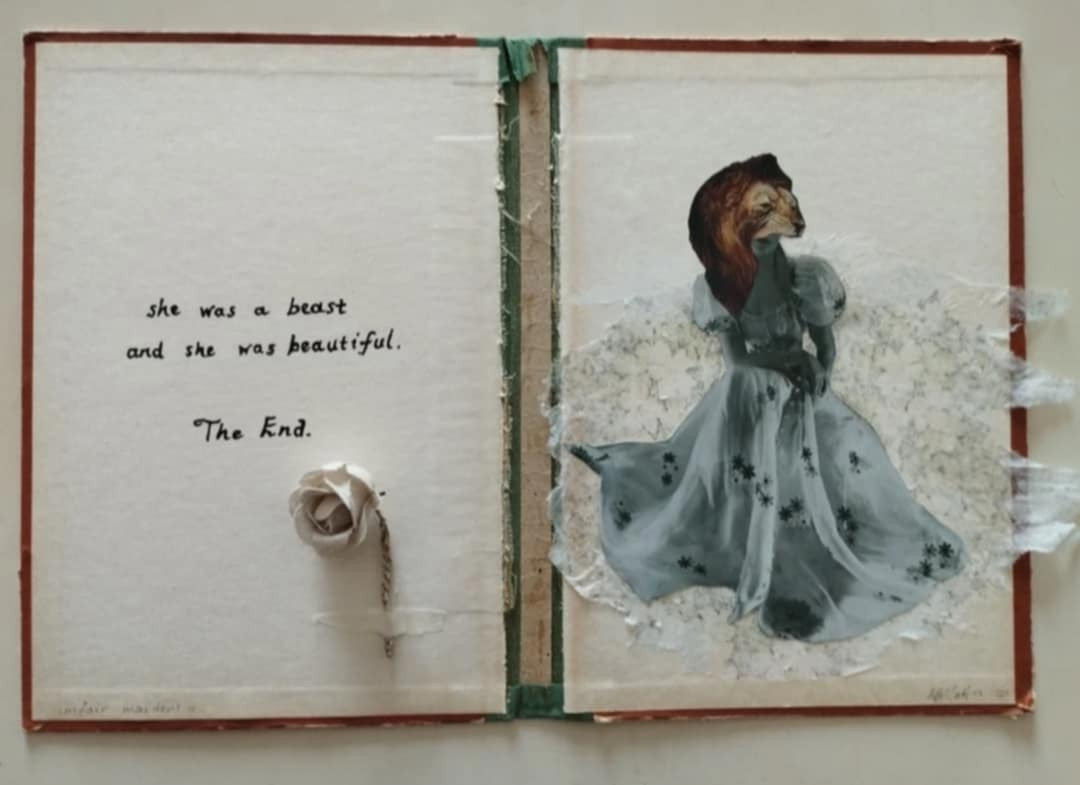
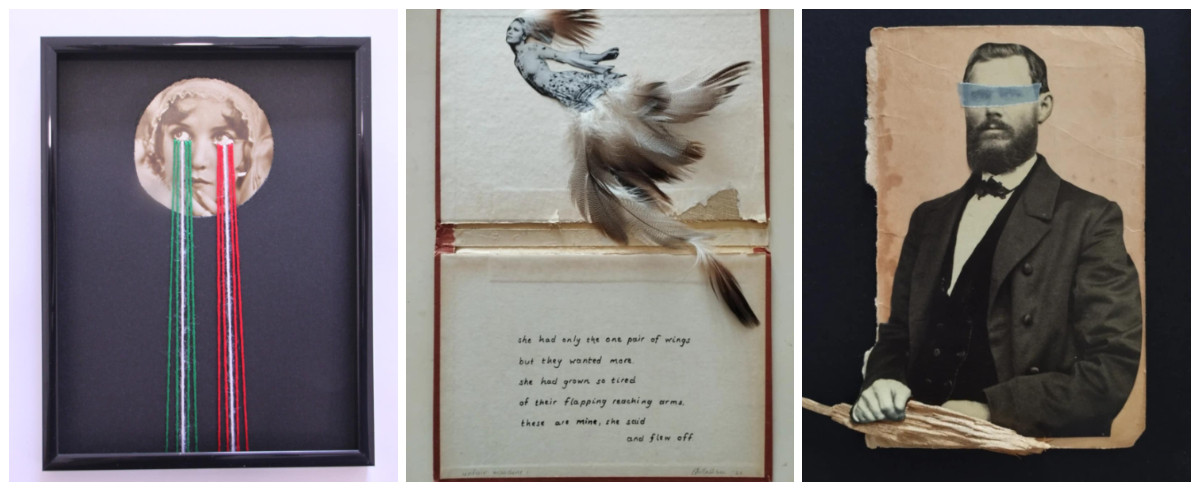
The works that were exhibited earlier this year at Hearth, for example, are part of a series I call “Unfair Maidens”, where the maiden unapologetically and fiercely claims justice for herself, even if this risks being called all kinds of ugly. Authors who have absolutely inspired me with their brilliantly twisted remakings of these narratives include Angela Carter, Margaret Atwood, Madeline Miller and Lauren Groff.
A seduction of senses
It’s interesting that you note this tactility, as this is indeed what drew me to collage, and to working exclusively in analog collage and assemblage. I am that person who gets giddy in stationery shops, swoons at the mention of vellichor and experiences a low-key state of manic bliss at the sight of vintage photographs, maps, postcards, etc. in flea markets.
I have a liking that borders on reverence for the forgotten sentiments held in ephemera, the echo of memories in discarded objects. And paper: the fragility and persistence of it! This was something I appreciated anew during the pandemic, when I was looking for a creative outlet under lockdown, and started making a collection of small artist books (“The Library of Fleeting Details”) which then brought me to collage.
How to appreciate depth without sinking
Yes, this muchness and sense of endless possibility and deconstruction is an exciting aspect of collage! However, while I acknowledge that collage as an artform seems to especially lend itself to postmodernism (and though I personally resonate with post-structuralist theories), it’s not something I deliberately consider in my practice.
Creativity and community thrive in liminal spaces
My experience as a migrant (I am a South African turned Portuguese citizen now residing in Romania) often feels like a condition of continuous and deferred arrival: I have arrived; but have I arrived?; and where now, and where next? And I could say it is similar when it comes to the local art scene. After nine years in Bucharest, I still feel a bit like (an) outside(r)-in, though this is a familiar feeling: as a woman of colour, I am well-acquainted with the space of the margins. But, as bell hooks said, this is also where creativity thrives and where community becomes vital. And, though it took quite some time, I’ve fortunately found art spaces that also embrace the margin. I currently share a studio at Atelierele Malmaison (I had to carefully check the spelling of “atelierele” - Romanian remains a challenge!) and it has made a huge and positive difference in terms of visibility and connection as an artist. And I have had great opportunities for collaboration with {consults dictionary again} Asociatia Hearth/ Casa Kerim and of course, the dynamic organisers of the Collage Festival, Bucharest Collage Collective. Independent, self-organised artistic communities (also thinking of a cultural project like Celula de Artă) are key and I am here for it!
How it feels to be a feminist activist in Romania, in 2025
It reminds me of when I became engaged in feminist activism in Portugal around eighteen years ago: back then, we were mocked, derided and dismissed in mainstream media and popular discourse. I founded the feminist collective GATA, Group for Activism and Transformation through Art, in Porto (I was happy to discover that “gata” also exists in Romanian - though it means “ready” not “cat”, it still works!). We were a small group strongly influenced by feminist performance art; committed to dancing revolutions and to each other; and rare. Now the feminist movement in Portugal has grown in leaps and bounds, and artivist groups are refreshingly common. And it’s been heartening to see how performance, music and poetry are part of feminist protests here. So I would encourage artists to: give it time; center love and friendship; read wildly; recall joy in resistance; continue to speak out, no matter what, for we know (in the words of Audre Lorde) that our silence will not protect us, and listen to and for the unheard.
From World War I to today
I don’t think collage is an inherently political artform, but it might have heightened political potential, as demonstrated expressly in feminist collage. (I know I said the word “feminist” 500 times in my previous response - please bear with me.) Artists such as Hannah Höch (in the aftermath of World War I), Lorna Simpson and Barbara Kruger left a legacy that established collage as a liberating means of questioning, disrupting and subverting oppressive visual tropes and stereotypes around gender and identity. And in this age with its proliferation of insta-images, collage has renewed relevance as it invites action and imagination, a call to (re)create instead of passively consume: accessible, limitless, still cutting edge.
Visual poetry: a practice of immediacy
At best, I approach collage as a poet. It’s a matter of attention, the clarity and surprise of it, and being sensitive to what wants to be expressed. I tend to favour minimalism, so the composition has to be sharp. I do sometimes have an idea or a concept in mind, but the resulting collage is most often dictated by the material I have available, and serendipity.
Art therapy: back to myths and folktales
I still offer expressive arts workshops for groups as well as individuals - but not in clinical settings, so I can’t speak to how it’s received by medical professionals, though I know through friends in the field of some amazing work being done within institutions here. For me it’s been slow-going so far, in part because I decided to prioritise my own artistic practice for a while, but I am excited about a project involving storytelling that I’ve been dreaming into being and hope to realize very soon. Myths and folktales again: we’ve come full circle!