„I don’t want to be defined by a single character,” says Darko Perić, the actor who became known to international audiences for his role as Helsinki in the series „La Casa de Papel”. With a career built around strong characters, often in antagonist territory, Darko Perić is keen to explore stories and worlds as different as possible. And one of his most recent experiences brought him back to Romania, a country which, as he confesses, has its own place in his life story.
The actor is part of the cast of „Vacanță all inclusive”, an action cop comedy directed by Radu-Matei Bărbulescu, in his feature-film debut. The film follows Mișu and Enzo, two narcotics officers and lifelong friends, whose seaside holiday turns into an investigation after they discover, on the beach at Vadu, the traces of a cocaine shipment. The case takes them from the Black Sea coast to Bucharest and puts their friendship to the test. The cast includes Pavel Bartoș, Smiley, Raluca Aprodu, Diana Cavallioti, Darko Perić, Alex Velea and Theo Zeciu.
“It was a joy to work in Romania, this time on a film set. I was pleasantly surprised by the professionalism of the crew, by the organisation and by the atmosphere. I got along very well with Radu Bărbulescu, and I really enjoyed the chemistry between Pavel Bartoș and Smiley.”
Next, we talked with Darko Perić about his character, Ilya Vucko, about the experience of filming in Romania, the years he spent here as a Veterinary Medicine student, and about Romanian cinema.
„Vacanță all inclusive” is now showing in cinemas across Romania.
Beyond the image of Helsinki, what people see when they meet Darko
Many people recognise me as Helsinki and imagine that I am just as tough or intimidating as the characters I have played. They usually find out fairly quickly that the man behind the role is someone else. That is precisely why I like to explore roles and worlds as different as possible. I don’t want to be defined by a single character.
How did you get the role in „Vacanță all inclusive”
Cristian Hordila contacted me; we had met a few years earlier, at TIFF. When we talked about the film, I felt a personal connection both with him and with the project. The idea seemed fresh to me, and I was curious to see how things work on a Romanian set. Romania is part of my story, so coming back here for a film had a very particular significance.
What drew you to the character of Ilya Vucko
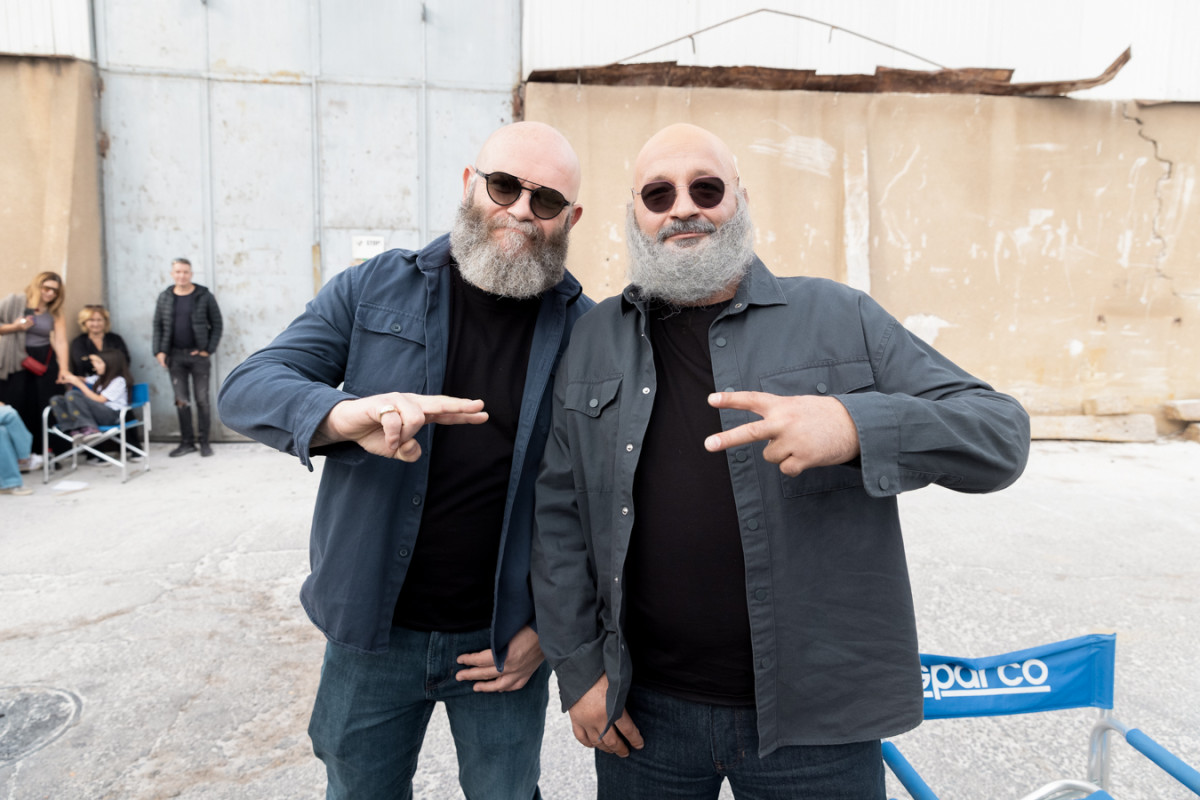
I was drawn by the chance to step into a story different from the projects I had worked on until then. When I build a character, I first try to understand what he wants and why he reacts in a certain way. I don’t start from the antagonist label; what interests me is the person behind it. In a comedy, if the character takes his situation seriously, even when everything around him becomes absurd, the humour can emerge naturally.
Between comedy and action, how do you adapt your acting to two such different registers
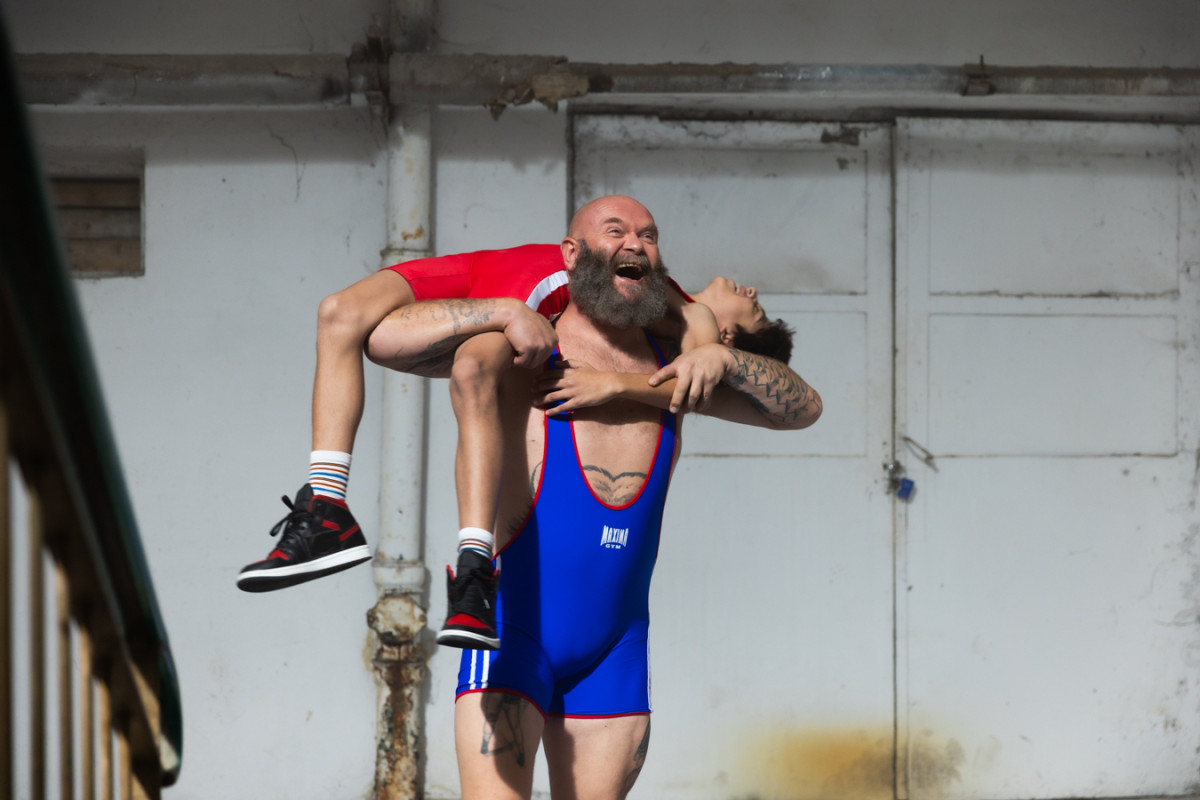
For me, the key is adaptability. You have to stay true to the character, whether the scene leans towards action or comedy, but also pay attention to what is happening around you. Improvisation can bring very good things, as long as there is a sense of measure and you don’t lose sight of the story. What matters is to keep the balance and let situations play out naturally.
Filming in Romania and working with the crew
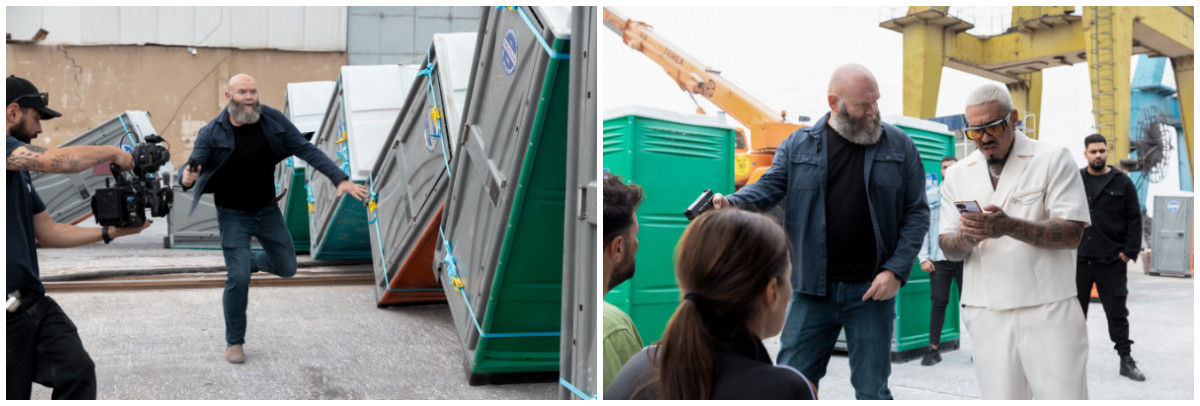
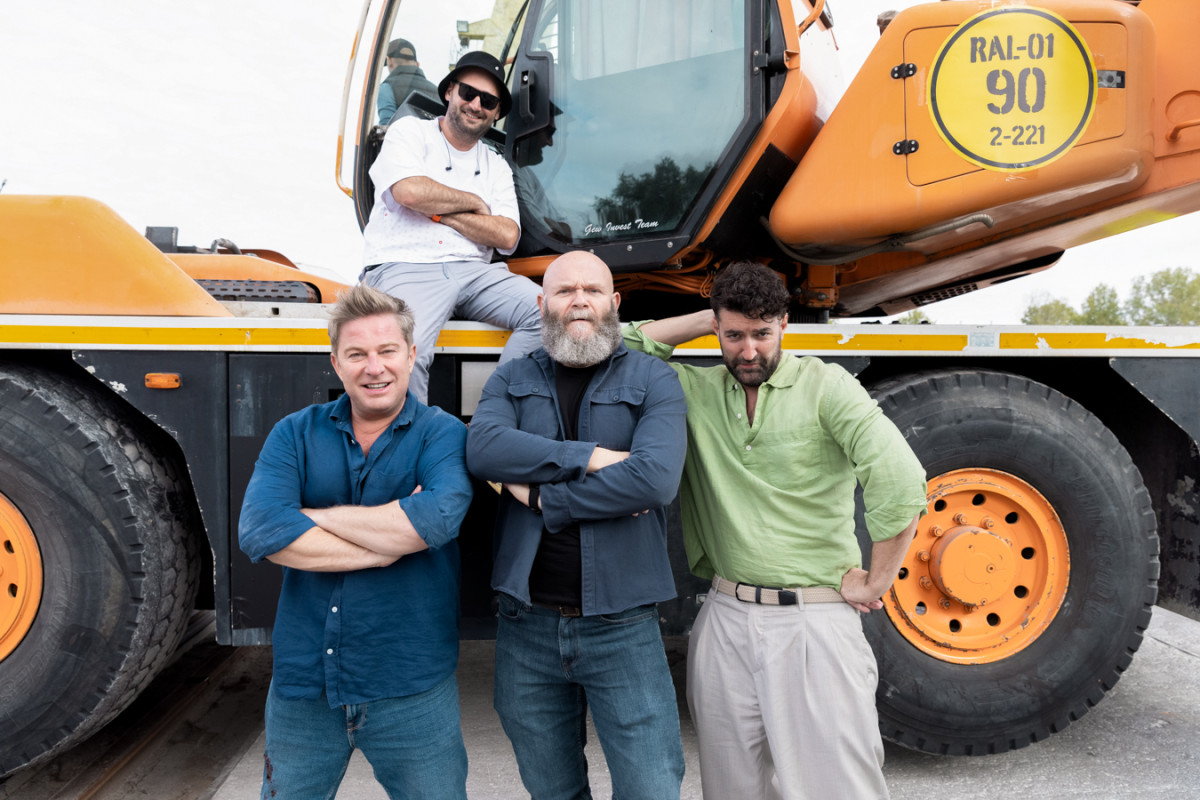
It was a joy to work in Romania, this time on a film set. I was pleasantly surprised by the professionalism of the crew, by the organisation and by the atmosphere. I also enjoy filming in Italy, where there is a kind of creative chaos, with a lot of energy and spontaneity. They are different experiences. I got along very well with Radu Bărbulescu, and I really enjoyed the chemistry between Pavel Bartoș and Smiley. The relationship between the people on set is essential. Working with Tudor Mircea, the director of photography, was also a wonderful experience.
The years spent in Romania, at the Faculty of Veterinary Medicine, before becoming an actor: what memories do you keep and how this experience shaped you
I left home at 13, and at 18 I came to Romania to study veterinary medicine. It was an important period of my life, with people and experiences that have stayed with me. Back then, I had not the slightest idea that I would become an actor. I remember that, during my student years, I worked as an extra on the set of a Sergiu Nicolaescu production about the Revolution. It was a small experience, but an interesting one, especially looking back now. Romania is part of my story, and the fact that I have returned here for a film, this time as an actor, holds a special meaning.
After your experience with international productions, how Romanian cinema looks for you
I think Romania and Serbia have a great deal in common: the humour, the history and the way we relate to one another. The Balkans are a region of extraordinary people and stories, yet one that is sometimes seen through stereotypes. I would like films from this part of Europe to travel more and reach international audiences. That is why I am interested in co-productions and in encounters between filmmakers. After taking part in many festivals, including as a jury member, I wanted to contribute to building such a place myself. I am the director of the Iron Gate International Film Festival (IGIFF), held in Kladovo, Serbia, on the Danube, in the Iron Gates area. The festival brings together films, filmmakers and audiences from several countries. I would love for audiences in Romania to discover the festival as well and to add it to their cultural agenda. More information is available at irongateiff.com.
Favourite Romanian directors
I like Romanian cinema and I follow with interest what is happening here. Radu Jude is a director whose universe draws me in. I also like Cristian Mungiu and Corneliu Porumboiu. I can’t say there is one single director I dream of working with; I am more interested in the stories and the people behind them. I would like, for example, to act in a historical film. I know such productions are expensive, but I believe there are many fascinating stories that could be told.
What you’d like audiences in Romania to discover about you as an actor, beyond the negative roles you have played so far
Fame came relatively late in my life, around the age of 40, and I think that helped me look at it with a certain distance. I don’t want the success of one character to define me forever. What truly interests me is to keep discovering different people, stories and worlds. Curiosity brought me to acting, and it is curiosity that keeps me going. I like working in different countries and seeing how audiences react to the stories we tell. I don’t know exactly what my next role will be, but I hope it will be one that surprises even me.