
A word, not twenty-two, not a hundred, all you need is the right word to form a new connection, says writer Lana Bastašić. She still believes in what humans have to say, when it comes to AI, hoping that storytellers will find ways to filter out the clichés and let their imagination grow and invent worlds that can save us.
Lana Bastašić is a former Yugoslav-born writer and her short stories have received numerous regional awards in the Balkans. Her first novel, Catch the Rabbit, won the European Union Prize in Literature and the International Latisana Prize in Italy.
"Has the story done something to you? Has it made you wonder? Has it moved you? Has it angered you? Who am I, then, to say that anything is good or bad. Sometimes it just isn’t for everyone, and that’s the beauty of it, and of us", says Lana.
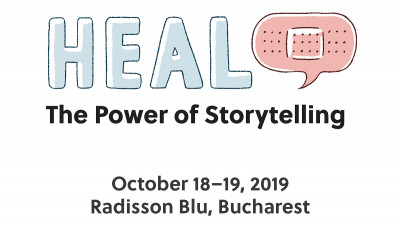
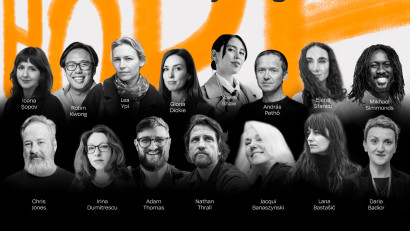
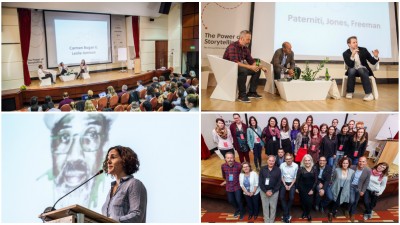
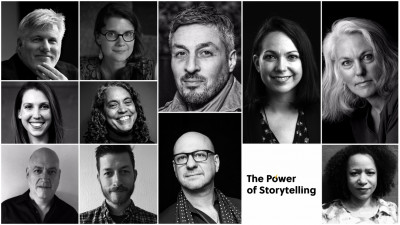
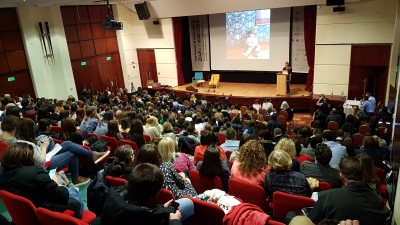
She will attend this year’s The Power of Storytelling conference, taking place on March 21–22, an event that brings together over 550 participants from Romania and the region, alongside Pulitzer Prize winners, bestselling authors, and world-class storytellers. We reached out to Lana in order to find out what were the stories that fascinated her at the start of her journey or how can a story reshape a country’s narrative, to name just a few topics in the interview below.
Things that define you
I am a human being, first and foremost. I like to go back to that simple truth when I try to tell a story. It means that I exist as a body in context, and that the words I work with have not grown in a vacuum. It also means that other human beings will, hopefully, read those words and recognize something that feels true to them.
The biggest strength of a storyteller
To find the right word. Not two. Not twenty-two. Not a hundred. Just one. You might think that because writers work with language, it is readily available to us, but this isn’t the case. Just as a dancer has to translate an experience or emotion into movement, we have to translate as well. Once you find the right word, ideally one that has not been used too many times before, a new connection is created. The reader goes, Yes, that’s new, but that’s exactly it.
What makes a story worth passing on
I think it’s very subjective. I used to be much more pretentious about it. I described stories as good or bad. Now, however, I look at this differently. Has the story done something to you? Has it made you wonder? Has it moved you? Has it angered you? Who am I, then, to say that anything is good or bad. Sometimes it just isn’t for everyone, and that’s the beauty of it, and of us.
The tribe of storytellers
I think everyone is a storyteller. Some are just more careful with the words they use and the audience they let in. We have a responsibility as humans, first and foremost, to always keep learning how to be better at being a person. Within the framework of that responsibility, storytellers can help us reach new points of view and get us a bit closer to the goal.
Do you think literature can challenge the official narratives?
This isn’t just about the story that is being told, but also about the way is told, from whose perspective, and with which words. A story pulls you aside and says, Let’s look at it from this other angle.
Storytelling in the age of AI
I might be oblivious, but I still find great stories written by human beings. Perhaps, it will help us fish out cliches and commonplaces more easily. AI reflects us and so, if it uses certain expressions, perhaps it’s up to the storytellers to find new and different ones. I am not a fan of AI, but I am hopeful. People always find a way. Human stories always find a way.
The first story that fascinated you
I was fascinated by The Neverending Story when I was little. I read it as the origin story of a misfit writer. Somebody able to invent a world and, by doing so, save us.
I’m still fascinated by the magic in storytelling, those moments when our reality is only slightly shifted, and our imagination stretches out. It is important to stretch it, otherwise we’ll no longer be able to imagine a different world.
What kinds of stories does the world need right now
It’s hard to generalize. I just hope that people keep sharing their stories, without fear or censorship. We need as many as we can get. We’re not even close to the whole picture.
If hope is a choice, what kind of stories help us make that choice?
Those that care about human beings–both their characters and the readers. Those that shake up our rigid idea of ourselves. Stories that make us believe, each one of us, that we could be a bit better.