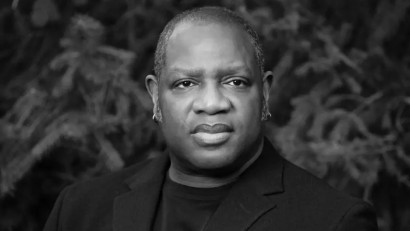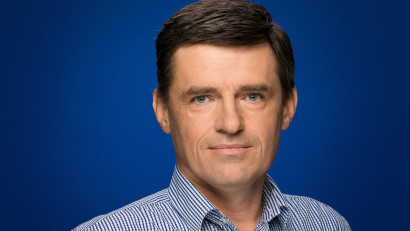

Louis Chude-Sokei is one of those rare figures for whom the boundary between scholarship and practice, between the archive and the stage, between the written word and the sonic event is blurred. As a teacher, writer and artist Chude-Sokei knows no boundaries at all, and can cross, repeatedly, in all directions of multiple cultures.
Born in Nigeria, raised in Jamaica, educated in the United States, he is a Professor of English at Boston University, 2025 Guggenheim Fellow, former Editor in Chief of The Black Scholar for over a decade, a curator of Carnegie Hall's Afrofuturism Festival, and the mind behind Echolocution: Sonic Arts and Archiving, a project that asks what we can learn if we return to sites of trauma and violence through sound and techniques of listening.
We met through my online friend Jay Glass Dubs from Greece, and he is one of the people I like to read articles by and also liner notes for vinyls in my collection like my album of the year: Spatial. No Problem by Mouse On Mars & Lee Scratch Perry.
His books, from The Last Darky to The Sound of Culture: Diaspora and Black Technopoetics, from the memoir Floating in a Most Peculiar Way to the forthcoming Machines of Flesh and Blood: Race and the Making of Artificial Life, build a body of thought that refuses to separate reggae from robotics, dub from diaspora, technology from the daily texture of being African in a world that keeps redefining what that means.
His work was central to the German Pavilion at the 2024 Venice Biennale, where his sound installation Thresholds gave the entire pavilion its name. He has collaborated with Mouse on Mars (also on the live performances for the Spatial, No Problem album), David Grubbs, Jay Glass Dubs, Marina Rosenfeld, Kurdish vocalist Hani Mojtahedy and on Searching For The Dub Sublime by indigenous resistance.
For Louis Chude-Sokei, thinking always needed a sound system for amplification.
How do you view your life journey
As an ongoing quest to make connections, especially between elements that seem out of place, and even if they refuse to see each other as within the same realm of possibility. It has always seemed necessary to me that we see mutual necessity in even the most incongruous phenomena. This for me is the work of culture, which some think of as a thing that just happens. Culture requires study, choice and deliberate engagement, not passive acceptance. It is something we make.
Dub. The art of the echo
And echo is also a metaphor of reciprocity, a relationship between sound and silence, the listener and the past. This all made sense to me in the context of Jamaican Sound Systems where volume shook the material body and the technology—echo and other effects-- restructured the mind. Also watching how deep in meditation folks at Sound System events often got, not just the Rastafari but everyone tuned into bass monotony and the sudden shifts in the mix. I’d been reading about jazz for years and wondered why reggae and dub hadn’t generated the kind of philosophical and critical work that was available to jazz and Western Classical music. I decided that my contribution would begin there because every sound and style comes from specific cultural choices and responses and histories. To listen to dub was to encounter a form of thought that was expressed through this sounds and made possible by it. Ganja also helped.
Dub poetry influences
In the very same way that generations of poets and writers let jazz shape and frame their words, either written or spoken, dub is there in my writing all the way down to the sentence. And by that, I mean that my writing is aware of monotonous/drone-like rhythm and groove that is broken suddenly by textures and repetitions and other voices only to return to the groove. Figures like Linton Kwesi Johnson most definitely shaped my prose as well as an early stage of my politics and cultural engagement.
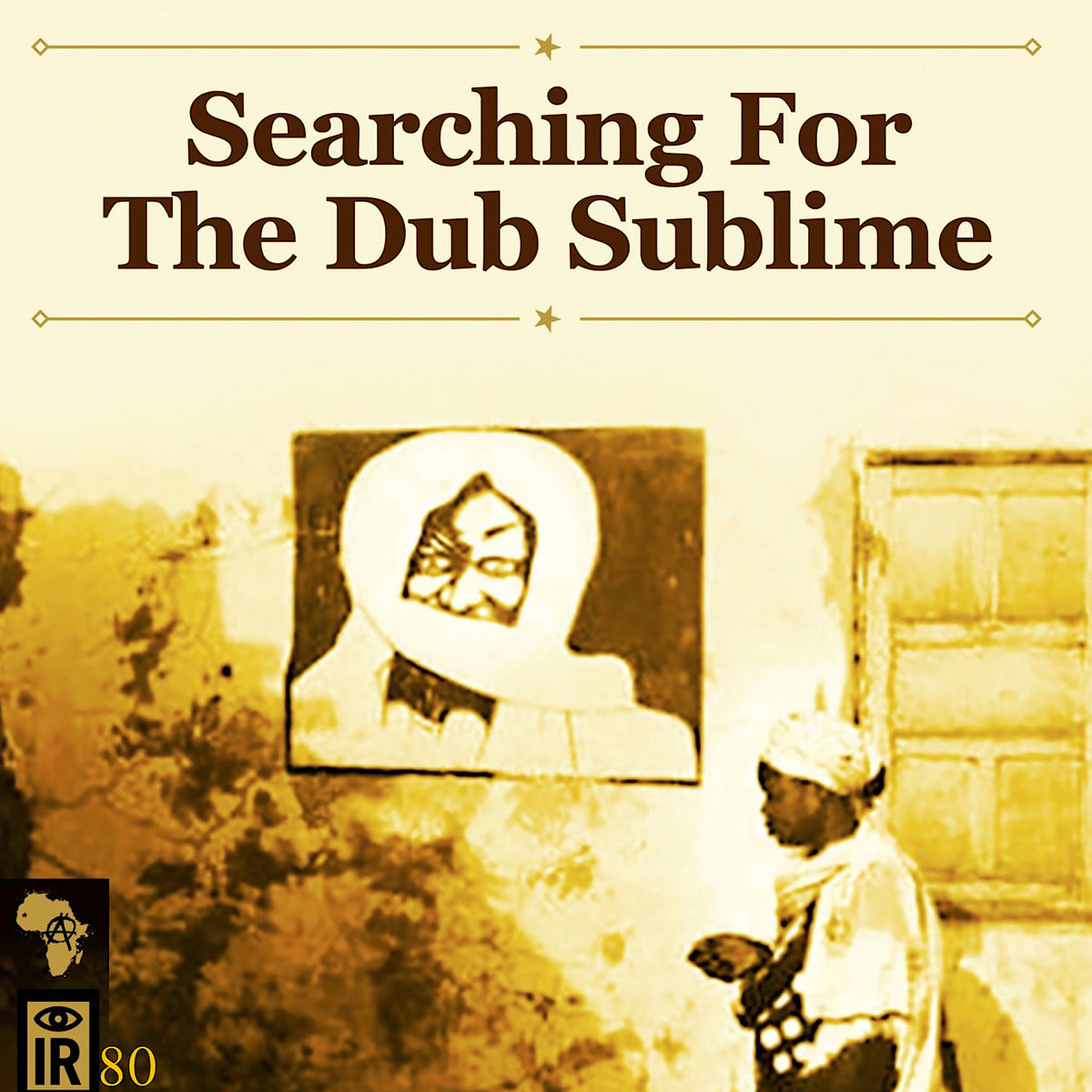
The dub poetry fusion tune Decolonizing Decolonization
Thank you for appreciating it. I’d been in conversation with Indigenous Resistance for some time online until one of them realized that I was the author of something they’d read years ago and rated highly: my essay/booklet Dr. Satan’s Echo Chamber: Reggae, Technology and the Diaspora Process. This intensified our connection, and they sent me their catalogue of recordings and book publications, which blew my mind. Eventually they invited me to collaborate on a project that was initially literary but quickly mutated into something spoken/recorded once they linked me with the wonderful producer/artist/sound designer Herman “Soy Sos” Pearl. We clicked so strongly that the track emerged as a sign and sound of what IR are about: a radical politics of sound, solidarity and possibility. We’ll be releasing some dub versions of the track on vinyl hopefully by the end of the year. I’ll be sure to send it to you.
The Sound of Culture. Race, technology, science fiction & sound
As I point out in the book, even Black radical politics has imagined Blackness through associations with nature, or the organic, or authenticity. This even though racism and colonialism have also equated Blacks with nature and organic phenomena and the fact that any true understanding of Black cultural productions in the diaspora must acknowledge that Blacks are equally adept at inauthenticity, and have produced art, culture and politics rooted not in nature but in the imagination, in non-naturalistic dreaming. So, one of the goals of that book was to provide a history of those inorganic, yet very Black traditions of thinking, from Black surrealism in the Negritude movement, from even the creepy politics of European Futurism, to sci fi, AI and of course to find that tradition primarily present in dub and electronic music, but going back beyond jazz funk, the work of Sun Ra and early experiments in analog recording. Pan-Africanism and any Africanistic discourse will utterly fail if it ignores the inauthentic, the equally liberating possibilities of our engagement with things like machines and technologies.
Your forthcoming book Machines of Flesh and Blood explores race and the making of artificial life
As others are busy pointing out, AI inherits all of the biases and prejudices that have produced Western traditions of knowledge as well as the material violence of technology and its dependence on extraction. That’s very important, but this book wants to make sure we don’t reduce race to these important though fairly conventional understandings. Not only has race been implicated in artificial life from the very beginnings of the very notions of both—race and artificial life—the intimacy between the two is precisely what is enabling the current birth of entirely new forms of “life,” or agentic beings that are poised to reshape not only the landscape of culture and politics, but also intimacy and human sociality. The historical creation of race is the history of the future.
The collaboration with Mouse on Mars on Anarchic Artificial Intelligence
Though I’ve always performed my lectures and readings and have performed with musicians and DJs for years, I never actually listened to my own voice. I focused primarily on the content—the writing, the words, not the sounds or the ideas that sounds themselves can generate, sometimes with and sometimes against the writing and the words. But the album started when Jan St. Werner, one of the founders of Mouse on Mars, heard me performing a lecture in Berlin and was taken by my voice, which he described as “a landscape.” The lecture was about the technology of echo, by the way. The voice as raw material, as presence, isn’t the same as words and writing. That voice itself moved to the forefront of my thinking with the album, especially with it being distorted, echoed but also rendered by algorithm, estranged from me the alleged owner of it. Who’s voice is it? All my recordings and performances have since then been engaging with that question, especially given the current state of technologies where our voices are less and less our own. Funny enough, this scenario is something Blacks have been wrestling with since the birth of the recording industry!
Lee Scratch Perry & Spatial. No Problem album
As you can imagine, it was a challenge to find a way to share the project with the public when the primary voice—Lee “Scratch” Perry—was no longer with us. At least not in person: we had his recorded voice, samples and field recordings and ambiences that were triggered live to maintain the collaborative spirit of the album. But because it wasn’t a memorial or a tribute my challenge was to keep the focus on the spirit of collaboration, on the language of cross-cultural making and shaping and grooving. You see, Lee was all about the future, even though some of the most touching moments on the album are of him reminiscing about the past. The performances were life changing for us and the audience. It was the most extreme experience of performing my words in dub (though not reggae), in a ritual that respected and honored Perry’s legacy but took it and the work of Mouse on Mars further. And it took my use of my own voice far beyond anything I’ve ever done or expected. I’m still shaken by the beauty and power of those two sold-out nights at The Barbican.
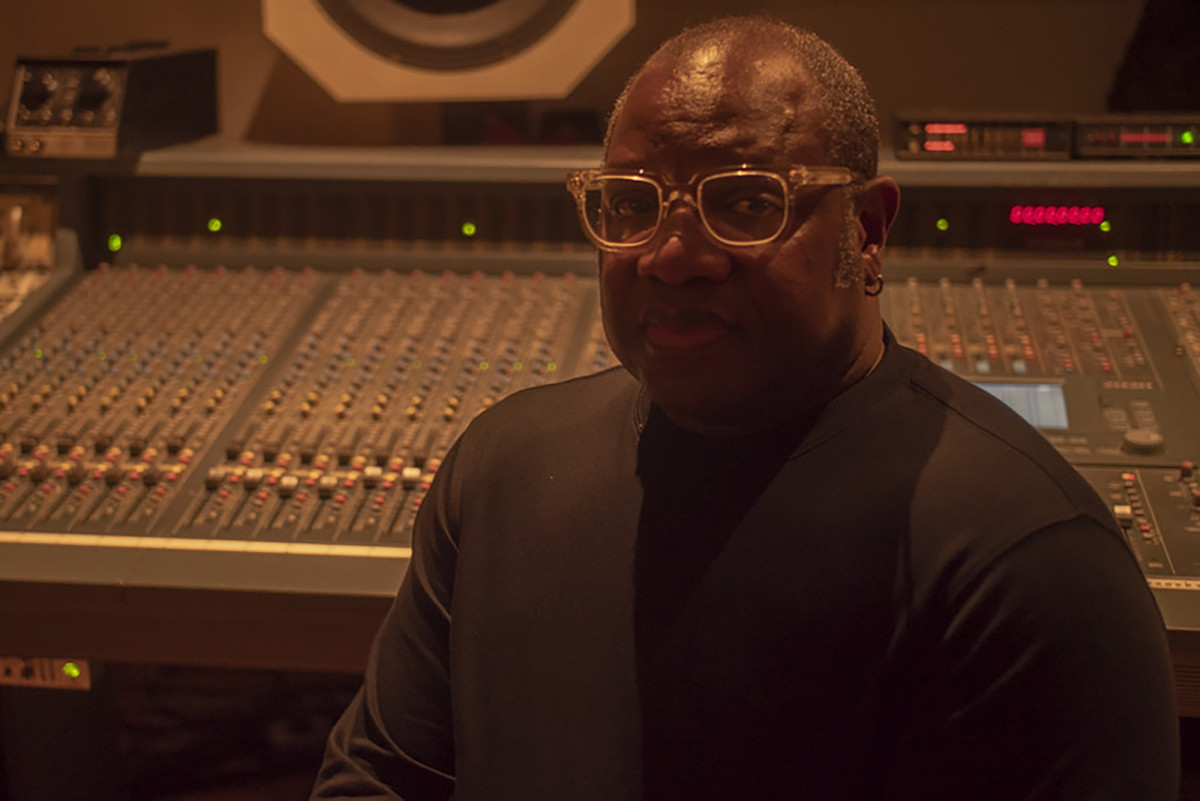
You founded Echolocution: Sonic Arts and Archiving. What did you discover about trauma, sound & listening?
You see, so much of our response to trauma and history and injustice is through speech, declarations, ideological claims and argument. All of that is necessary but can silence other responses and prevent us from fully exploring the echoes of history and certain events. This is particularly the case when we are victims of that history or sure about our claims. Listening can be a humbler posture in the face of time and the indifference of history. By silencing your own voice you can hear other textures, voices and possibilities; or if not, you can confront and critique your own certainties in spaces that are themselves haunted by events.
Thresholds at the German Pavilion at the 2024 Venice Biennale. The condition of the diaspora
It is the condition of Diaspora, but as so many writers from different diasporas have argued, it has become the condition of modernity and certainly of our moment. This is why migrants, exiles, immigrants and refugees are always the most modern of beings. To name Thresholds is to name transition and to keep it as an endlessly mobile and flexible process, not place or space. And I must stress that it is not a utopian space. It is also painful, tragic, full of loss and shame. But it is also how newness enters the world.
Afrofuturism
Though it might surprise you, I’m not an Afrofuturist. Not at all. Because of my work with Carnegie Hall as well as some of my scholarly work, I’m often associated with it. But my work—for example, the book The Sound of Culture--is largely a critique of Afrofuturism and I was invited to work with Carnegie Hall because I was an outsider to the movement. I just happened to have produced work that has proven influential. Nobody in Afrofuturism considers me an Afrofuturist and to be honest, there are some irked that my work keeps coming up when people talk about it. The term I use for what I do is “Black Techno-Poetics,” which I’m glad that others are picking up and using. Yes, it shares much with Afrofuturism but diverges in important ways. For example, it’s always been clear that the movement was headed for mainstream acceptance as an entire generation of corporate minded Black “creatives” would use it as a method of upward mobility. They are welcome to do so because I’ve never thought of it as necessarily “radical” just an opportunity to depart from and openly critique the conformities and conventions of Black cultural production, which can often become crippled by a focus on history that can at times seem sanctimonious. It was/is a useful way of using the future to critique an obsession with the past. That opportunity remains in my work but I’m not sure it’s still there in what is or was Afrofuturism. Plus, I’m an old Rasta: I have no interest in “isms” and “schisms.”
Editor in Chief of The Black Scholar for over a decade
The journal was initially meant to “unite the academy with the street” but by the time I took over, the academy had a significant Black presence in need of a specific space for critical, scholarly discourse. A space that was not “the street” but that could help in the creation and curation of more conversation about race, sex and culture in a range of registers. Despite our great success as an academic journal, those still wed to the culture and politics of street knowledge—the older generation--were unhappy with our direction. But what I learned was just how the growth and flourishing of Black scholarly and intellectual conversation had expanded well past the capacity for any one venue to contain it all. What this means is that those who were disappointed in the journal’s direction were essentially nostalgic for a time when all Blackness could be in one place; but those who were excited about the new direction were ignorant of those other spaces that were no longer present because they mistakenly thought they were speaking of and to all. It’s one of the things that my work had been charting since my first book actually, the glorious but painful fact that Blackness is far beyond any attempt to represent it, to speak to or for it or to contain it in one space, one body or once voice. And so, in performance and in sound, we hear Blackness as essentially a nostalgia for coherence, for community, for singularity. The problem is far too many of us don’t realize that it’s a fiction and continue as if an organic whole is simply there for us to represent or call up.
Teaching about diaspora, dub, and technopoetics
For almost the last ten years I’ve been doing primarily administrative work building and expanding a program in African American and Black Diaspora Studies at Boston University. My teaching has been minimal and so courses in Science Fiction have been my primary outlet when not teaching more mainstream courses in race, migration and Diaspora. What this means is that as my work as a writer, scholar and performer/artist has grown to increasingly challenge Black mainstream thought, my teaching hasn’t really reflected it. I also happen to be at a school where these topics and issues are seen as so far from the mainstream that teaching them might not generate enough response. Outside of my home campus, though, and through the lectures, readings and performances I do throughout the country and the world, I’ve been able to connect with people who respond intensely to this material. I’m in ongoing conversations with students who see my work as an alternative to much of what’s out there. And I’ve learned from them how much of a desire there is for alternatives to conventional academic or scholarly knowledge, even that produced by Black thinkers. It’s made me less selfish in that I’ve always been committed to my work because it’s mattered to me. I’ve learned how important it is for other people, particularly from groups and communities and cultures I never expected to connect with.
Your memoir, Floating in a Most Peculiar Way, and the different I-s
Of course, for my generation using an “I” in scholarship was always frowned on! Now it’s increasingly common as “objectivity” is dismissed as a racist or colonialist or patriarchal fiction. Sadly, the “I” is no freer from such problems and we’ve fallen into a pit of narcissism (as the cliché goes, “me-search” not “research”). But what the memoir did is addict me to something that scholarship only pretends to offer: raw, unfiltered, unflattering truth. The kind of truth of race, culture, migration and sex that may not fit within the ideological frameworks that guide and restrict politics. I’d been bringing scholarship closer to my personal experience for years but after the memoir I’ve become more honest about the complex evasions and empty promises and performances of much theorizing. The “I” has become richer and more capacious but also more dangerous because it is without innocence.
The collaboration with Jay Glass Dubs
I have such a great affection for Dimitris and his work. We came together through the wonderful Athens-based creative team of DETACH who also run Stegi.Radio via the Onassis Foundation. I was to do a keynote lecture for one of their festivals in Athens in 2020 and they asked me to collaborate with Jay Glass Dubs for the theme. We did a very interesting piece called “The Color of Echo” under the name Echo Bros. Funny enough, before DETACH contacted me I’d been deep into Dimitris’s work, which I admired for its daring to openly take dub from the Black Atlantic to the Black Mediterranean! To a space shaped by different migrations, different othernesses and such deep, glacial textures. His work with the legendary poet/spoken word artist Leslie Winer was very much on my mind when we first met, and shockingly, she and I began communicating around the same time and I was able to collaborate with her with an essay for her career-spanning 2021 compilation, When I Hit You, You’ll feel It—featuring Dimitris’s work among others. Dub poetry as well as beat poetry and hip hop are very much influences on Leslie’s work and so she and Dimitris separately and together are great examples of that glorious inauthenticity I mentioned earlier, that bastardization of sound and cross-cultural listening that I’ve always heard in dub as a form that reminds us that we migrate to survive and grow.
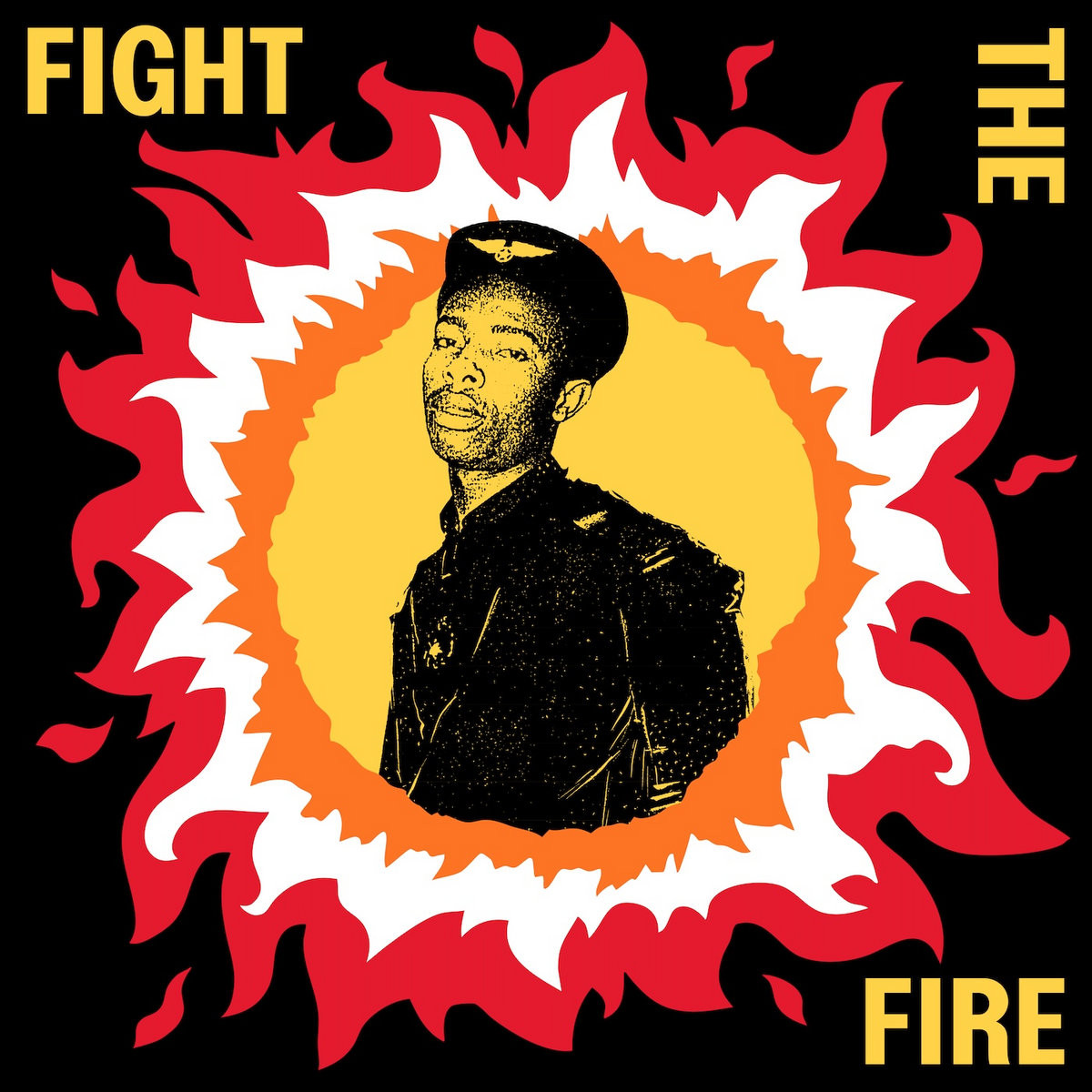
The essay for Fight Fire With Fire: Nigerian Reggae & Dub
I respect them deeply also. They reached out because of my 1997 essay/booklet, Dr. Satan’s Echo Chamber: Reggae, Technology and the Diaspora Process. I don’t know if they knew that I was Nigerian/Jamaican, but I was incredibly pleased by the opportunity to write about both sides of my heritage via dub! However, I didn’t want to make it about me since the compilation told a massively important global story: about what happens when Jamaican fantasies and dreams of Africa get consumed, imitated and reproduced by actual Africans who in turn dream and fantasize of Jamaica! It’s really the story of diaspora functioning as an echo chamber, where we listen to fantasies of each other and remake ourselves in the sonic image of those fantasies. All this while being absolutely committed to the belief in our shared authenticity. This is crucial, though, because the moment of Nigerian dub is the seedbed of what will become contemporary Afrobeats and other electronic music from the continent as well as a newer Pan-African politics rooted in different migrations and cultural forms than during the earlier twentieth century.
How was your collaboration with Marina Rosenfeld
You know that lecture/performance I did that caught the attention from Jan St. Werner from Mouse on Mars? It was done in collaboration with Marina who manipulated my voice in real time. We kept in touch after that and I was deeply honored to collaborate with her in South Korea and in the United States for the respective premiers of her incredible piece, “µ (mu).” Working with her was a thrill because she approaches sound with an incredible openness and a relentless joy. I was flattered that she saw through my identity as a scholar and heard me as an artist. As you know, Marina is also a product of the dub virus, just as you are, which is why your work is a crucial contamination. It is what brings us together—not purity but a comfort with mixing and blending and making errors that groove.