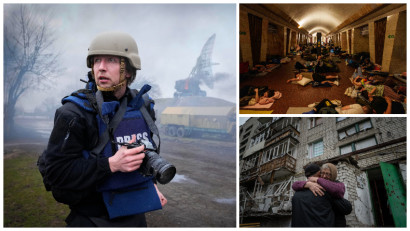
Even in times of war, perhaps more than ever, you have to do your job and document what's happening. But at the same time, you must always be aware that there's a line you shouldn't cross, says Evgeniy Maloletka. Evgeniy is a journalist and filmmaker from Ukraine, among the creators of the documentary 20 Days in Mariupol, and he’s not too optimistic on the ending date of the war. In the back of his head he’s dreaming of the time when the damage is over so he could lead a normal life and shoot ordinary events.
"It is important for me to photograph not only pain, but human strength; not only destruction, but everyday life, the way people continue to live, endure and help one another. Ultimately, for me it is about the human being and the desire to live rather than simply exist", says Evgeniy.
He says that today we have to think not only about the photograph itself, but also about its consequences: what we publish, when we publish it, and whether the image could harm the people we photograph. Evgeniy attended Bucharest Photofest last month, so we talked to him about AI & photos, the major changes regarding photography and how does it feel when war becomes the permanent background of your own life.
What sparked your interest in photography
I remember that I first picked up a camera when I was around twenty years old. I was still at university at the time and was dating a girl who had a camera. She wasn’t a photographer herself, but she was interested in photography. We started taking pictures of each other, and gradually I became curious about what photography really was and how it worked.
I started looking at and studying photography more seriously, and I became particularly interested in documentary and news photography. I found something in it that felt very close to me. Later, I got a job at a news agency - at first it was more of a side job. There I saw young Ukrainian photographers working, covering news and events, and it really inspired me.
I started photographing more on the streets and gradually moved into covering events. That is how I found my way into press photography, and, you could say, I still haven’t been able to leave it.
Then the war began. First came the Russian occupation of Crimea, followed by the war in Donbas. We found ourselves in a situation where we had to document what was happening to our country. War became an enormous part of my professional life, not thanks to what happened, of course, but in spite of it.
The turning point
The turning point for me probably came in 2014, when I began working more regularly and closely with international agencies. That was when I truly realised for the first time that my photographs could matter not only inside Ukraine, but far beyond its borders.
Before that, I had also wanted to work with international media, but it wasn’t easy. I was a young photographer, there were no events of that scale happening in Ukraine, and I didn’t have the resources or opportunities to travel extensively. I tried to photograph wherever I could, including in Africa and Belarus, and each of those experiences pushed me a little further forward.
But when the war began, everything changed dramatically. War became the tragic context in which I had to grow professionally, learn to work in extreme conditions, and constantly apply everything I had learned before. Working in war requires an immediate reaction, inner focus, and the ability to understand many different factors at once.
That experience became defining for me. It changed both my profession and the way I saw it.
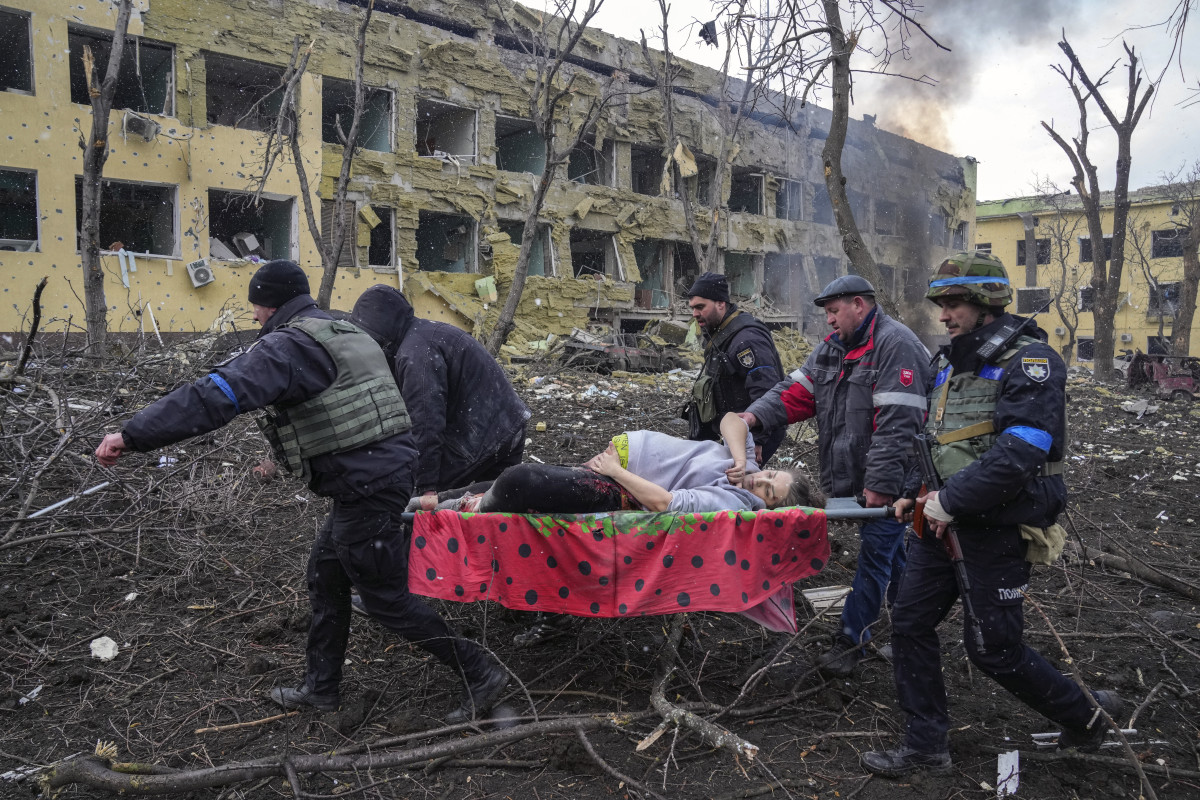
Photo credit: Evgeniy Maloletka
Defining moments in your career
One of the most important stages of my career probably also began in 2014. Russia’s occupation of Crimea and the war in Donbas completely changed the nature of my work. I began working regularly with international agencies and realised that the events I was documenting mattered far beyond Ukraine.
Another defining moment was Russia’s full-scale invasion. The scale of what was happening changed, and my work changed with it. Photography became more than just a profession for me. It became a way of documenting the history of my own country as that history was unfolding.
Your perspective on photography
After 2014, I went through a period of disappointment with photography. It seemed that in-depth stories were becoming less sought after and that interest in this kind of work was declining. So I moved into video. It gave me a new impulse, helped me grow, and allowed me to explore a new field, including storytelling.
But photography always remained the foundation. Video taught me a great deal, but the feeling that photography was truly mine never disappeared. In some ways, being a photographer has always remained my dream job.
With the beginning of the full-scale invasion, I consciously returned to photography. I realised again that the power of a single image can still make a difference, draw attention and preserve the reality of what is happening.
Video now dominates much of the information space. Perhaps I am a little old-school in that sense, but for me photography remains a way of speaking about what matters. Sometimes it feels as though doing that becomes more difficult every day, but I still believe in the power of photography.
Your personal signature in photography
Over time, I have become much more demanding of myself and of what I photograph. Today I want to go deeper. It is important for me to be sensitive towards the people I photograph, not to rush, and to give them the space to reveal themselves.
Experience has also changed the way I understand situations. Sometimes I can already imagine certain scenes in my head before they happen. I understand what I need in order to tell a particular story, where I need to be, whom I need to speak to, whom I need to call, and where I need to go.
So an image is less and less the result of pure chance. More often, behind it there is preparation, an understanding of the situation, and an ability to anticipate the moment that the story really needs.
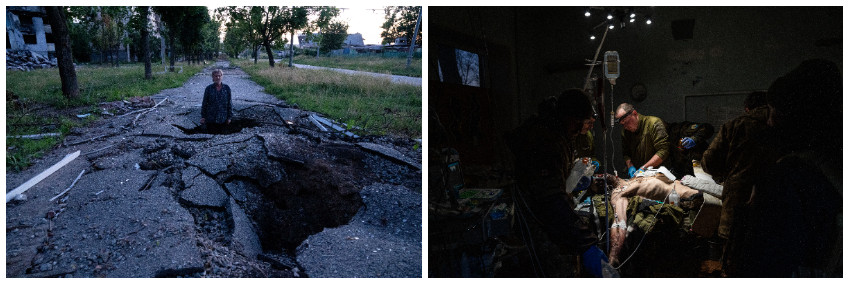
Photo credit: Evgeniy Maloletka
The themes you obsess about
Positive stories are very important to me, not necessarily in the sense of being light or happy, but in the sense of being alive. I understand that I cannot constantly photograph only grief.
I want to show how people go through grief without being consumed by it. How Ukrainians live every day with war, trauma, fear and their own internal struggles, and still find a way to keep living.
It is important for me to photograph not only pain, but human strength; not only destruction, but everyday life, the way people continue to live, endure and help one another. Ultimately, for me it is about the human being and the desire to live rather than simply exist.
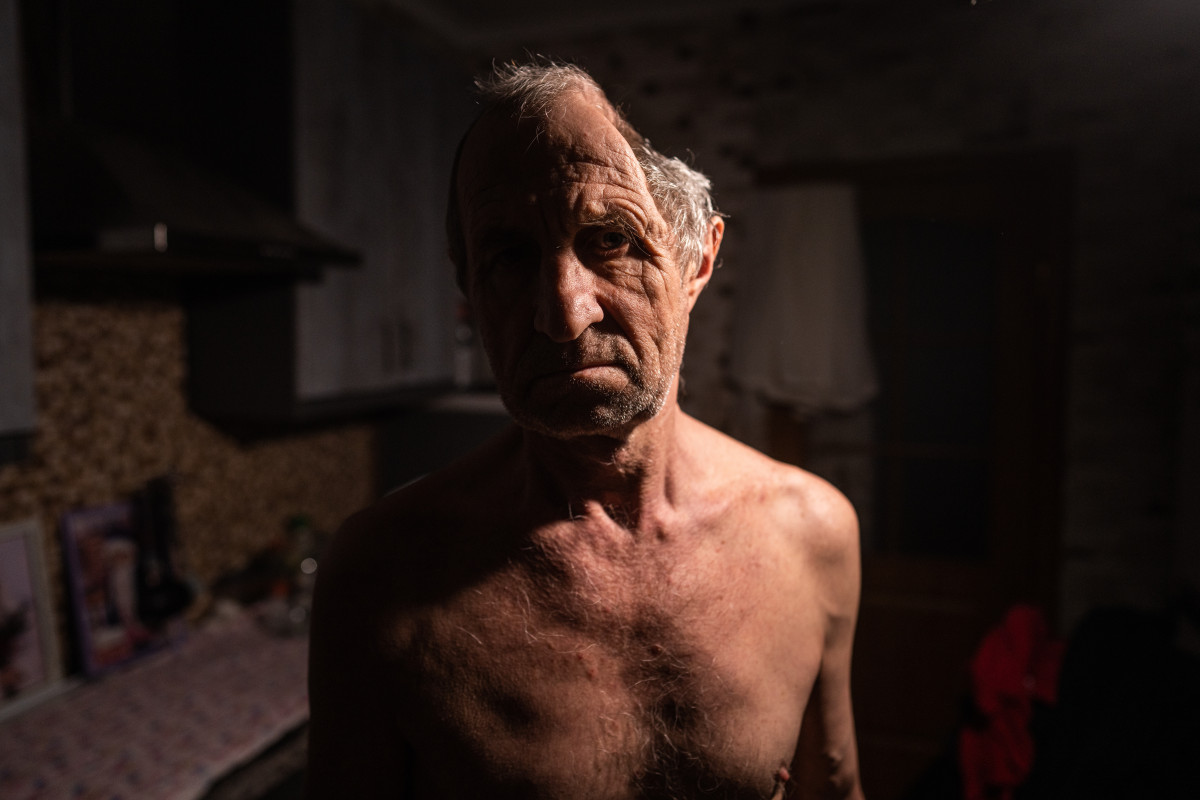
Photo credit: Evgeniy Maloletka
Major changes you see in the photography world
If we are talking about photography itself, I don’t think it has fundamentally changed. A good photograph or a strong body of work remains powerful regardless of the time in which it was made. A good image doesn’t need to prove anything - it will be noticed.
What has changed dramatically is the media environment around photography. With smartphones and the instant transmission of images, speed has become one of the defining factors. Today, almost everything can be broadcast online in real time.
This is particularly significant when working in a war. Today, a photograph can not only tell people what is happening; it can also cause harm. People are much more aware of journalists and of what appears in a frame because they understand that an image can potentially be used against them or create a security risk.
So today we have to think not only about the photograph itself, but also about its consequences: what we publish, when we publish it, and whether the image could harm the people we photograph.
It is not so much photography as a visual language that has changed. What has changed is the responsibility that comes with an image.
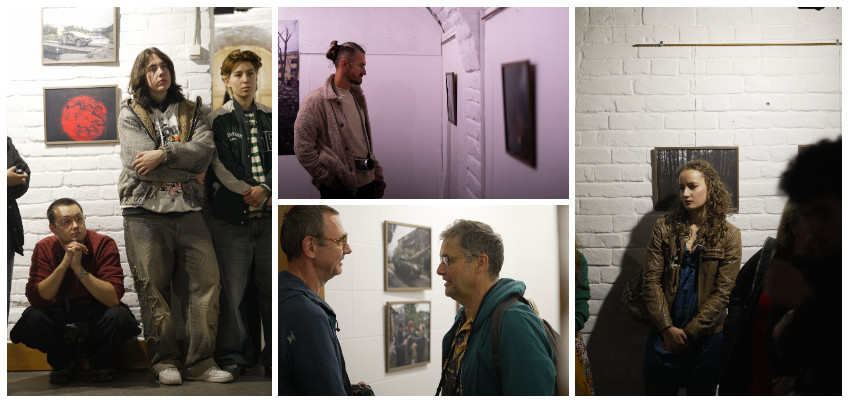
Photo credit: Bogdan Miron
The impact of AI
I think the development of artificial intelligence actually makes the strength of documentary photography and journalism even more apparent. Behind every documentary photograph there is a specific event, a specific person, and a photographer who was physically there and documented what happened.
The problem is that many people cannot always distinguish a real image from an AI-generated one. People can be misled into believing that something happened when, in reality, it never did.
That is why it is so important that we still have photographers and videographers who are physically present and documenting reality. Those images will remain as evidence of what actually happened.
The risk of disinformation created with AI is very high. But perhaps that is precisely why the role of documentary photography is becoming even more important: it has to preserve the connection between an image and reality.
At Bucharest Photofest
I believe that the more people see photographs from Ukraine, and the more visual evidence they are exposed to, the better they will understand what is happening here.
I would very much like people not to forget that the war in Ukraine is still ongoing. I would like them to stop, even for a moment, and think about what is happening in the world right now.
War is not normal, and it is not something that happens everywhere. Terrible things happen in war. These are not things we necessarily want to remember, but they are things we need to know. And one day, these are things we will have to tell our children about, because these are historic events taking place in our own time.
For people in Bucharest, this is not happening somewhere impossibly far away. The war is less than a day’s journey from them.
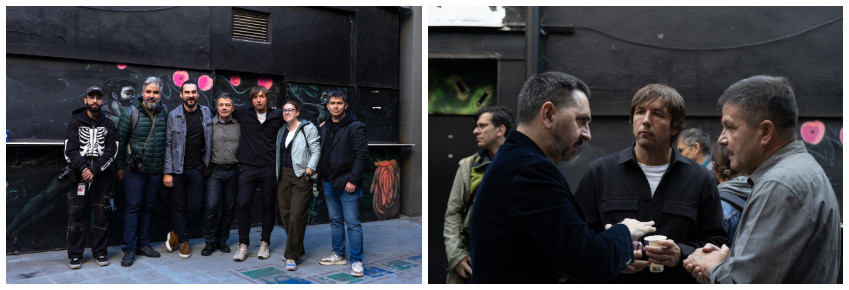
Credit photo: Adi Molnar
A personal ethical code that guides your work
Working in a war, we face ethical questions almost every day. Even when simply speaking with someone at the scene of a tragedy, you have to understand what that person has just been through and what state they are in at that moment.
I think that over these years, all of us working here have partly become psychologists. I cannot say that I am experiencing the same thing as the person in front of me, but I try to be present, to sense their emotional state and to understand them.
This matters not only on a human level. If you genuinely understand what a person is going through and approach them with sensitivity, you are able to tell their story in a deeper and more nuanced way. People can feel how you treat them. They begin to trust you more, and that trust allows them to open up.
For me, ethics cannot be separated from photography itself. It begins with the way you treat another person. You have to do your job and document what is happening, but at the same time you always have to understand that there is a line you should not cross.
The trust of the person I am photographing is extremely important to me.
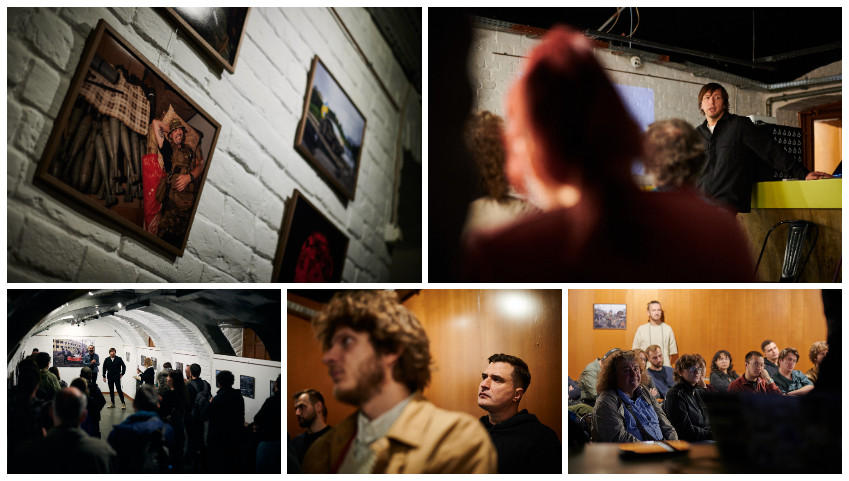
Photo credit: Tudor Maghiar
The role of photography in 2026
Globally, I don’t think photography itself has fundamentally changed. Every year brings new technologies, new ways of transmitting images and new demands on our work, but the essence remains the same: we photograph and document what is happening around us.
At the same time, new challenges have emerged. I see this particularly clearly here in Ukraine. There is now much greater awareness of what images we publish and how those images can affect people.
I am Ukrainian, and I photograph Ukrainians in moments of grief and pain. People here are living through war, Russian shelling, missile strikes and drone attacks. They constantly read the news and see photographs and videos of the aftermath. Images that serve as evidence for the outside world can, inside the country, traumatise people again when they are already living through that experience themselves.
So for me, photography today remains a form of testimony. But at the same time, the photographer’s responsibility has become even more important - to understand not only what an image shows, but also how that image may affect people.
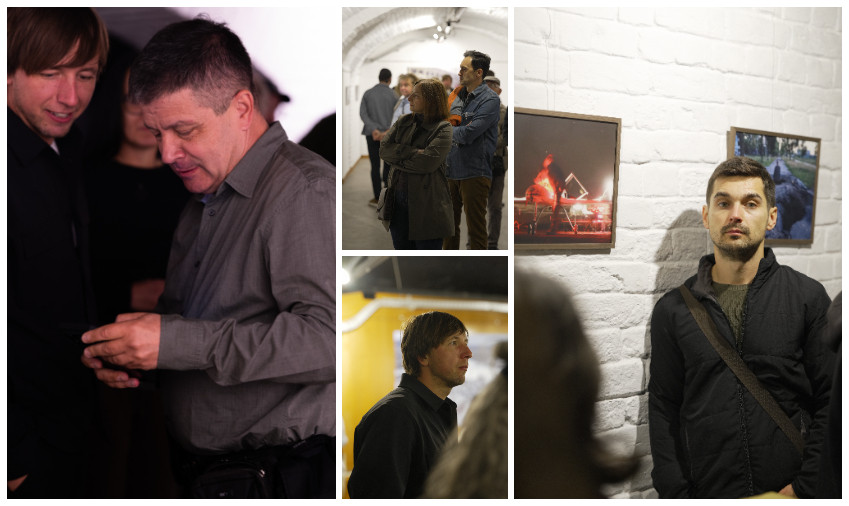
Photo credit: Bogdan Miron
A war photographer in Ukraine
When I was younger, being a war photographer felt, to some extent, like an adventure. It doesn’t feel that way anymore. War has become part of the daily routine, and the work is increasingly about struggling with your own emotions.
It is especially difficult because all of this is happening in my own country. Every day I see evidence of the grief that Russia has brought. Some things simply never leave your mind. Sometimes you go to bed with images in your head that you cannot forget.
Then you wake up in the morning, open the news and immediately look to see where there has been another attack, what is burning, what has exploded. It does not leave much room for optimism, because it is my country that is burning. And that hurts.
At some point, war stops being simply a story you are covering or another assignment. It becomes the permanent background of your own life.
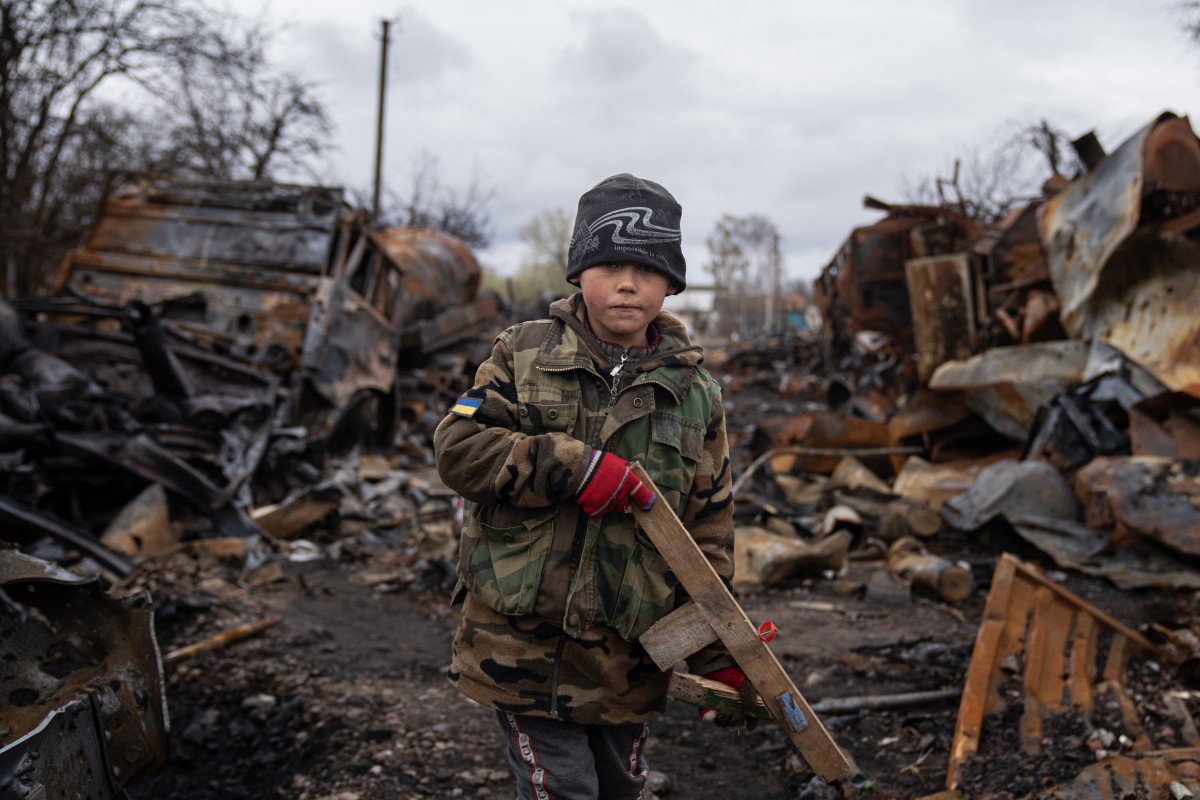
Photo credit: Evgeniy Maloletka
Plans for when the war is over
To be honest, it is difficult for me right now to believe that the war will actually end. Perhaps I am too pessimistic about it. At this point, what matters most to me is simply making it through this marathon, keeping my sanity and remaining human.
It is important to me not to allow this war to make me too hardened, not to lose my emotional sensitivity or my ability to feel. In simple terms, I want to preserve my humanity.
After the war, of course, I would like to photograph completely different things. Maybe I would work more with nature and climate change, or simply photograph ordinary events. I would like to be able to plan my life normally again instead of living from one strike to the next.
More than anything, perhaps, I would simply like an ordinary life, to be able to look not only at death and destruction, but at life itself.