
Life is incredibly rich and unpredictable, says Zygmunt Krauze, President of the Composition Section Jury at the "George Enescu" International Competition and professor at the Composition Masterclass. Terrible, unacceptable things happen in the world, while at the same time, wonderful things are being created. And they all find their way into his music.
Composer and pianist, an important figure in the Polish and European avant-garde, with more than 100 works and 10 operas to his name, and President of the International Society for Contemporary Music, Zygmunt Krauze has been expressing his view of the world through music for 70 years.
"We don't really realize what kind of world we are living in, what kind of crimes are going on every day in different parts of Europe, Africa, Asia and also America. So I'm engaged in this sense, and I see what happens and try to express this in my music", says Zygmunt Krauze.
Zygmunt Krauze reflects on the kind of music that speaks to the times we live in, what technology has brought to art, how the creative process has changed, and the role classical music plays in 2026, in the conversation below.
How do you see the world in 2026
Tragic. I'm very sad about what's going on. I'm not only sad, but as a composer, I express this feeling in my compositions. If I can give an example, I composed in recent years Children's Requiem for Choir, Symphony Orchestra and Soloists. It's not a religious piece. It's a piece in which the text tells about the children killed in 2023 in different parts of the world.
Another piece, Listen and Sing for Baritone and Chamber Orchestra, is also about the people killed after the Second World War in different parts of the world. If you would like to know, I can tell you that more than 33 million people were killed in different parts of the world after 1945. When I tell this to my friends or the people I meet, they are always surprised. We don't really realize what kind of world we are living in, what kind of crimes are going on every day in different parts of Europe, Africa, Asia and also America. So I'm engaged in this sense, and I see what happens and try to express this in my music.
What kind of music do you feel fits the time we are living in
Different kinds of music. I accept everything which makes me feel that I understand these emotions. I don't put up any barriers. All kinds of styles, and I'm very flexible and open to any kind of music. The only condition is that the music speaks to me and I understand it, and I believe that it is an honest message.
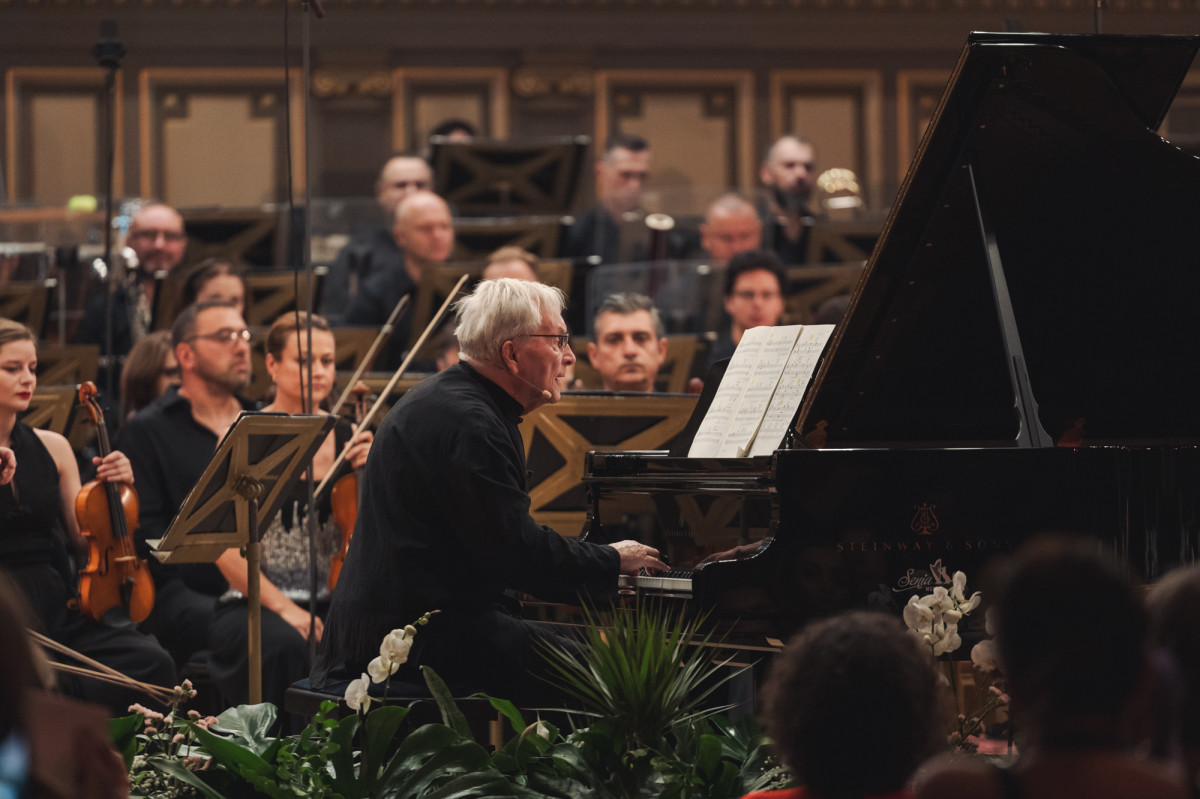
How did you see music when you were starting out and how do you see it now
When I was starting, that was the early '50s, over 70 years ago. So this was a completely different situation. Aesthetically, politically, economically, everything. So it is something which cannot be compared. When I think about 1952–53 in Poland, when I was in elementary school, I was just playing Bach, Scarlatti, Mozart and so on. And maybe I knew that Stravinsky existed, but I didn't hear this music. Ten years later, in the '60s, I already knew what was going on in Europe, with Pierre Boulez, Stockhausen, Messiaen and John Cage. So it was a drastic change. And later on, when I was already a professional composer, I was part of this, let's say, big family of artists who were creating music. And each of us created differently.
As I already said, I accept all kinds of styles and aesthetics. And when I see music nowadays, again, it's so different because of technology. Because of technology, first electronic music, then music which comes through the computer, and then AI, which can also be involved in the composition process. So when I look back, it is a fantastic and enormous change in everything. But not only in music, in everything. When I remember a car which my father had in 1950 or 1940, and now what kind of car I have, it's a different thing.
What have you lost and what have you gained along the way during your career
I think I mostly gained all these changes which I was talking about just a few seconds ago. So I gained all these changes, that means I participated in these changes and took part in them. What I lost, I don't know.
I don't know what I lost. I think I rather gained, that I became richer and richer, and had more knowledge and more knowledge every decade. And losing, you can be sentimental and think that you are losing some kind of moments or some kind of relations, but I don't look back.
I rather look forward. So this is why I am, even knowing what's going on, what we were talking about, optimistic.
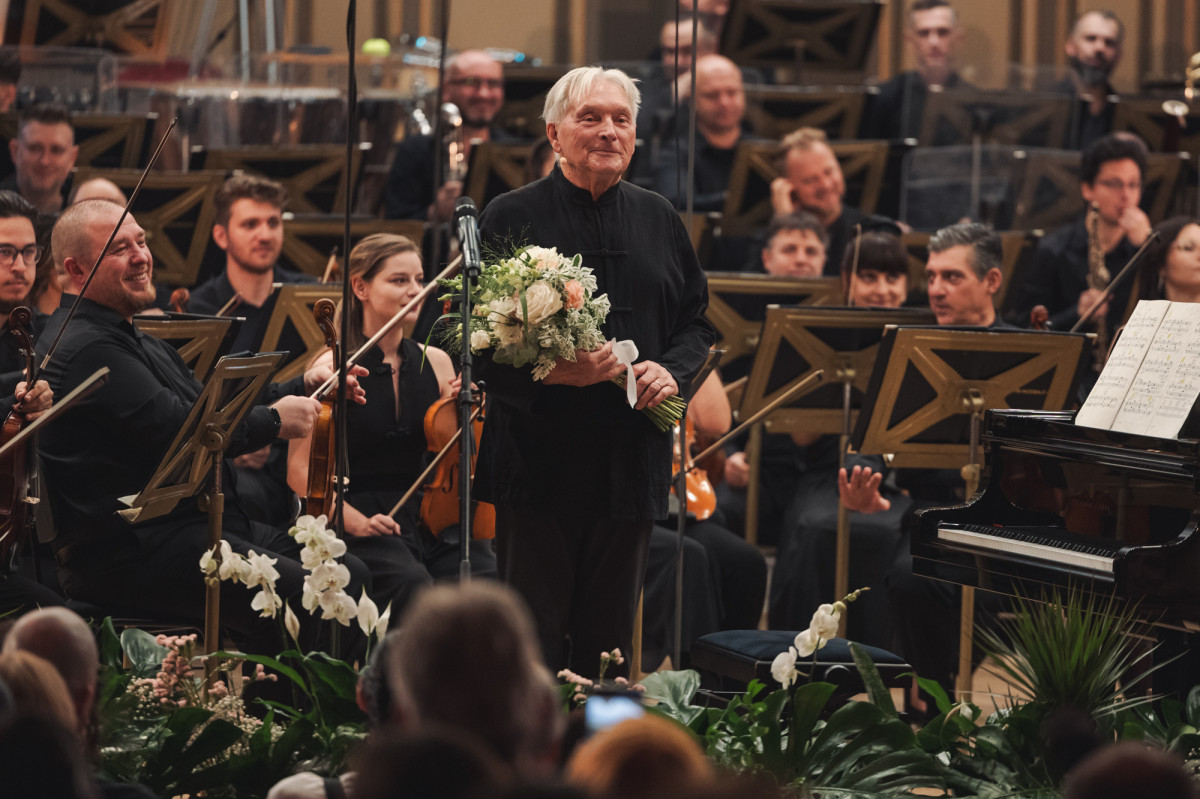
Photo Credit: Andrada Pavel
What does music mean to you now: How much of it is work and how much is inspiration?
I think it goes both together.
How has your creative and interpretive process changed over time
As a pianist, it becomes more and more personal, more and more strange.
How has people's relationship with music changed
I think that what is maybe different, when I look back, is that people are reacting more openly and accepting different music, different styles. I think that in my youth, we were kind of in a cage and accepted only a special kind of music and rejected the others. It's more open.
Your experience as a member of the jury for the Enescu Competition
If, over the years, I can say that there is a very big change in the process of judging. I remember 20 years ago, here in Bucharest, the jury was coming here for one week. We were sitting all together around the table, looking at the scores on paper and discussing every piece separately, together.
Now, this year, the jury was working online, separately, everyone in his or her own room, house, and so on, and gave the numbers. So the whole music, the whole piece was finally judged by numbers. And then the numbers were added, and this is the result. For me, it is not the best way. I think that we need, not maybe from the beginning, but at the end of choosing the best scores, the jury should have the scores visible. Personally, I prefer paper to the computer screen and discussing the music. This time, we did not discuss the music; we discussed the numbers. That's how it is. This answers how the work of the jury has been changed during the years.
With all the noise and change around us, how do you think the role of classical music is today
I don't know. I think that even if my perspective is quite negative about what's going on around us, politically and economically, I see that music develops quite well. I live in Poland, so I can say how it is in Poland.
We are building new concert halls, several fantastic concert halls; there are many festivals, concerts, and musical life has become richer and richer, and the development is quite good, I would say. So, from this answer, you can understand that life is quite, very, very complicated. Because, on the one hand, we have the elements and the things which are ugly and absolutely unacceptable.
And on the other hand, there are beautiful things which are created. So life is very, very rich and very unpredictable.
For a younger generation who may feel more distant from classical music, what would you say to inspire them to listen to classical music
You know, for many years I was also an organizer of musical life. Not only in Poland, but from a more global perspective, when I was the president of the International Society for Contemporary Music. So, in my opinion, we should maybe go out from the big concert halls, from the fantastic halls like Ateneum Palace, and go to the younger people, but they don't come here. It's, first of all, maybe too expensive and too beautiful.
So, I think that the way of engaging more listeners is to go out and to find new ways of presenting music. Maybe music together with other activities, like visual arts or choreography, to combine arts. And this is what I think is a good way to open access to others.
What pieces should you recommend they start with
I would say that I would be kind of risky and propose avant-garde works.
And the last question: what does avant-garde mean today?
Same as 100 years ago. It means not accepting the situation which is now, and creating works which are radical regarding how they will be received. This is my answer.