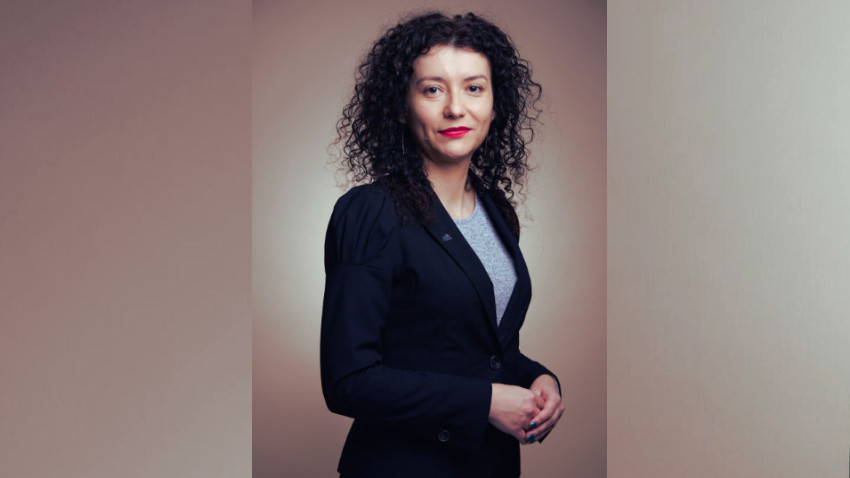

Nature always finds its way, a law that applies also to film making. From landscapes in which the characters simply exist in a slow pacing of time, without forcing them into a conventional narrative, what sets Maja Novaković films apart is this observer point of view, rather than explaining. She is drawn to silence, small gestures and the details of everyday life, and hope you can discover her through the triptych seasonal Then Comes the Evening or the winter monochrome movie At the Door of the House Who Will Come Knocking.
"For me, that is what makes Balkan cinema interesting: it can be intimate and grounded in reality, yet at the same time carry something much broader within its depths", says Maja.
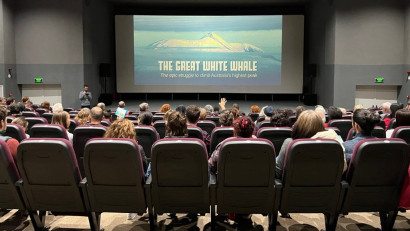
Maja attended this year’s Alpin Festival taking place in Brașov, Bușteni and Râșnov, as a jury member. We got the chance to talk to her about balkan sensibility, her relation to nature and her process when it comes to making films in which the outdoor life becomes a psychological landscape.
What came first: passion for nature or film?
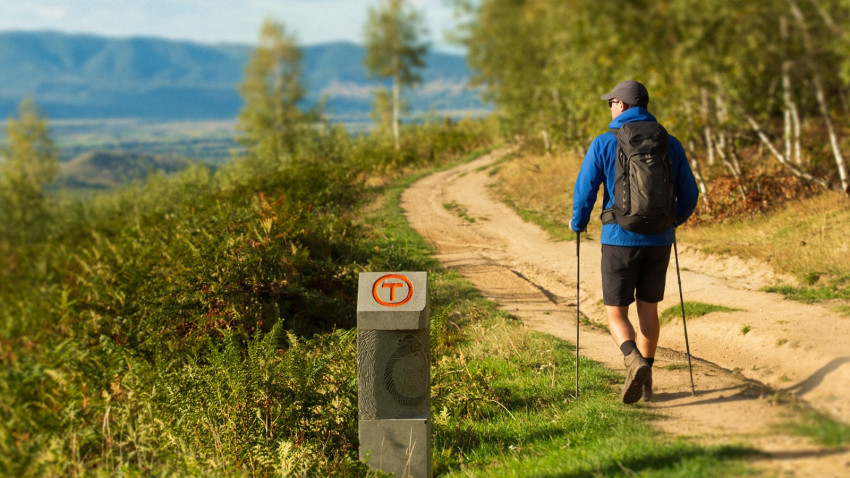
Nature, without a doubt. Long before I thought of film as something I could make, I experienced nature as a place of belonging and imagination. I grew up surrounded by landscapes that were not simply a backdrop to life. They carried stories, emotions, and a sense of home.
Film came later, as a way of looking at those landscapes more closely and trying to understand what they could express. Over time, I realized that I'm less interested in nature as scenery and more in the relationship between people and the places they inhabit. In my films, landscape often becomes a kind of portrait, sometimes even a character. So, nature came first, but film gave me a language through which I could listen to it and show it to others.
A true connection with the natural world
I discovered that connection very early, back in childhood. During primary school, I would often go into the forest behind my house, where I had a favorite tree. I kept returning there throughout high school. At that point, I would often bring a book of poetry with me and read under the tree. Even later, when I was at university, I remember coming home and feeling that I hadn't really been home if I hadn't had time to visit the forest and my tree. Looking back, I think that was when I understood that my relationship with nature was much deeper than simply enjoying being outdoors. It was a sense of belonging.
You decided from the start that this is the path you want to take?
Not really. I didn't decide from the beginning that this would be my path. It developed gradually, almost without me noticing. My first film came from a personal place, and only later did I realize how important nature and landscape were in the way I see and tell stories. I became more interested in the relationship between people and the places they inhabit, and in how those places shape our memories.
What is different in the movies you make
I don't really think about the film industry when I make a film. I think about the first spark, something that catches fire in my stomach and tells me I have to start something new. Before I begin, I need to answer for myself why I'm making this film at all. Then the question is how to follow that impulse honestly. I work intuitively. I'm not following a formula. I'm looking for the rhythm and language that belong to that particular story.
If something sets my films apart, it's that I prefer observing to explaining. I give the characters and the landscape time to simply exist, without forcing them into a conventional narrative. I'm drawn to silence, small gestures, the details of everyday life.
Your working process on films
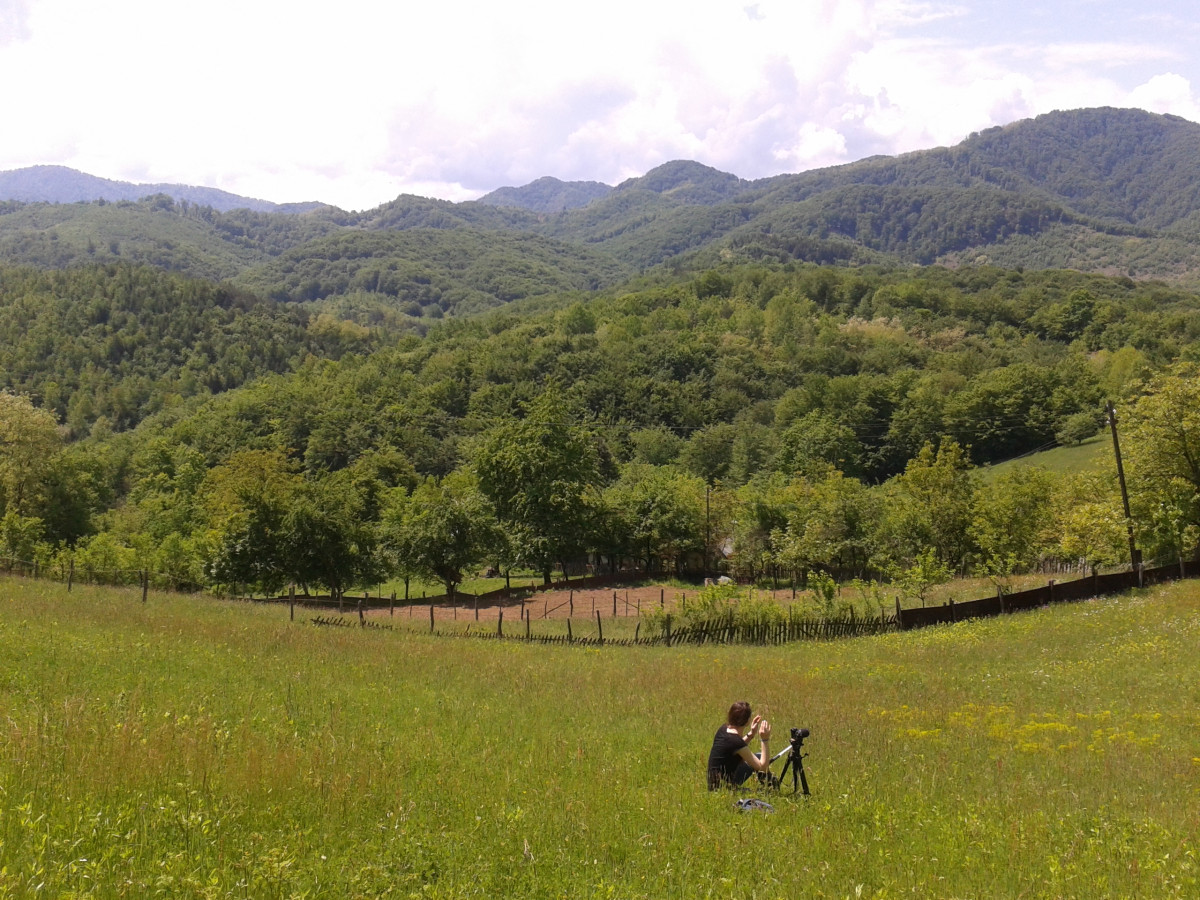
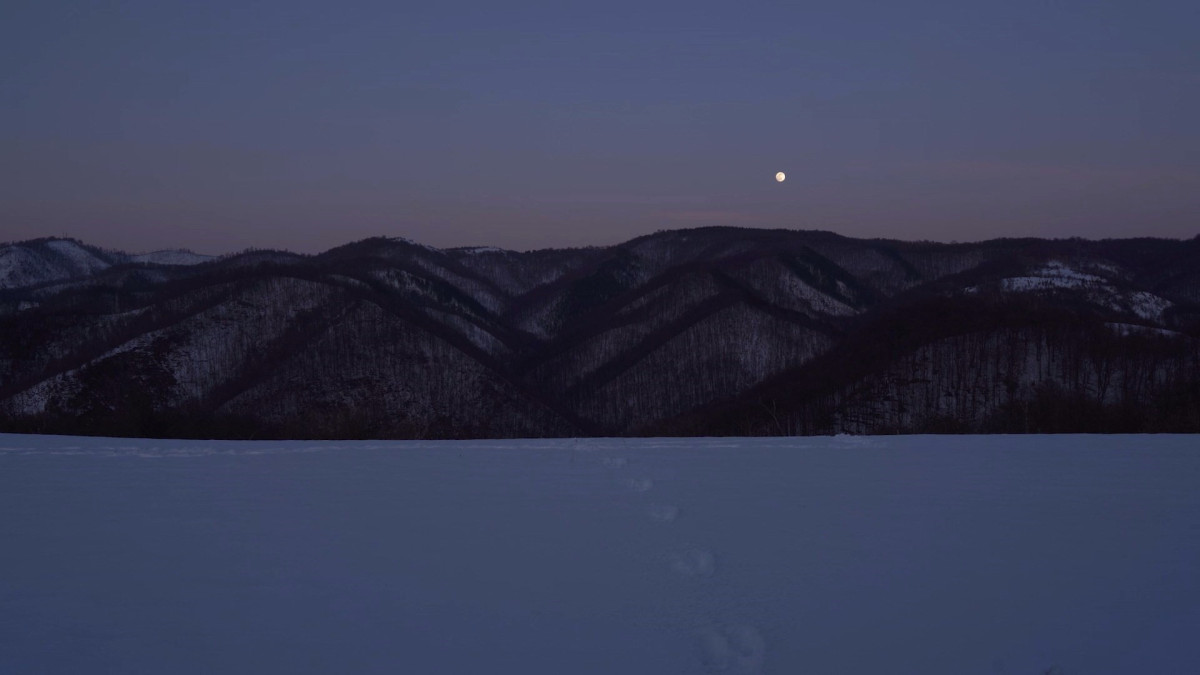
Both films grew out of a personal spark, and in both cases I worked with a very small crew. I don't start from a plot. I start with a season, a color, and a feeling, then look for the image that carries it. Then Comes the Evening is a triptych: a green, impressionistic first phase, a grey middle where the storm begins, and an orange ending where colors ripen and saturate. At the Door of the House Who Will Come Knocking is a winter film, cold and monochrome, with hard contrasts between light and dark. I use static compositions, I don't add narration, and I try to tell a story without a story, using atmosphere and image to guide the viewer. The realists monumentalize the common people, and I try to do the same. My first film was more of a portrait of specific people, whereas in the second, I wanted to approach an internal portrait. I'm interested in the inner world, which is why I speak of nature as a "psychological landscape".
The Balkan style
I think there is something particular about the way the Balkans hold history and everyday life side by side. There is intimacy, melancholy, and even absurdity in the way we look at ordinary things, and I think that naturally finds its way into film. I wouldn't say we have one specific style, but perhaps a shared sensibility, an attention to people, landscape, and the things left unsaid. For me, that is what makes Balkan cinema interesting: it can be intimate and grounded, but at the same time carry something much larger beneath the surface.
What did nature and mountains teach you
So far, I've made two films, each in its own way an attempt to answer part of that question. If I had to give a simple answer, I would say that, above all, nature has taught me patience. It doesn't rush, and you cannot force it to give you something before the time is right.
What can filmmakers do to better preserve the environment
Sometimes the most ecological choice is also the simplest one: fewer people, fewer things, less movement, and more attention to the place you are filming in.
The Alpin Film Festival
I'm very happy to be here. I first visited Brașov last year, and I must admit, I fell in love with the city. Surrounded by the hills, I have a feeling of being embraced. I'm delighted to be here among films and filmmakers driven by a curiosity about mountains, nature, and our relationship with the places we call home.
What should we know about the films made in Bosnia and Herzegovina
I think there is much more to discover in Bosnian and Herzegovinian cinema than films directly dealing with the war and its aftermath. That history is, of course, an important part of the country's cinematic memory, but I'm interested in what exists beyond it: the quieter, more intimate stories of people, places and everyday life.
The challenge in both films was to simply capture nature as it is. While shooting in the forests, I was surrounded by minefields, something that doesn't show up in the films. Venturing into the forests of Bosnia, at least in my region, is a stressful and challenging process.
3 movies that go hand in hand with nature very well
That's a difficult question, as there are so many. But if I had to single out three films that approach nature in very different ways, and as an active part of the story and the characters' experience, they would be:
- Salt for Svanetia (Mikhail Kalatozov, 1930): a remote mountain community, harsh conditions, and images of extraordinary power. The film shows how deeply the landscape shapes an entire way of life.
- The Naked Island (Kaneto Shindō, 1960): for its powerful connection between human life, landscape, and physical labor.
- And a more recent film, To Hold a Mountain (Biljana Tutorov and Petar Glomazić, 2026): for the way the mountain becomes not simply a landscape, but a place of belonging and resistance.
Present, future and the film industry
At the moment, I'm developing a new film project that is very personal to me. As with my previous films, I'm still at the stage where I'm trying to understand what the film needs to become.
As for where the film industry is heading, I think it is difficult to predict. What I hope for is that, alongside all the technological changes, there will always be space for films made from a personal impulse, films that take risks, move slowly when they need to, and find their own language rather than following a formula.