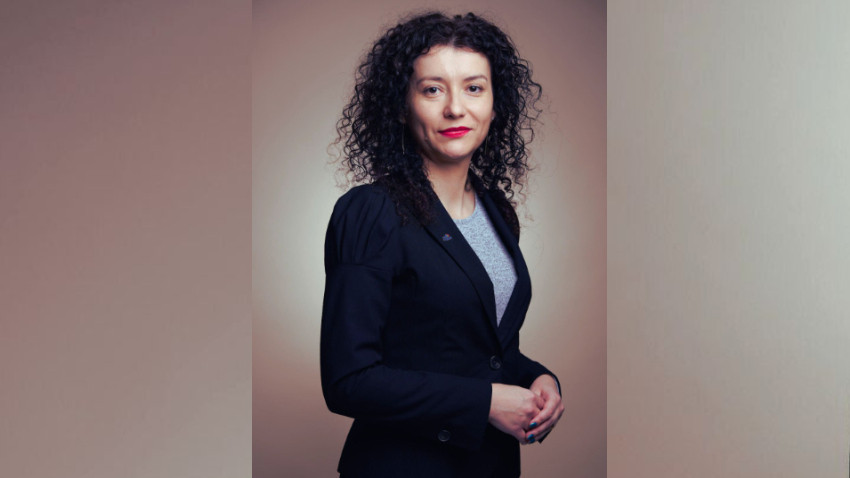
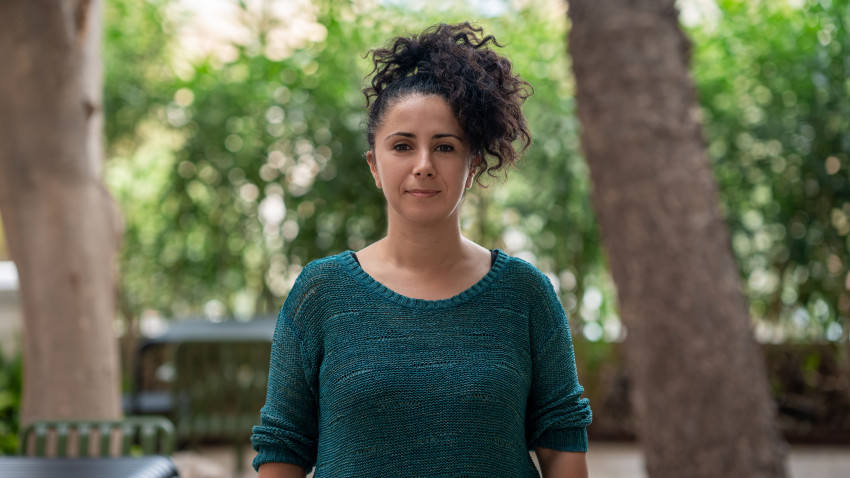
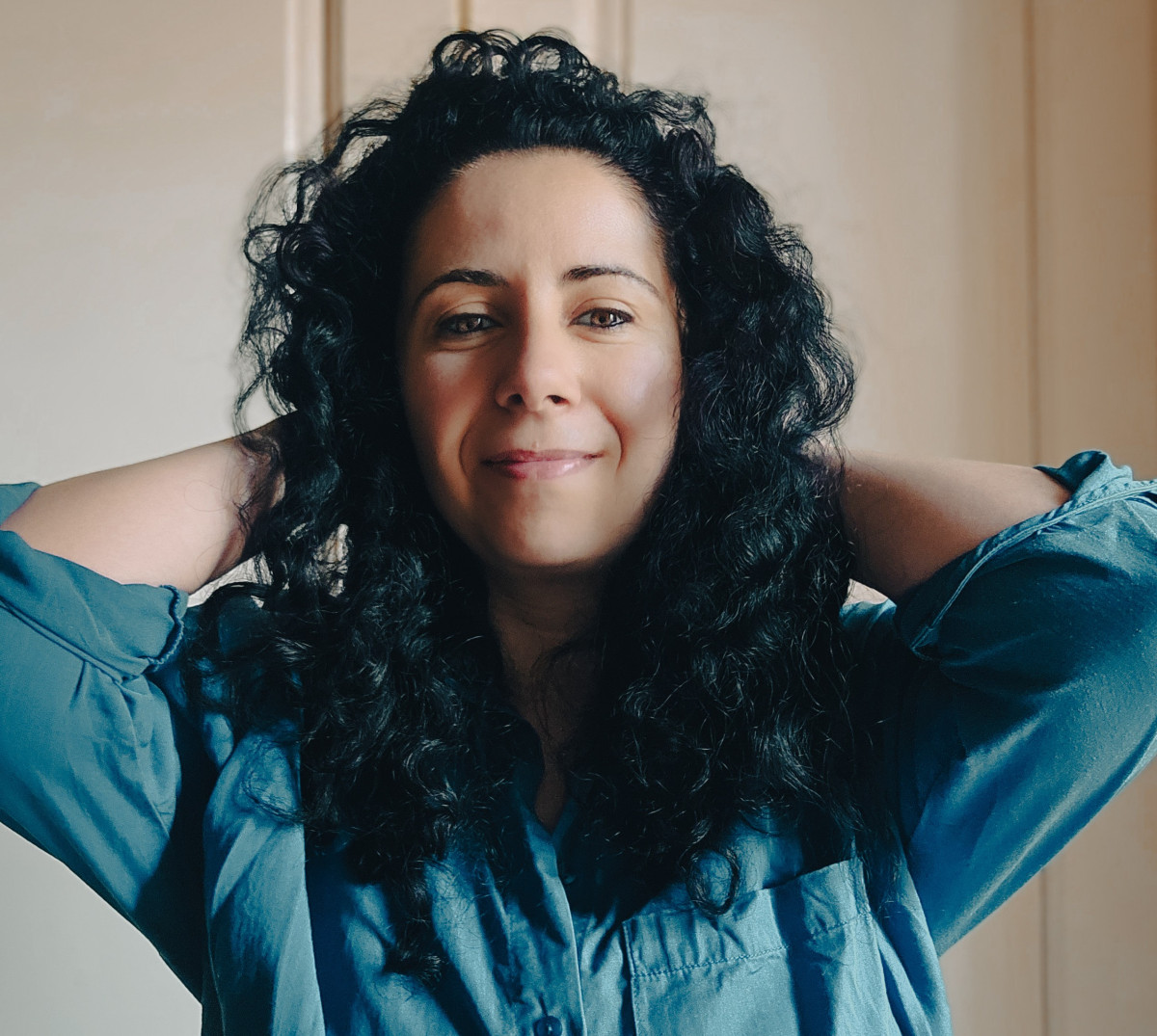
Writer Oana Aristide was born in Transylvania to parents of Romanian and Yemeni origin, but her family moved to Sweden after the fall of communism. She worked as a macroeconomist in Bucharest and the City of London, and her debut novel, UNDER THE BLUE, published in 2021 by Serpent’s Tail, was named among the best books of 2021 by The Times and was shortlisted for the ASLE-UKI Book Prize and the McKitterick Prize.
"English has given me the freedom to write about anything, anywhere, and probably the chance to reach more readers, but that freedom comes at a cost: there’s a kind of novel I’ll never write, either in English or in Romanian", says Oana.
ASTRONAUT! is her recently published second novel, which blends personal experiences from the years of Romanian communism in a suspenseful, satirical key, where pretense plays a well-defined role. Her obsession is honesty, to which she constantly returns when writing, as she states: we carry within us the props of an entire theater, smoke screens, scripts, stage directions, all to help us bypass the truth. Let's discover Oana as she truly is beyond all masks, diving into her writing process, her frequent moves, and the way she relates to literature.
First writing experiences
My late grandfather’s books covered a whole wall of the living room in our apartment in Sighișoara, and as soon as I could read, I began making my way through them indiscriminately. Fortunately, there were plenty of books suitable for children – Jules Verne, Karl May, Alexandre Dumas – but also plenty that simply left me puzzled. It’s a cliché to say that a book is a doorway to another world, but to a child it really feels like that: we had the front door of our apartment, through which I could go out to meet my friends and play, and we had books, through which I could meet the most extraordinary people.
I remember that it was Irving Stone’s novel about Michelangelo, The Agony and the Ecstasy, that first showed me what it meant to be an artist, the miracle of a person bringing something wholly new and surprising into the world. To a child, this seemed like a conjuring feat. It subverted the way people were defined, how they were spoken of. No, we are not our jobs, we are not our possessions. We most certainly aren’t our school grades. We are something else, something magical: this creative potential. And so I started writing stories, and sometimes I would share them with my primary school teacher or classmates.
Moving to Sweden after the fall of Communism
There was the general shock of material abundance everywhere, and of discovering that you no longer had to fear the authorities. For my reading and writing, it meant having to switch languages yet again, this time to Swedish. In Sighișoara, I attended a German-language kindergarten and school. My grandfather’s books were in Romanian. My father was Yemeni and had tried to teach me Arabic. In the end, I got so fed up with switching languages from one book to the next that I decided to read only in English. The idea was that wherever in the world we might move, we would find books in English. Sweden has an excellent public library system, and even in our small town there were metres of shelving devoted to literature in English. It was also possible to request books from other public libraries. I made that decision at twelve and have stuck to it ever since.
What is it like combining macroeconomics and literature?
They’re almost completely separate, and it’s very easy to keep them that way. I remember finding Swedish so similar to German when I first started learning it that I kept getting confused: I would start saying a word and be unsure how to finish it, whether the ending I had in mind was Swedish or German. That doesn’t happen with economics and creative writing: they occupy different neighbourhoods of the brain.
Greece, England, Sweden. Adapting to a new place
I’ve lived for extended periods in six different countries, mostly doing very different things. It’s safe to say that I need change in the same way others need roots. I don’t feel I belong to a particular place, except perhaps in the sense that I feel European (even though, ethnically, I’m only half European). I’m probably also terrible at ‘adapting to a new place’, if that means changing yourself to fit in: I mostly just pick and choose the cultural aspects that I already like. I don’t move somewhere to become something; I move to find a place that fits me. Sometimes I’ve made the wrong call, either because I didn’t know myself well enough or because I misunderstood the place.
The success story of Under the Blue novel
Under the Blue was both lucky and unlucky. It came out during the pandemic and attracted a lot of attention because its subject so closely mirrored what was happening in the world at the time. On the other hand, bookshops were closed, there were no literary festivals or events, and that made it difficult to reach readers. Debuts always struggle to gain attention. It’s true that people read a lot during the pandemic, but they tended to buy books by writers they already knew. And I have complete sympathy for anyone who didn’t want to read about a pandemic while living through one. So, mixed fortunes.
My intention with the book was to put the reader in a moment when it’s too late to do anything to save ourselves, and hopefully get them thinking about the privileged situation they’re in now, when there’s still time to act. The pandemic in the novel was just one particular expression of the broader subject of climate change, but once reality had its say, it moved to the foreground for readers. The other half of the book was about artificial intelligence and what it can teach us about ourselves. Perhaps the strangest experience with Under the Blue was seeing a book that was solidly science fiction when I wrote it become current affairs within a few years.
In which language do you write first?
English, always. Which means there’s a certain kind of writing I’ll never be able to do: the kind in which the vernacular is deeply, unmistakably rooted in a particular place and social class in the English-speaking world. A good writer who grew up inside that voice can make it the whole novel – Augie March, Trainspotting, Portnoy’s Complaint, As I Lay Dying. Or maybe I could, given enough time and by immersing myself in the culture of a place, but I’d very likely end up with a weaker book than one written by someone from there. So English has given me the freedom to write about anything, anywhere, and probably the chance to reach more readers, but that freedom comes at a cost: there’s a kind of novel I’ll never write, either in English or in Romanian.
Authors that inspired you over the years
My childhood hero was Jules Verne. In my teens I read whatever I could find in English in Swedish public libraries, and I veered towards philosophy and American fiction – the likes of Updike or Bellow. Later on, Marilynne Robinson, John Banville, Carson McCullers, Denis Johnson, Ishiguro or Tom Drury. Stanisław Lem. The last novel I loved was Empire Falls by Richard Russo. I love realism, and I love an interesting and original idea. The two rarely meet in a single book.
Communism and your latest novel, Astronaut!
Astronaut! follows a rebellious schoolgirl and a decent policeman in Romania in 1989 trying to remain spiritually intact inside an oppressive system. It’s a murder mystery, a coming-of-age story and something of a fable, but above all it’s a satire. There are no space travellers in it, although the title makes sense once you’ve read the novel. And there may be no bears either.
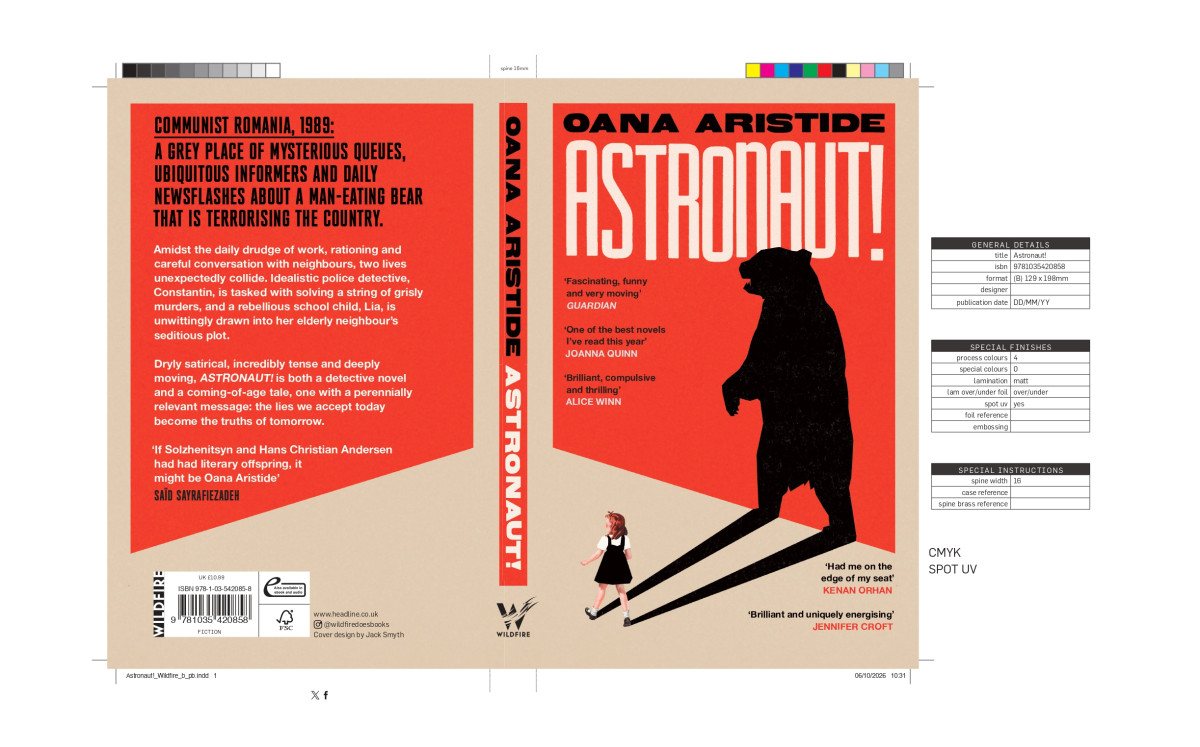
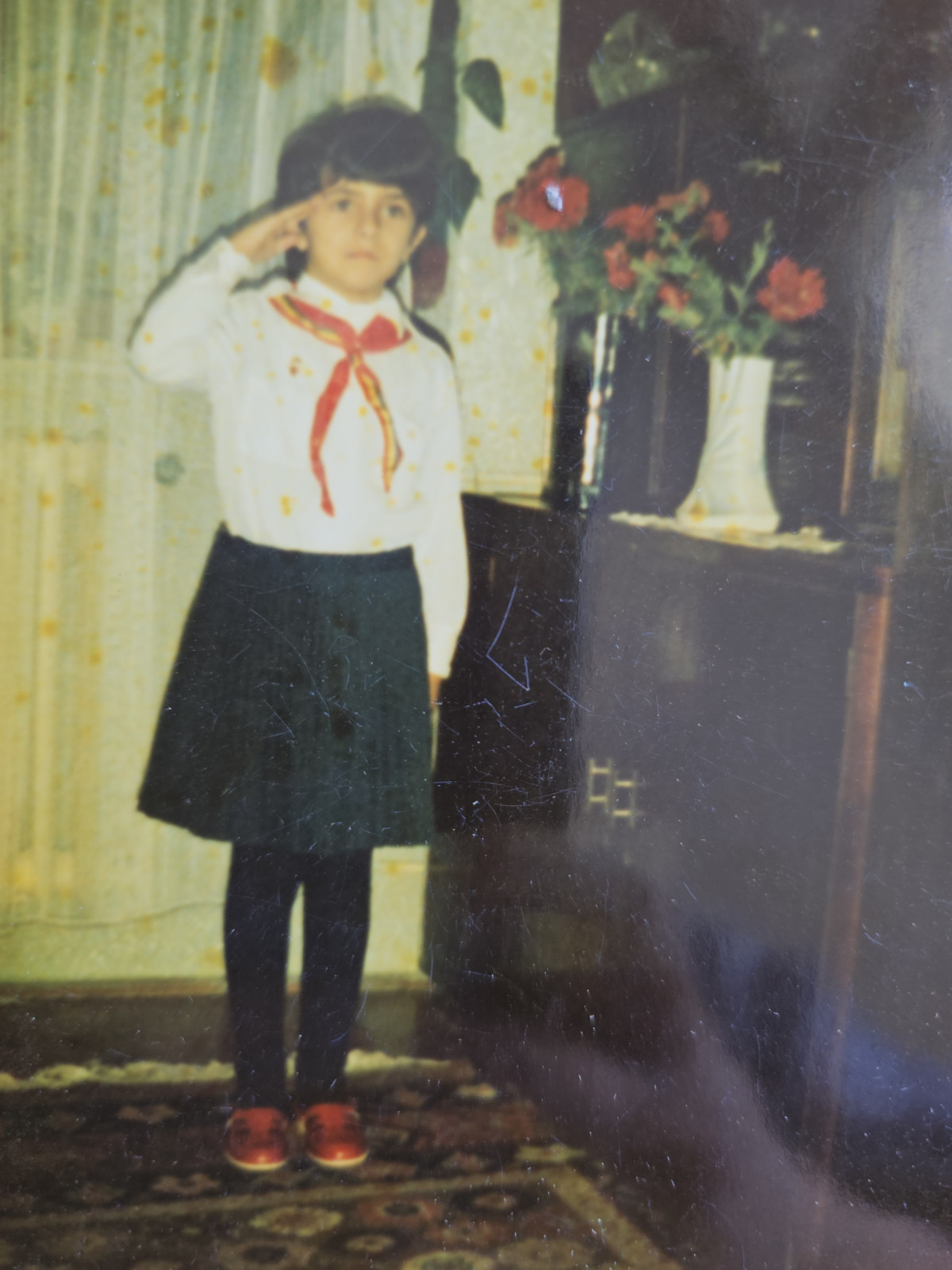
Satire always starts with some form of pretence: someone is playing a role for other people, or for themselves, or perhaps a whole group is playing a role together. Essentially, someone is lying in one way or another. I used to have this feeling as a child under communism: that people were being ridiculous. That they knew they were being ridiculous but mysteriously couldn’t help it. In that political context, of course, the pretense isn’t just funny, it’s tragic, because of what can happen to anyone who stops playing along. A novel can live in that space.
That was the starting point for Astronaut!, and I had more relevant personal experiences than could fit in the book. So the difficulty in writing it was more about finding the right tone: not letting whimsy overwhelm the seriousness of the situation, while allowing the characters enough agency for it to remain clear that, ultimately, the choice is still ours, even if the costs are enormous. And all the choices ‘the pretenders’ make – keeping their families safe, having a job, not going to prison, not going hungry – are understandable and valid, but, if we’re honest, must still be weighed against the price we pay: a slightly dented soul.
What question do you keep coming back to when you write?
Truthfulness. It’s probably an obsession of mine. I think we’re expert liars, especially to ourselves, to the point that we don’t even notice when we’re doing it. We have a whole theatre inside us – smokescreens, scripts, stage marks – to help us avoid the truth.
Your relationship with writing
I don’t know anyone who writes well without effort. As far as I know, everyone revises and edits, rethinks, has insights even after half the book is already ‘done’. The key, I believe, is to enjoy the process itself. I don’t know why anyone would write if they didn’t love the struggle of it, and the satisfaction – when it works – of creating something new that rivals what’s already here and real. What is easy for me is to sit down and write; there’s nothing I’d rather do. There are days when something really good appears in a first draft, but that’s not the norm.
It takes time to get to know a character: how they talk and think and move in the world. The best literary sentences, in my view, aren’t the ones that get quoted out of context and sound great, but the ones that sound plain on their own and make devastating sense in context. Think Chekhov. It’s much easier to write a zinger than that kind of line.
What comes first: the character or the idea?
I don’t think it’s always the same for me, but I’m generally more interested in ideas, and then I try to construct the world and characters around them. I have to feel passionate about the subject – I’m going to spend years with it and these characters, so I’d better enjoy their company.
When I was writing Under the Blue, I was struggling with the AI part of the book, with how to write it. There was something specific I wanted to do with it, but I felt that, to get there, I first had to do a lot of world-building and provide context that didn’t really interest me. Around that time I attended an event with George Saunders, where he said: ‘Write what you enjoy writing, and readers will enjoy reading it.’ I’m sure he didn’t put it as plainly as that, but that was the gist. It freed me to write that part of the book entirely in dialogue, to focus on what I actually wanted to get on the page, and to leave out all the background that would have just been padding.
Readers in the social media era
I don’t have any new insights into this. I’m just sadly noticing the same things we all notice: people are reading less, and attention spans are getting shorter. The arts are also getting confused with politics in a way that I think is harmful to both. Not in the sense that novels shouldn’t be politically engaged, but that artistic merit is increasingly judged by how much we agree with the political ideas expressed.
What are you working on now?
I’ve just finished my third book. It’s a novel set in the US, a kind of heist story that’s also about the temptation to reject some of the terms of our contract with reality.