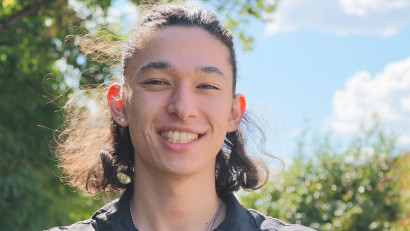

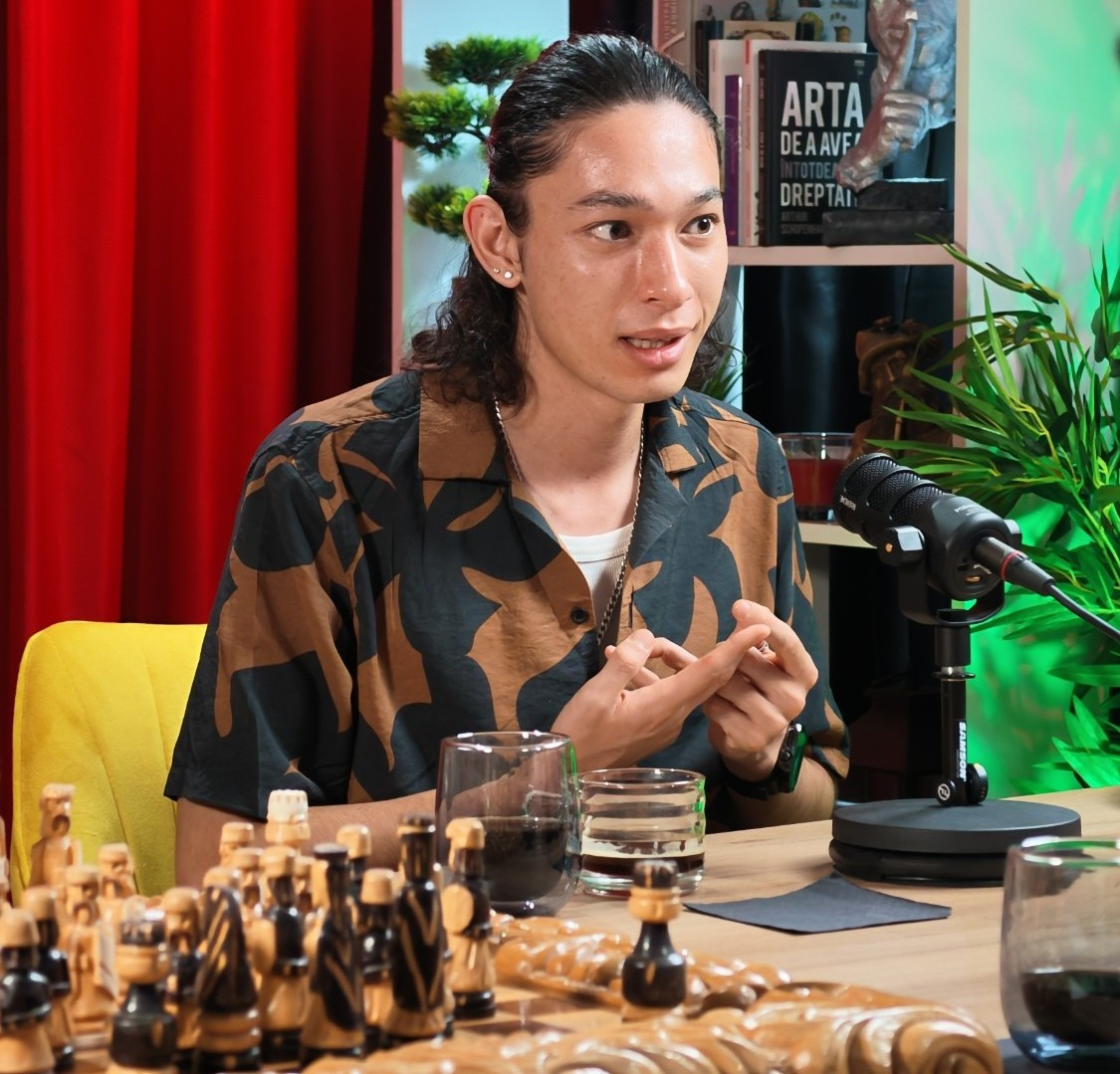
He was born in Romania, but at 5 years old he left for Japan. Fast forward to 2025 and here he is back in our country, half vlogger, half student. You might have already seen him on social media or in TV appearances: Kenji Miura, aka The Japan Guy. His short, funny, and engaging videos have already built a community of 100,000 people and led to collaborations with brands linked to Japan.
"What surprised me most was how warm people are. Someone you don't know tells you on the street “you look great” or “nice outfit”. In Japan nobody does that to a stranger", says Kenji.
Kenji says that through the lens of social media, Romania appears as a country that laughs at itself, but loves itself. Users argue, comment, and share. In Japan, it's different. Many content creators don't show their faces, and people comment very little and anonymously. He wants to grow old in Romania, even though he will travel often to Japan, where his childhood memories and friends are. But the plan is to be a bridge between the two countries - to bring together the respect and discipline of Japan and Romanian sincerity and warmth.
Romania, first impression
I was born in Bucharest, but when I was 5 I moved to Japan, to Osaka. I didn't know a single word of Japanese, not even “arigatō”. In my first year at school I understood nothing. Then, little by little, I ended up speaking better than my Japanese classmates. In June 2025 I came back to Romania. I came alone, because I wanted to see with my own eyes how Europeans think compared to the Japanese.
My first impression was in the taxi from the airport. The light turned green and in the same second the car behind us honked. In Japan you almost never hear a horn. That's when I thought: ok, this is a different life.
Your main activity
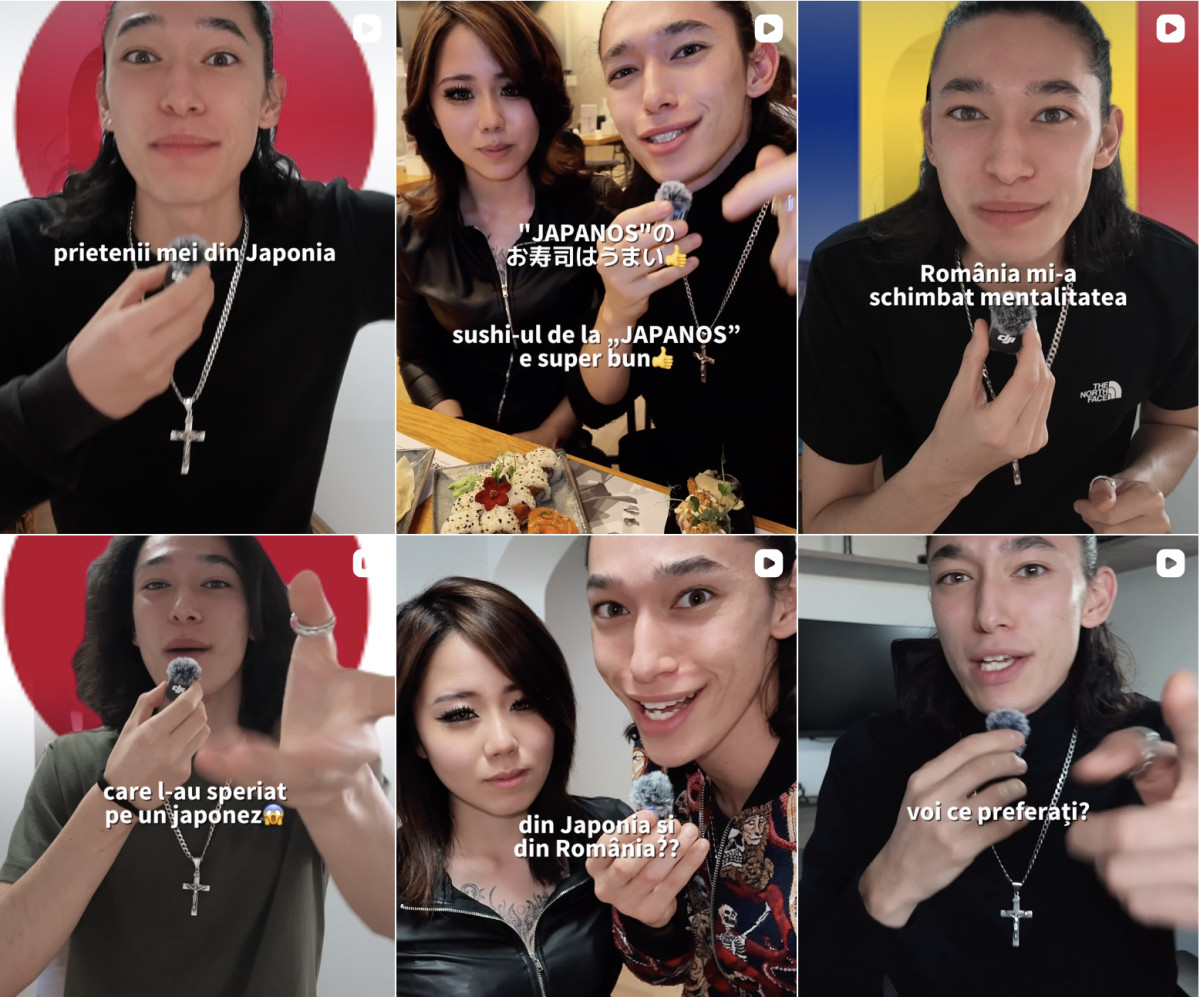
I make videos in Romanian on TikTok, Instagram, Facebook and YouTube. I show the differences between Japan and Romania, with humor, but also with real things from everyday life. Today we are a community of more than 100,000 people. I'm also a student, so my day is split between classes and filming. I also do collaborations with brands connected to Japan.
The biggest challenges
At first the language was hard. I understood Romanian, but I always answered in Japanese. When I arrived, for the first two months the words just wouldn't come out. I didn't take any courses. I learned by filming myself: I wrote a script, read it in front of the camera, and that's how the words stayed in my head.
Then there was the paperwork. In Romania, for any document you need patience. And a bit of “tupeu” (nerve). An example from university: at my first exam I wrote the proof in a short way, like we do in Japan. I got a 3. I appealed, explained it step by step, and got a 9. That's when I understood that here you have to show every step.
The hardest moment was one evening when I had a high fever and I was alone. I drove myself to the emergency room and waited two hours. That's when I really felt I was alone in a new country.

What surprised you the most
What surprised me most was how warm people are. Someone you don't know tells you on the street “you look great” or “nice outfit”. In Japan nobody does that to a stranger.
Then the food table. Romanians eat a lot, talk a lot, dance, drink, and after that they still go to the club. I don't know where they get so much energy. And a small thing: the first time I sneezed at university, the whole room said “Sănătate”. It sounded like a song. In Japan nobody says anything.
My revelation is that Romanians are sincere. They say directly what they think. At first it scared me, now I like it.
Teaching Japanese to Romanians
Through my videos I explain Japanese almost every day, and I notice a lot in the comments. The good part is that Romanians pronounce Japanese very easily. The vowels are almost the same, so a Romanian sounds more natural than many other Europeans.
The hard part is kanji and the word order. In Japanese the verb comes at the end. There are also the politeness levels, which don't really exist in Romanian. What I noticed: Romanians want to know “why”. They don't like learning by heart. When you explain the logic and connect it to something they already know, they get it really fast.
The biggest cultural differences
I would put it like this: Romania is the country of sincerity, Japan is the country of respect. In Japan you always think about the other person. Don't bother anyone, don't talk on the phone on the train, don't be late even five minutes. You never say directly “I don't like it”. You say it in a roundabout way, so the other person doesn't feel bad.
In Romania you say what you feel. You get angry, you make up, you hug, “te pup”. People are warmer. In Japan even parents and kids don't hug very often. School is different too. In Japan students clean the classroom and the toilets themselves, there are no cleaning staff. The school is not yours, so you leave it the way you found it.
What you don't like about Romanians
If I had to change something right away, it would be the queue. At the counter I saw people getting in before me because they had “connections”. In Japan that would be shameful.
Second would be the traffic. Honking one millisecond after the light turns green, and cars parked in the driving lane. Third is bureaucracy. You wait weeks for a document that in Japan would take a few days. But honestly, these are small things. I wouldn't change the people.

Which habits would you import form Japan
The first thing would be cleanliness as a habit. In Japan, if you can't find a trash bin, you take your trash home. At the stadium, after the match, everyone picks up their own mess. The place is not yours, so you leave it clean.
The second is punctuality. Five minutes early, not fifteen minutes late. The third is on the escalator: you stand on one side, so people in a hurry can pass. And there is a Japanese saying I really like: “Chiri mo tsumoreba yama to naru”. It means even dust, if you collect it every day, becomes a mountain. A little, but every day. That's how I learned Romanian too.
Your relationship to Romanian food
My relationship with Romanian food shows on the scale. I came here weighing 50 kilos, now I'm 70.
My top three: mămăligă with cheese and sour cream, sarmale with sour cream and hot pepper, and Romanian shawarma, with fries inside. Plus mici with mustard. You can't find that meat taste in Japan. What I can't eat: pork rind (șoric) and piftie.
The minus is the portions. Mămăligă, bread, cozonac, all at the same meal. I even invented something: mămăligă with cheese and jam. I posted it on TikTok and people wrote to me that in Moldova they really eat it like that.
Vlogging in Romania
I started because I didn't have any friends here. I thought that if I filmed myself reading a script, maybe I would learn Romanian more easily. That's how it all began: a guy who grew up in Japan, learning again how to be Romanian. I never thought it would go this far.
Speaking Romanian on camera was hard at first. I still make mistakes, and people correct me in the comments, kindly. This work has brought me a community and even TV appearances, on Digi24 and Știrile ProTV. Through social media, Romania looks like a country that laughs at itself but loves itself. Romanians are very active. They comment, they argue, they share.
In Japan it's different. Many creators don't show their face, and people comment little and anonymously. In Romania people want to get to know you, as a person.
Three things you would recommend to a Japanese
- The food. Sarmale, mici, mămăligă. And the fruit. A Romanian apple has much more taste, and in Japan fruit is very expensive.
- A Romanian wedding. The “găina”, the hora, manele after midnight. A Japanese person lasts about five hours. The wedding lasts twelve.
- The people. If you get lost, someone helps you. If you eat with them, you become friends.
Romanian events you tried
I went to a Romanian wedding and I even got to be the “găina”. It was amazing. Food, hora and manele after midnight. I went to Comic Con in Bucharest. At the end people were hugging like a family. You don't see that in Japan. I went to the seaside, in Constanța, and I found it really beautiful. I also went to barbecues with Romanians, where the grill is a show, not just food. I haven't made it to the theater yet. It's on my list.
Future plans
I want to stay in Romania. If you ask me where I want to grow old, the answer is Romania. I will go to Japan often, my friends and my childhood memories are there. But my life now is here. My plan is to be a bridge between the two countries. To take the respect and discipline from Japan, the sincerity and warmth from Romania, and put them together.