On November 6–7, 2026, Bucharest hosted FUTURE FRAMES, Romania’s first festival dedicated to immersive cinema, bringing together internationally acclaimed artists and pioneering voices redefining the future of storytelling. The festival brought together award-winning creators whose works have premiered or been recognized at Cannes Immersive, Venice Biennale or SXSW, connecting Romanian audiences with some of the most compelling developments in contemporary immersive storytelling.
The immersive screenings were complemented by a series of artist talks designed to demystify the creative processes behind immersive productions and explore new systemic approaches to supporting the growth and sustainability of immersive cinema.
Seven internationally recognized immersive creators participated in the festival’s talks and case studies, alongside contributions from researchers and industry professionals. The conversations took the stage at Nord Events Center, engaging audiences through a collective panel, in-depth case studies, and thought-provoking discussions exploring the evolution of immersive art, the intersection of technology and human experience, and the emerging possibilities of cinematic storytelling.
Ugo Arsac (director) and Antoine Boucherikha (immersive sound artist) presented the creative process behind Katábasis, the immersive documentary awarded the Grand Prix at Cannes Immersive 2026. Blending anthropological research with artistic experimentation, the project draws on the ancient myth of katabasis — a descent into the underworld — to explore the hidden labyrinth beneath New York City. Venturing into the metropolis’s unconscious layers, the experience gives voice to those who inhabit, navigate, or seek refuge in its underground spaces, revealing overlooked lives and untold stories.
Sarah Ticho (director) presented the intricate research and creative process behind Soul Paint, a multi-award-winning VR experience co-created with Niki Smit, supported by behavioural scientists and narrated by Rosario Dawson. Combining 3D drawing, embodied interaction, and emotional introspection, the experience invites participants to visualize their inner worlds and explore the diversity of human emotions. Recognized at South by Southwest (SXSW), Soul Paint is now reaching hospitals and schools across the UK, expanding access to self-awareness, emotional well-being, and creative expression through immersive art.
Marion Burger and Ilan Cohen (co-directors) presented the deeply personal creative process behind Emperor, a multi-award-winning interactive VR experience exploring the relationship between a father living with aphasia and his daughter. Set within a hand-drawn, monochromatic landscape representing the father’s mind, the experience invites audiences to journey alongside his daughter as she seeks to reconnect with his inner world, increasingly obscured by illness. A dedicated case study further explored the project's distinctive interactive language and innovative approach to immersive storytelling.
Mariano Leotta (co-director) presented Red Planet 3009, an immersive sci-fi experience showcased in Cannes Immersive, inviting audiences to explore Mars through the eyes of Serendipity, a rover discovering the ruins of a failed human colonization centuries after its collapse. Part of the larger Cast to Mars universe, spanning immersive theatre, projections, and role-playing experiences, the project explores humanity’s legacy in the context of a potential environmental collapse. Beneath its futuristic narrative lies a deeply personal inspiration: Leotta was born in Sicily, a region increasingly affected by severe drought.
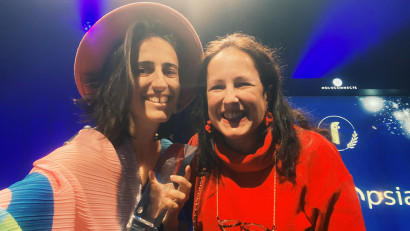
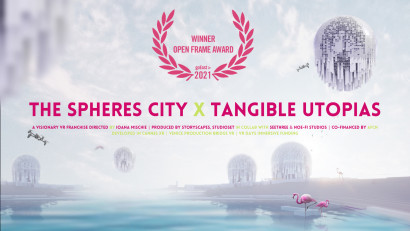
Ioana Mischie, creator of acclaimed immersive franchises including Tangible Utopias and Human Violins – Prelude, the first Romanian immersive experience selected for Cannes Immersive, moderated the collective conversation as Artistic Director of FUTURE FRAMES Festival. An advocate for developing a distinctive narrative grammar for immersive worlds and expanding their impact on society, the artist and futurist steered the conversation beyond individual creative processes toward the collective, the systemic transformation of immersive art for the long-term.
Together, the visionary creators offered a compelling glimpse into the future of immersive cinema, positioning Bucharest as an emerging meeting point for international artistic innovation, creative experimentation, and new forms of audience engagement.
During the FUTURE FRAMES panel, the immersive creators were invited to propose concrete solutions for the long-term evolution and sustainability of the immersive industry. The conversation explored urgent questions surrounding the preservation of digital works, the relationship between virtual and physical worlds, sustainable funding models, and new frameworks for evaluating artistic innovation.
Some of the key pillars of the discussion addressed by Ioana Mischie were:
How can we support the continuity of immersive creations?
Sarah Ticho highlighted the importance of “Longevity Grants” — funding mechanisms designed to sustain immersive projects beyond their initial production cycles that are often insufficient. While many creative works receive a single production grant, their development, technological adaptation, distribution, and long-term maintenance can extend over several years. Without continued support, even groundbreaking projects risk disappearing, while their creators and production companies face significant financial vulnerability. Longevity grants could provide a vital framework for ensuring that artistic innovation is not only initiated but also sustained.
“A recurring proposal among artists, producers, and distributors is to establish longer-term funding schemes that cover at least the maintenance costs of immersive experiences. Such mechanisms are essential for expanding the industry not only quantitatively, but also qualitatively. In this regard, Romania could benefit immensely from preserving immersive stories and their lasting cultural heritage.” adds Ioana Mischie.
How can we expand the impact of immersive works?
Ilan Cohen and Marion Burger emphasized the importance of “The Follow-Up Process” as a solid pillar of every immersive work — the development of mechanisms to research, document, and expand the long-term impact of immersive experiences. Beyond successful world premieres, immersive works could benefit from systematic audience research, impact assessments, and continued engagement with the communities they reach. Understanding how a work is experienced, by whom, and with what lasting effects could transform each project into a valuable learning process, informing and enriching future artistic practices.
How can we celebrate both artistic experimentation and audience accessibility?
Ugo Arsac advocated for greater diversity in funding categories, highlighting the challenges of evaluating highly experimental artworks and commercially oriented productions within the same funding framework. A single evaluation hierarchy risks overlooking their distinct contributions: while some projects pioneer artistic innovation, others expand audience engagement and accessibility. Both are essential to a thriving immersive ecosystem.
How can we preserve immersive worlds for future generations?
Antoine Boucherikha proposed as a provisory solution creating a virtual archive such as “Museum of Alternate Realities”, envisioned as a digital archive dedicated to preserving virtual worlds and immersive creations. The initiative raises a fundamental question: how can we ensure that interactive artworks, often dependent on rapidly evolving technologies, remain accessible, discoverable, and culturally relevant over time?
In parallel, however, there is an increased need to archive digital worlds in real-world museums, galleries and exhibits.
How can Europe develop and retain its own immersive intellectual property?
While global audiovisual markets have long been shaped by major American entertainment franchises, immersive media presents an opportunity for Europe to develop distinctive original intellectual property. However, emerging immersive formats still face challenges in financing, rights management, distribution, and long-term exploitation.
Mariano Leotta highlighted the difficulties of developing and sustaining European immersive IP within an industry ecosystem whose existing structures are not yet fully adapted to these emerging formats.
“Original creative IP lies at the very heart of immersive innovation and deserves to become a strategic priority at both national and European levels. Yet original worlds are among the hardest to create, sustain, and preserve, demanding years of continuous commitment and investment. By nurturing them, Europe strengthens its vital cultural connective tissue, paving the way for an authentic creative renaissance in an era of technological abundance,” emphasized Ioana Mischie.
How to create cross-disciplinary collaborations that last?
Building on Ilan Cohen’s reflections on immersive research, Andrea Gaggioli advocated for establishing long-term interdisciplinary teams of artists and researchers from the earliest stages of project development.
The overarching proposals emphasized a fundamental shift: from financing isolated productions to building a lasting ecosystem in which immersive works can evolve, circulate, be preserved, and generate knowledge long after their premieres.
With its inaugural edition, FUTURE FRAMES contributed to positioning Romania within the international conversation on immersive cinema, while opening a dialogue between artists, researchers, cultural institutions, and future industry stakeholders.
Co-founded by Ana Vlad and Teodora Doboș, FUTURE FRAMES FESTIVAL explores the profound intersections of storytelling, psychology, and immersive cinema. The festival is organized by Asociația Tinerilor Cineaști, co-financed by the Administration of the National Cultural Fund (AFCN), and supported by a multitude of partners including UNATC.