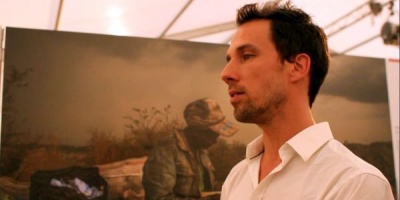
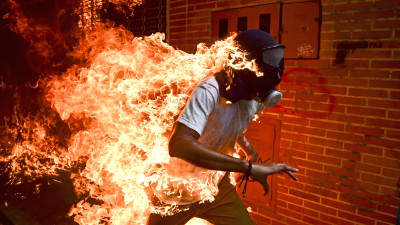
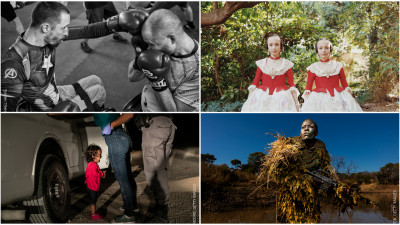
Beauty is not a form of escape, and it can still be found everywhere, even in our world marked by war, inequality and abuse. That means humanity is still standing, believes photographer Florian Bachmeier.
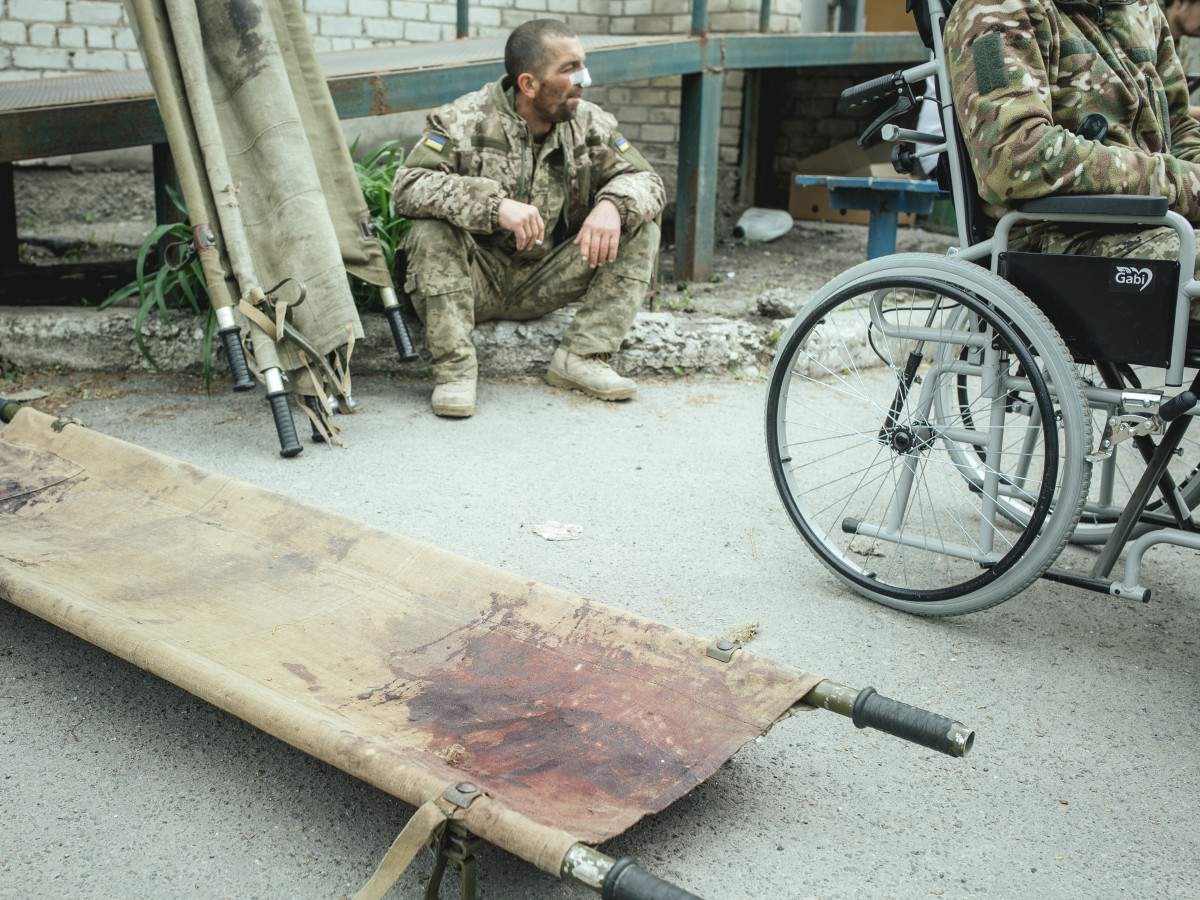
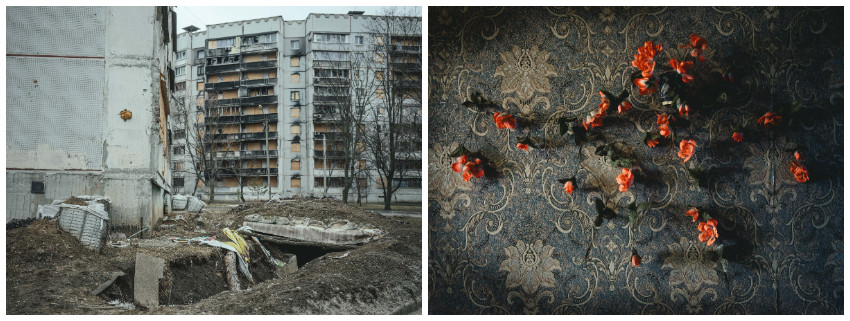
Florian comes from a small town in Bavaria, and he took his first photos during a trip to Romania. At World Press Photo 2025, he presented Beyond the Trenches, a project about life on the Ukrainian front lines, about lives lived on the edge and children born into a world of violence.
„Photography can collapse distance. One frame, if honest, can create a kind of silent empathy — not pity, not spectacle, but a shared recognition of being human. That intimacy, that pause in the flood of information, is what makes photography powerful”, says Florian.
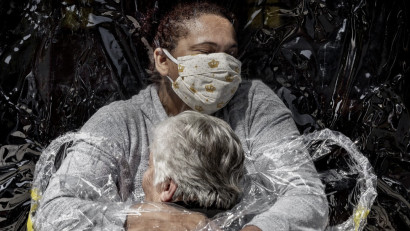
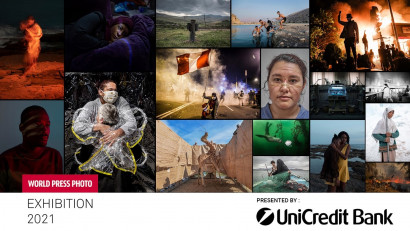
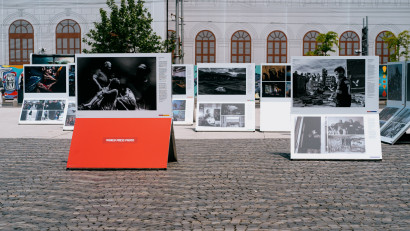
For one month, the works of the World Press Photo Contest winners were on display in Bucharest’s University Square. Florian Bachmeier is one of them. The exhibition closes on June 2.
Important chapters in your career
I’m from a small town in Bavaria, in southern Germany, surrounded by mountains, fields, and a certain kind of silence that, in retrospect, gave me a lot of room to observe the world early on. After school I went to Spain, where I studies photography and where I tried to make a living out of it, at first without too much success. Back in Germany I studied history in Munich, which deeply shaped the way I understand conflict, power, identity and memory — and ultimately, storytelling.
The most important chapters in my life have often been the quietest ones, for exampling the time I worked on Tuberculosis in Moldova, a really sad and often solitary story. Working in Ukraine for over a decade, for instance, didn't just shape me as a photographer — it changed me as a person. The intimacy of long-term documentation taught me the value of staying, of listening, of resisting the urge to simplify what is complicated. Another transformative moment was being part of the World Press Photo Awards this year. It brought a sense of recognition, but more importantly, a profound sense of community and responsibility.
Your interest in photography
It started quite intuitively. I was always drawn to stillness — to moments that said more by not shouting. And somehow, I did grow up around cameras and photography as an art form, working as a photo assistant during school time. During my years studying photography in Spain, I started to travel, and I carried a camera almost instinctively. I felt the urge to document not just what I saw, but what I sensed beneath the surface of places. That’s when I realized photography was not just about images, but about presence - and, even more important, about absence.
First photo camera. First photos
My first camera was an analog Minolta reflex camera that I bought second-hand. I remember taking some of my first photographs in Romania during a trip through the country — images of lives quietly being rebuilt, of the weight that still hung in the air. An attempt to connect without fully understanding yet — was the beginning of something essential.
Key defining moments in your development as a photograph
I learned from my teachers at the art school in Spain, David Artigas, and from the late Koldo Chamorro who was somehow a mentor for me. Then mainly by doing. By failing. By returning. And then, there were books, long walks, and conversations with people whose stories were bigger than mine. Covering Ukraine since 2014 was also foundational. Staying with the country through its various stages of trauma, resistance, and transformation taught me to slow down, to build trust, and to focus.
How has the perspective on photography changed for you
Earlier in my career, I maybe was drawn more towards immediacy. Now maybe I’m drawn also to what is behind, the traces, the resilience. I’ve become interested in the psychological landscape, in memory, in silence, inherited trauma. Photography, for me, is more about what isn’t visible than what is.
How the context of the last 5 years changed the way you do your work
The last five years — the pandemic, the return of full-scale war to Europe, the erosion of democratic norms — have sharpened everything. There’s less room for complacency now. I feel a great responsibility to tell stories slowly, deeply, and ethically.
What’s important to me now is to document the fragility of things we once took for granted — home, truth, childhood. I want to photograph not only what is happening, but what might be lost.
The mission of a photojournalist, especially during times when democracy seems fragile
I believe the mission of a photojournalist is to restore complexity where it’s being erased. In a time when narratives are being weaponized and truths distorted, our task is to insist on nuance. To slow the gaze. To remind people that there is always more beneath the surface. We are not just witnesses, we are also interpreters. Our responsibility is not only to show the world, but to care for how it is seen.
The essence of photography that has the power to move and to encourage change
Photography can collapse distance. One frame, if honest, can create a kind of silent empathy — not pity, not spectacle, but a shared recognition of being human. That intimacy, that pause in the flood of information, is what makes photography powerful.
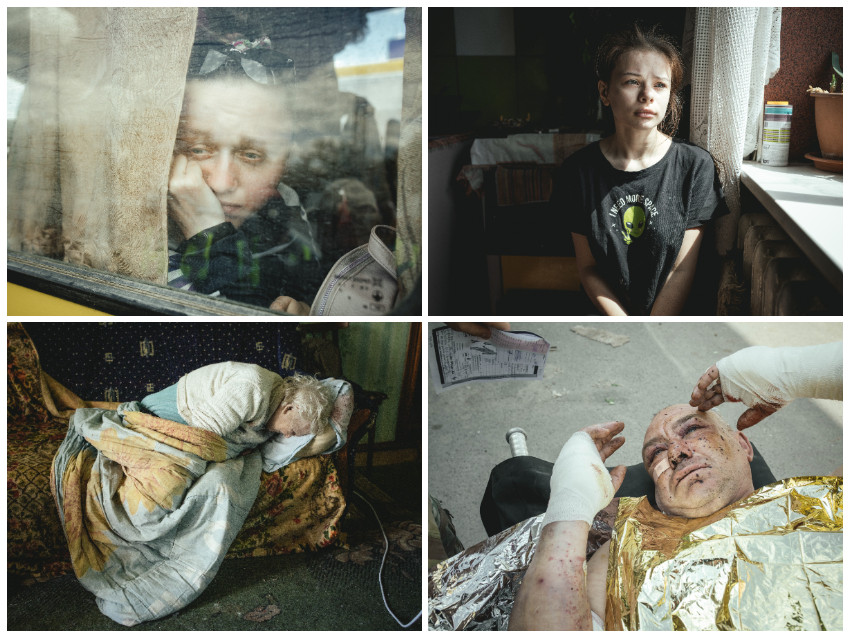
„Beyond the Trenches” - the project that you presented in WPP
The project I presented is not only about Ukrainian children who have known nothing but war, it is about life on the frontline, on the edge in general. But children who were born into a world shaped by violence, displacement, and uncertainty is one of the most cruel aspects of that circumstance. And yet, what struck me most was not only their trauma, but also sometimes their strength. Their imagination… I spent, when possible, time with them and their families, often, listening, waiting. It wasn’t only about taking the photograph — it was about creating space for the photo to exist.
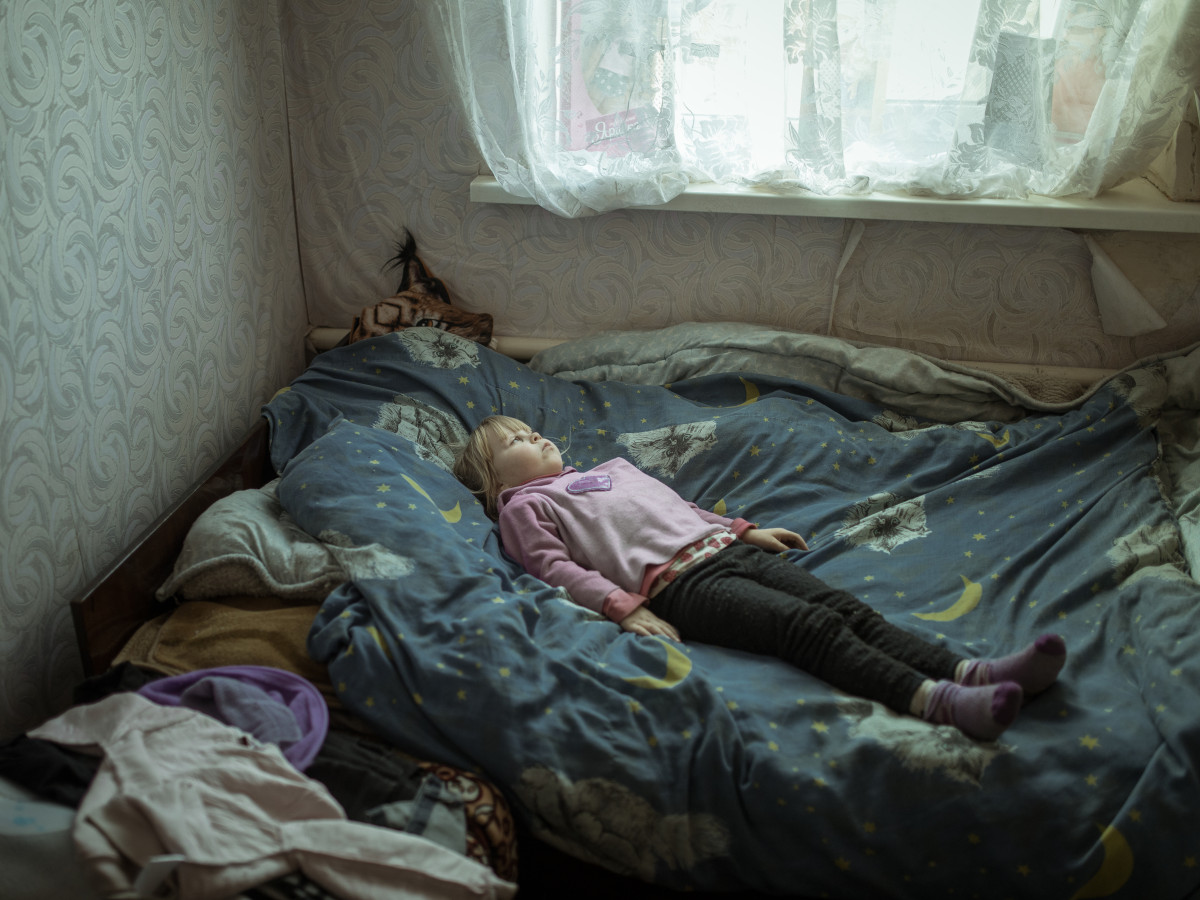
The story of Anhelina
Anhelina lives near the frontlines in eastern Ukraine. She knows the sound of artillery better than that of a school bell. She is six years old and lives with her grandmother in a small village, relatively close to the frontline, in the region southeast from Kharkiv. She is heavily traumatized and suffers from anxiety as a psychological disorder. Her mother is staying abroad as there is no work in the villages. Yet when I met her, she lied on her bed, like paralyzed.
The reactions of the public and jury to your work
The response was incredibly humbling. What moved me most were the private conversations — with jurors, with fellow photographers, with members of the public… That mattered. That’s what I had hoped for — to preserve their dignity and presence.
What surprised you about the photos selected at World Press Photo this year
What surprised me was how quiet many of the images were. Not less powerful — but more reflective. It felt like somehow a collective turn toward deeper engagement. I think these photos reveal our vulnerability, but also our capacity for care. That despite everything, we are still looking — still trying to understand each other.
Where do you look for beauty these days
Beauty isn’t an escape and it does not take long to find it almost everywhere you go — it’s proof that something human still survives, even in the harshest places.