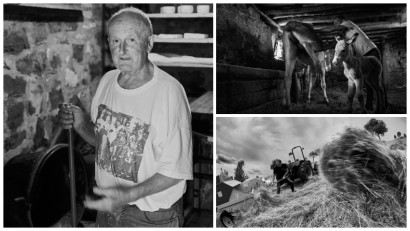

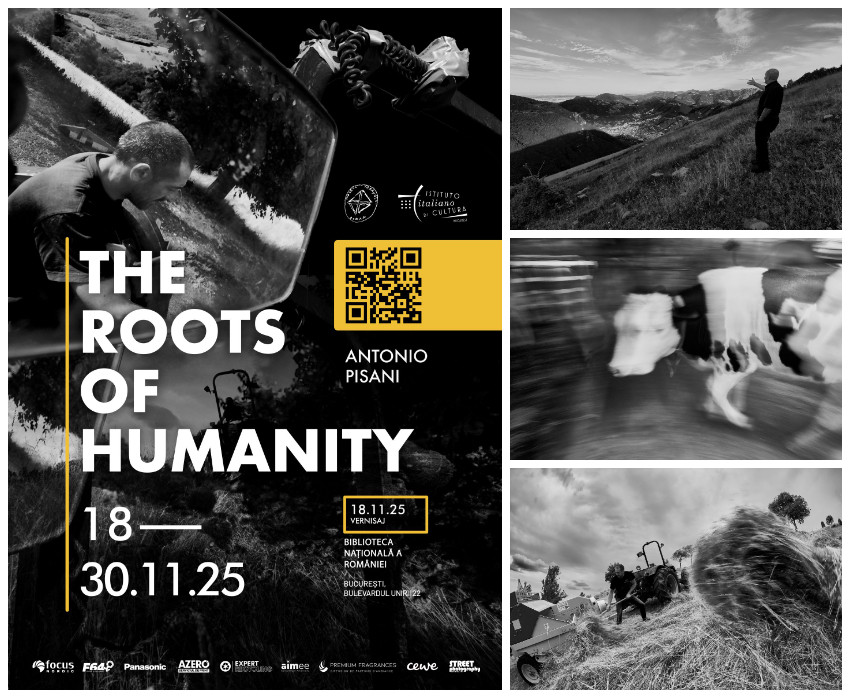
Antonio Pisani’s photo exposition, The Roots of Humanity, to be seen between 18 and 30 of November at The National Library, is not only about village exploration. Is more about today’s important quests on how to better preserve cultural traditions in a fast paced world. How can we be more human and present in a never ending scroll & swipe? Pisani proposes to slow down, live in the moment and let the time have its own rhythm.
"The true work wasn’t only behind the camera — it was in listening, learning, and watching the slow erosion of something deeply human. Starting the project in the Alps was symbolic — it’s where my own roots lie, and where humanity’s roots remain visible beneath the layers of modernity", says Antonio.
We asked Pisani how can we face the river of imagery in which we seem to sometimes drown. He proposes to just slow down and treat every image as a complete statement, that is his secret when he shoots. The flood of images isn’t the issue — emptiness is. How can we create more meaning in stead of noise. Sit down, relax, just read and watch.
Your early beginnings
Photography was part of my childhood. I was a toddler when I first held a camera, and by nine, I already had two film cameras I used constantly — thereafter many other cameras and lenses followed. It felt like a way to understand the world rather than just observe it. My father, a professional photographer in the ’90s, helped shape my path later in my teens through countless discussions about philosophy, light, ideas, and both theoretical and technical knowledge. My mentor, Yoshi Imamura (1945–2022), changed everything — he taught me that seeing is an act of being, and that awareness comes before the image. He once built me a handmade pinhole camera body cap, a reminder that simplicity often reveals more than control. That mindset stayed with me: photography as presence, and as a means to reveal awareness beneath the surface.
What has changed since you started
My work has evolved naturally with time. I never followed a fixed style — I adapt to the subject and the feeling. Sometimes that means textured, grainy images; other times, clear and striking frames. Grain for me isn’t imperfection; it’s atmosphere — a tactile layer of emotion. What changed most is my sense of time. I photograph contemplatively, following my own pace, letting things unfold instead of chasing them. Photography became less about production and more about reflection — about witnessing what’s in front of me without holding on to it.
The Roots of Humanity project
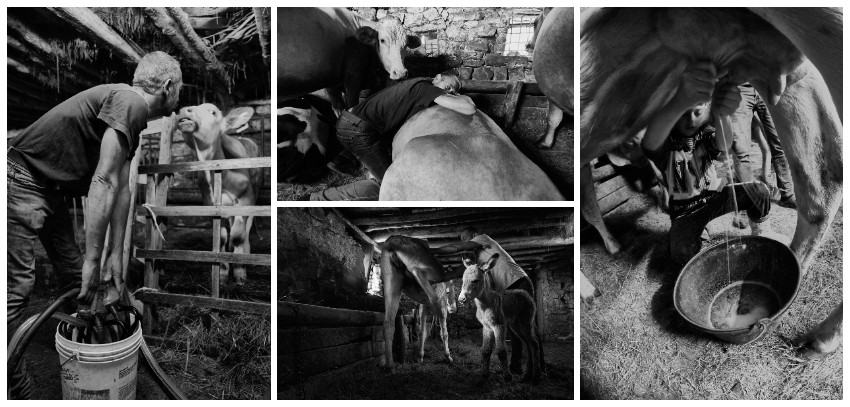
The Roots of Humanity has been developing for over a decade. The first chapter began in the Alps, not far from my native city, where traditions and crafts are quietly disappearing. I’ve known some of the farmers since I was a child — I used to visit them with my family, buying fresh milk at the sunset, cheese, and cured meats. Over time, those visits turned into long conversations about their lives, their work, and how the world around them was changing.
The idea for The Roots of Humanity emerged from a sudden insight a Eureka moment, as usually happens in my case, potentially sparked by witnessing their perseverance and gradual fading into silence. I returned often, staying for days across different years, documenting their rhythm and resilience. The true work wasn’t only behind the camera — it was in listening, learning, and watching the slow erosion of something deeply human. Starting the project in the Alps was symbolic — it’s where my own roots lie, and where humanity’s roots remain visible beneath the layers of modernity. The project will continue to grow, evolving beyond this initial setting and involving a participative audience. That can contribute to the mission.
What revelations did you have about culture, traditions, and roots?
Traditions survive only when practiced, not displayed. Culture exists in daily gestures — in repetition, in transmission, in doing things with care. The people I met taught me that simplicity carries immense dignity. Preservation isn’t nostalgia; it’s participation. The immersive, multi-sensory exhibition reflects this — blending visual, acoustic, olfactory, and tactile elements so viewers can feel life in the mountains in an alternative, holistic way. To preserve these roots, we need to reconnect with them consciously, valuing culture and craft not as folklore but as living wisdom. What we need now is a renewed humanism — one that unites culture, nature, and consciousness into a new renaissance. How? By taking deliberate, synergic actions that elevate and support human values and traditions, no matter the challenges we are facing.
Why did you choose black and white for the series
Black and white represents balance and defines the way I shoot exclusively — it goes far beyond a technical or stylistic choice; it is the yin and yang of photography. It’s minimalism applied to light, revealing essence through restraint. It mirrors the Zen principles passed down by Yoshi Imamura: simplicity, presence, and emptiness as form. Monochrome turns light into emotion and silence into structure. It’s not about removing colour; it’s about letting meaning emerge.
Challenges
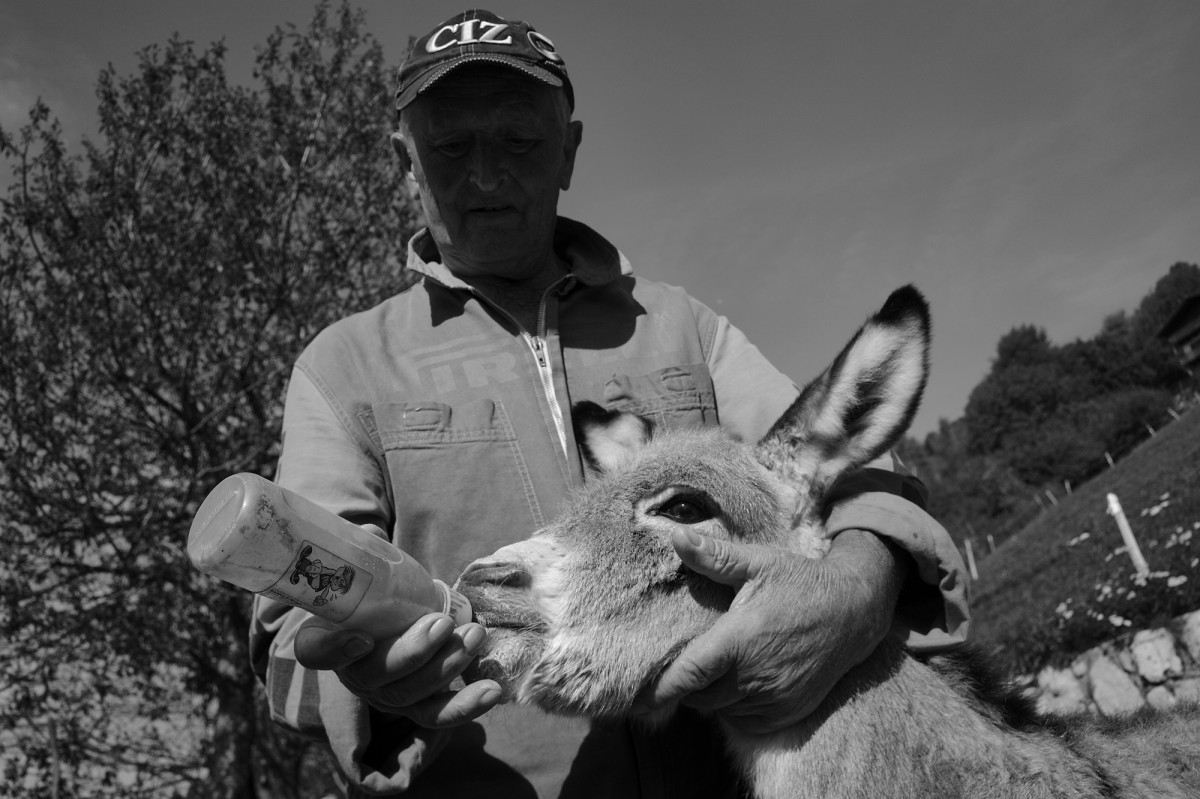
There was no physical danger during this project, but the emotional intensity was profound. The family I photographed, among the other subjects, faced significant loss — the matriarch was terminally ill during the reportage, and lately the patriarch became dramatically unwell. Those moments demanded honesty and care. Connection came through time and sincerity, not persuasion. I shared their silence, their pace, their way of being. Photography, in those moments, was empathy — a way to honor what was happening, with dignity.
How do you deal with the daily avalanche of images
By slowing down. I shoot with precision, edit deliberately, and treat every image as a complete statement. The flood of images isn’t the issue — emptiness is. Photography should create meaning, not add to the noise. Working at a human pace is my way of protecting that integrity.
The AI revolution
AI and robotics can serve us if used consciously. They shouldn’t exist to scale endlessly or satisfy egotistical ambitions, but to preserve and sustain cultures slowly disappearing under a diffuse numbness of collective awareness. Used wisely, AI and robotics could help protect traditions, record culture, and maintain balance with nature. What matters is intention. Machines can process, but they cannot feel. Our task is to keep human sensitivity alive — to use technology not for speed, but for depth and preservation.
What advice would you give to a young photographer starting out
Learn to see before you shoot. Be curious, travel, listen, and stay present. Don’t chase visibility; aim for understanding. Style is a product — an artistic voice comes naturally when intent matures. Photography is not about taking; it’s about perceiving and giving. Let your gut guide your eye.
What do you know about Romanian photography
Romanian photography holds authenticity and quiet strength. I admire Iosif Berman's work — an avant-garde figure whose incisiveness, determination, and truth resonate deeply with me. His work merged the challenges of the 20th century with poetic realism that reflected both struggle and grace.
Where do you think photography is heading?
Photography is moving from consumption to reflection. As AI-generated imagery floods our screens, authenticity will become rare and valuable. The future belongs to those who create work that moves people’s consciousness. Technology will change, but light won’t. Photography will always be about presence — about transcending the human condition and embracing the gift of letting go.