
Ever wondered if what you’re doing right now for 5 days a week is really you? Or is it just a construct, planned before you chose this path? Adam Thomas, coach, advisor, and founder of Evenly Distributed, comes with a proposition: to stop for a moment and analyze yourself. Meditate more and be more curious about your true potential.
"The storyteller's job is to hold open complexity, to create space for nuance, contradictions, and the space for two things to be simultaneously true", says Adam.
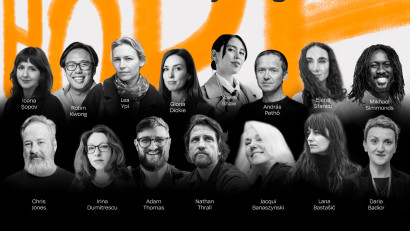
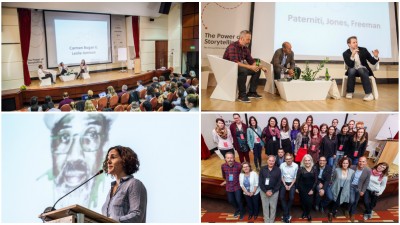
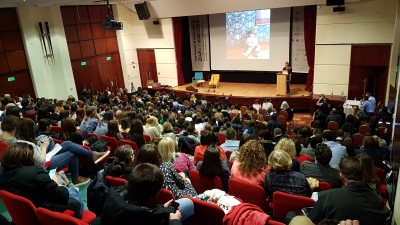
Adam works with leaders, entrepreneurs and creatives in nonprofits and philanthropy who are trying to change things. He recently joined The Power of Storytelling panel, an event that took place in Bucharest at the end of March. We talked to him about stories in the AI era, multipotential people or human nature in a speed race against technology.
What are the things that define you
Curiosity is the thing that connects everything I do: coaching, advisory work, fundraising, storytelling, content creation, organisational design. But I'm less interested in curiosity as a personality trait and more interested in how to develop as a practice, both as people and organisations. What I keep coming back to, across every area of my life, is how to deliberately design curiosity in your everyday life and work.
The tribe of storytellers
The responsibility of storytellers is to resist the pressure toward simplicity. Our algorithms and politicians want a clear narrative arc, an easy fix, a shareable moment. The storyteller's job is to hold open complexity, to create space for nuance, contradictions, and the space for two things to be simultaneously true.
Storytelling in the age of AI
Both the floor and ceiling have risen. Semi-decent storytelling is now infinite and free (if we don’t consider energy consumption, which we should) through ChatGPT or Claude. AI turns poor writing into adequate writing (just look at LinkedIn, where the volume of “thought leadership” from unqualified people is exhausting).
But in turn, I think that makes outstanding writing stand out. Writing that is genuinely insightful, legitimately weird, borne of unique experience…those are the pieces that can still surprise or challenge us.
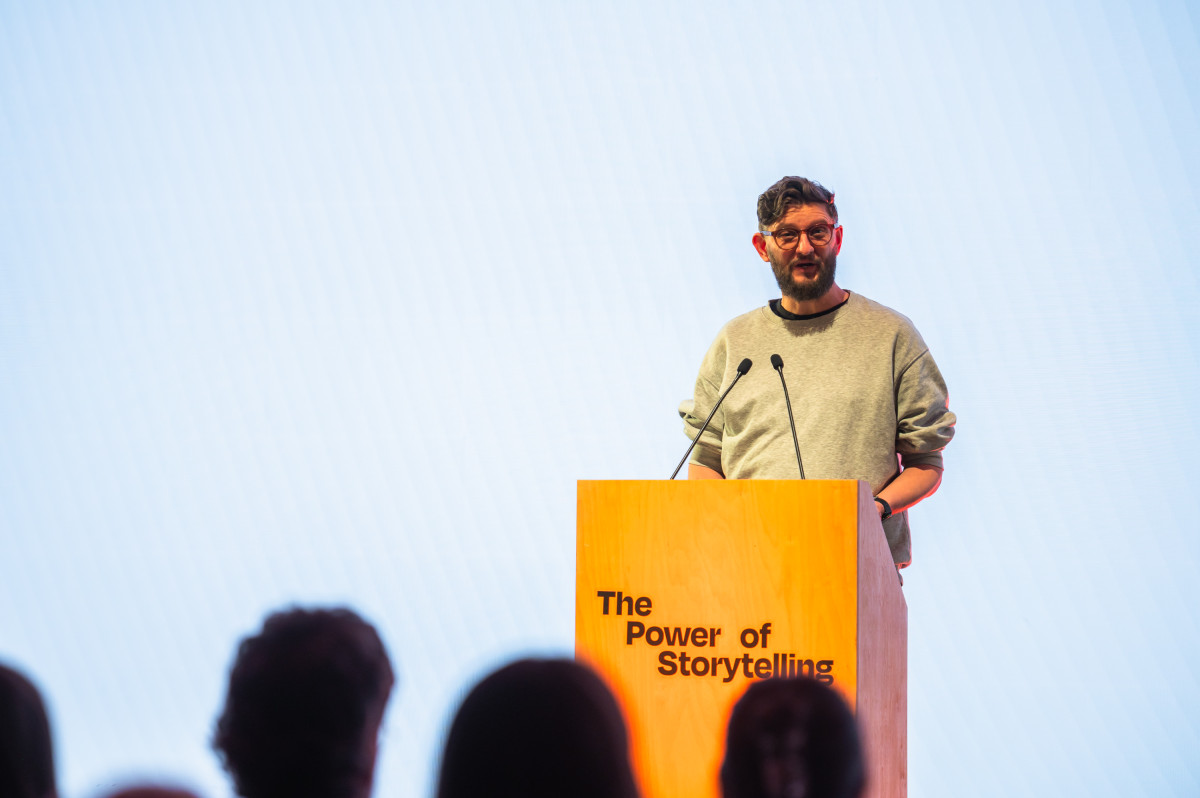
Photo credit: KOMITI
What has stayed exactly the same in human nature, despite the radical shifts in technology?
We reach for narrative because it helps us understand and it helps us share. That's not new. What's new is the volume of chaos and information we're trying to narrativise and the speed at which we're expected to do it.
One structure you think is fundamentally broken
The structure that's most broken - in nonprofits especially - is the one that treats strategy as a luxury - as something you do when you have time (which means of course you never do it).
We've built organisations (and our lives!) around execution - targets, funder expectations, impact. Those things matter, but we get so focused on proving we’re moving, we stop asking whether we’re headed in the right direction.
The organisations and people I've seen navigate genuine complexity well protect thinking time. I really believe this is something anyone can learn; the barrier isn't ability, it’s permission to stop doing stuff long enough to ask whether you're still doing the right things.
(There’s this quote I love: The Buddha was asked how he found time to meditate with everything he had to do. He said: "I meditate for one hour every day. Except when I am very busy. Then I meditate for three.”)
The biggest misconception people have about being multipotential
Multipotential people have a genuine range of interests and abilities that resist easy categorisation - they don’t fit into one box. The misconception is that this range is a liability, when actually the diversity of interests is frequently the asset. It’s the thing that lets you make connections across domains that specialists miss, and that makes you useful in complex uncertain environments.
Have you personally struggled with committing to one path?
Yes, my career and life has been nonlinear, for sure. I’ve been a nonprofit director, chief product officer at a tech start-up, worked for a big news corporation, produced live events, managed bars, taught autistic adults, flipped shoes on eBay…
Emily Wapnick's book, How to Be Everything, gave me a language for this multipassionate approach and a set of archetypes through which I better understood my life and my very, very scattered career. It helped me understand that this constant switching wasn’t a weakness, but a potential superpower.
A pattern you see repeatedly in people who feel stuck
People who feel stuck are almost always waiting for external validation to move, waiting for someone to tell them it's okay to change direction, try the thing, or leave the role. The stuckness looks like indecision but it's actually a permission problem. And the permission they're waiting for is never going to come from the outside…
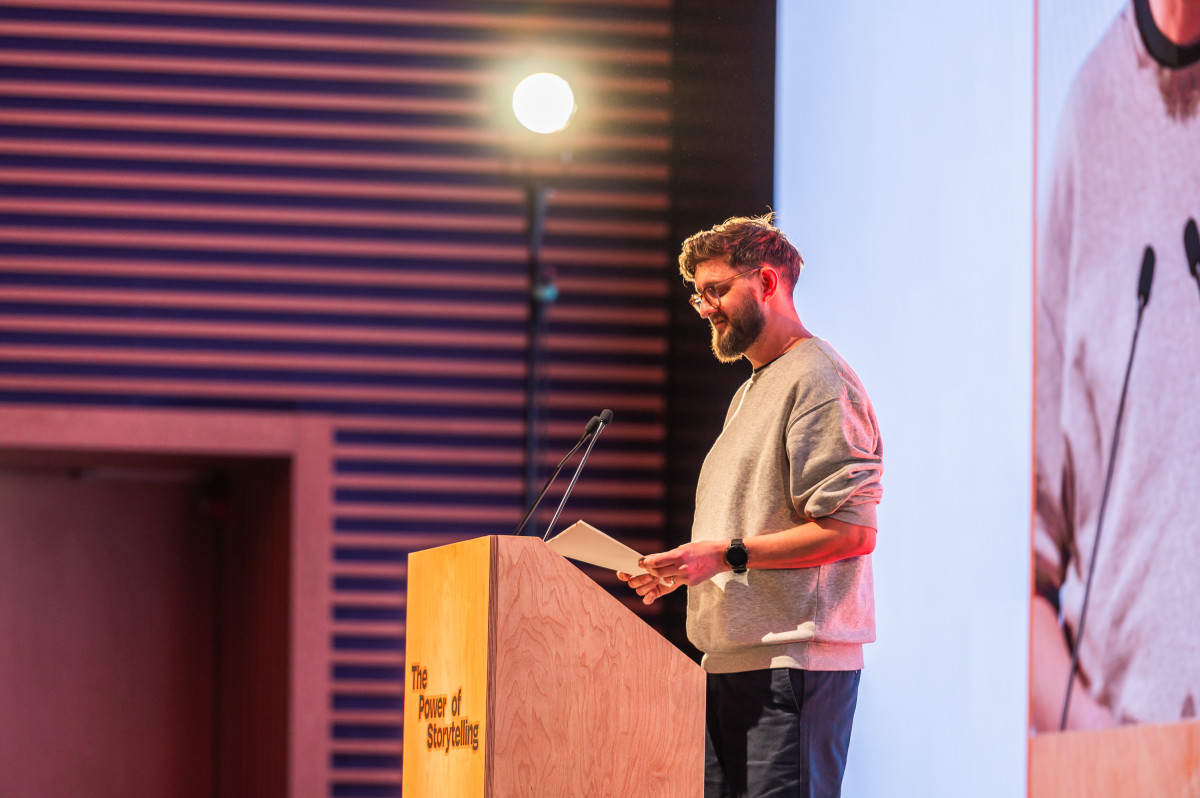
Photo credit: KOMITI
Something you wish more people questioned about their careers
The story they're living probably isn't theirs. It was written before they were old enough to have a say by parents, by class, by culture, by whatever version of success was modelled to them growing up. Most people never stop to ask whether they actually want the thing they've been working toward. And if you are afforded that moment where you can stop, I do think it's incumbent on you to make the most of it. That doesn’t have to be a radical change, it can start with tiny changes that compound over time.
The relation between stories & music
I mostly make instrumental music - no vocals, no lyrics - and I like creating spaces where people can lose themselves a little, where the music doesn't tell you what to feel. Someone once described it as a soundtrack to a film that doesn't yet exist, which means the listener gets to write the script, to tell their own story I suppose. I love tightly-crafted stories, but I also like music and art that create spaces for imagination and interpretation.
The world’s stories in 2026
I'm not sure I have a good overview of this right now (and I'm not sure anyone does, honestly). I've become increasingly overwhelmed by the world's stories and retreated somewhat. My news consumption has reduced dramatically. I'm still concerned about Ukraine, about the Middle East, about the direction of things globally. But I find myself paying much more attention to what's happening locally in my community in rural Germany, where information is actually useful to me, where I can do something with it (beyond just worrying!).
What kinds of stories does the world need right now
Unmediated ones.
If hope is a choice, what kind of stories help us make that choice?
Hope is a choice, yes. But, more concretely, I think hope lies in action. So the stories we need are the ones that help us do something.