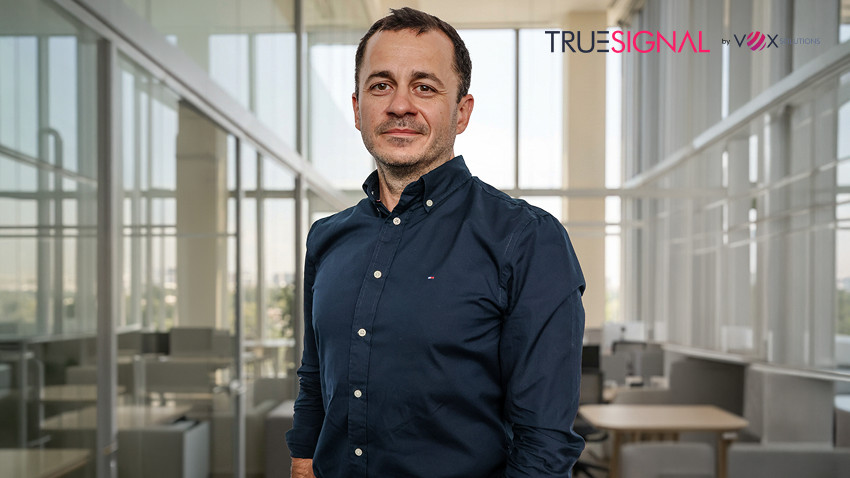
Georgi Nenov: This is the most extraordinary era a human being has ever lived in, and it is leaving a great many people behind

Georgi Nenov: This is the most extraordinary era a human being has ever lived in, and it is leaving a great many people behind

We’re told that we’ve lost our patience. That our attention spans are now measured in seconds, that everything needs to be shorter, faster, and easier to consume. After producing more than 500 podcast episodes, Georgi Nenov has come to believe the opposite. One of his most-watched conversations runs for more than three hours. Georgi is the creator of The Superhuman with Georgi Nenov, one of Bulgaria’s best-known podcasts. Through his foundation, he has spoken to more than 9,000 young people across 51 cities, towns, and villages, and more recently, he became the co-founder of an AI startup.

"Attention is easy to buy and almost impossible to keep. The only thing worth converting it into is a community: people who would continue your work in their very own way", says Georgi. 

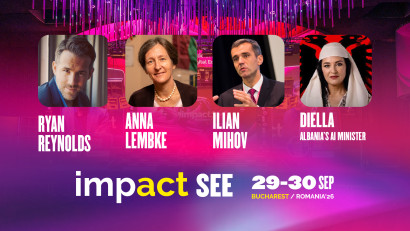
This September, Georgi Nenov is coming to Impact SEE (September 29–30, Bucharest), Southeast Europe’s largest economic event, bringing together business and political leaders, experts, innovators, and influential voices from around the world. Taking the stage will be actor and entrepreneur Ryan Reynolds, Dr. Anna Lembke, author of Dopamine Nation, Carlos Mulas-Granados (IMF) or Richard K. LaTulip.
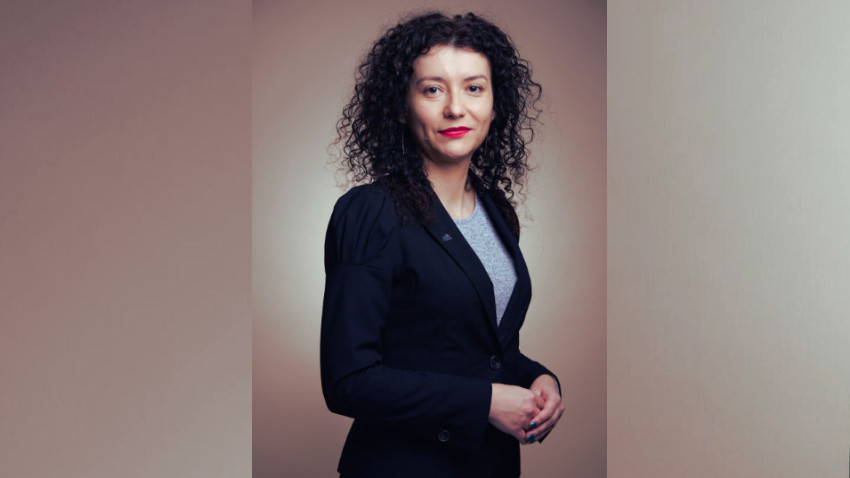
We asked Georgi Nenov what hundreds of conversations have taught him about people — and what remains when you look beyond the numbers, views, and applause.


The world today

As Galadriel said in The Lord of the Rings: „The world is changed. I feel it in the water. I feel it in the earth. I smell it in the air.” I personally feel it in the tempo. We are living faster than any generation before us, and most of us never agreed to it. People are getting exhausted by this unbearable speed, and some of them are already chosing to slow down intentionally through long conversations, offline rooms, and small communities. Places where nobody is optimising for their click or engagement. 

I have seen this first hand through my own audience's counter-reaction. After recording and airing more than 500 episodes, the ones people actually spend most time with are not the short ones. They are the 3+ hour long conversations, like my episode with Prof. Martin Vechev, the man behind Bulgaria's INSAIT, which runs 3:11:14. Attention didn't get shorter. It just got more selective.


In a history book from the future, what title would you give to the era we're living

"Second Gear".

It feels as though this AI leap our civilisation shifted up a gear and dumped the clutch. Technology now improves itself, some people are hanging tight and the rest of humanity are running after the car barefoot, trying to reach the rear bumper.


How do you personally adapt to this period of constant change 

I go back to my nine-year-old self: playful, curious, willing to look stupid in public. Children adapt easily because they have no reputation to protect. Somewhere in the accumulation of experience, we adults trade adaptability for rigidity. We stop learning and start defending what we already know.

In practice, that means deliberately putting myself on the beginner's side of the room. I started Brazilian jiu-jitsu 7.5 years ago, and last year I co-founded an AI startup with two eighteen-year-olds.

This is the most extraordinary era a human being has ever lived in, and it is leaving a great many people behind. Both are true. Choosing one is how you end up either panicking or sleepwalking. But actually the reality lies somewhere between these two facts.


The defining moments that shaped your journey 

Two moments clearly stand out.

The first one is when I started a hobby-podcast before I was ready, with an iPad, a helping hand and lots of enthusiasm. I was handling aviation logistics at the time, and the podcast was a shot in the dark, far outside anything I was experienced doing. The first episode's "studio" was my guest's living room with a baby crawling under the table. It is still the most important episode I have ever recorded, for one reason. I love this very simple yet profound Mark Twain quote: "The secret of getting ahead is getting started."

The second one came three episodes later, when I understood that this wasn't just a hobby-project but my life's calling. I get to sit with successful people from every walk of life on a weekly basis, and ask the questions I would want to ask about their own context, the things that they managed to go through in order to achieve success.


What does "Superhuman" mean

The name came from a friend, and it was better than anything I had and it fit like a glove to my idea.

What does "superhuman" mean to me is a question that I get asked a lot. I truly believe that the only thing separating my guests from anyone reading this is self-efficacy: their internal belief that they can do the thing before they have any proof that they can. Not talent, not luck, not connections. No external factors. The willingness to act without evidence.

So "Superhuman" isn't a category of person. It's the version of you that moves before it feels ready. Just like I did 512 episodes ago. Haha. Almost every guest I've had has been ordinary in most respects and openly stated that he/she does not consider himself/herself as a "superhuman".


The biggest lessons you learned from the first episodes of the podcast

Two stand out:

1. **Iterate in public.** Record, publish, listen back, find mistakes, fix the mistakes, repeat. Preparation has a ceiling. Iteration doesn't.

2. **When you sit across from someone smarter or more successful than you, the instinct is to prove you belong in the room. Resist it.** The follow-up question is always worth more than the clever observation, and the guest can tell which one you are reaching for. Great listeners are great company, and they get better answers and new friends. 


How has your perspective on success and failure changed

More than I expected.

I went in looking for patterns of exceptional ability. What I found is that most origin stories are unremarkable. The difference doesn't show up at the start. It shows up in how people behave after something goes badly wrong. Raycho Raychev, the founder of EnduroSat, heard a huge number of investor rejections and simply kept going until he got the first "Yes".

The other shift: I stopped reading failure as important information about a person. People who never make mistakes are rarely attempting anything with an uncertain outcome, and almost nothing worth doing has a certain one.


The most important ingredient of a great podcast

This is easy - His Majesty "The Trust". Almost everything valuable in a conversation comes from the trust between the guest and the team behind the podcast, and the entire foundation of it is built before the recording starts.

In practice, I meet every guest over lunch or coffee first. 90% of my preparation happens there, but the preparation is the by-product. The real purpose is that by the time they walk into the studio, we already know each other. Then I remind them of the two things that work as a safety net: how the editing process works, and that they can stop and take a pause whenever they need one. A guest who knows exactly what will happen to their words will say things a guest who doesn't will never dare to speak out loud.

Inauthentic conversations are obvious. An audience can hear someone performing within the first two minutes, even if they couldn't tell you why.


How do you craft your questions

A difficult question can't be the purpose of a conversation. When it is, it feels bolted on, and the guest hears it coming from a mile away.

I build context first: 30 mins of genuine curiosity about how someone actually thinks. After that, the uncomfortable question isn't an ambush, it's simply the obvious next thing to ask. That's where the gold is found.

What I've learned about people: almost nobody refuses a hard question. They refuse a hard question from someone who hasn't earned it.


How do you think humans and AI will coexist

I'll answer as someone who builds with it rather than watches it. Bear in mind that last year I co-founded Fluent Frame, an AI video animation company.

The AI&Human partnership is real, and the most under-discussed part of it is access. A mentor who knows almost everything, one click away, available to kids both in the outskirts of Sofia & Bucharest who would otherwise have none. That is genuinely new in human history.

But I'd argue with the version of this answer I would have given two years ago. I assumed AI would clean the world of misinformation and lies. The first-order effect has been the opposite: it made producing convincing nonsense almost free, and the filters haven't caught up with the production line. That isn't an argument against the technology. It's a description of the actual work in front of us in order to make the partnership for the good of mankind.


How do you maintain a healthy balance in your relationship with technology

I have two principles.

The first is about attention, and it comes down to protecting the hours nobody is optimising for me: training regularly, reading books rather than feeds, spending time with my daughter & my partner, getting proper sleep. The pace I described earlier isn't weather. It's a choice, made a hundred times a day, and I would rather make it deliberately than have it made for me.

The second is about data, and it's subtractive. I don't put anything into an AI system that I wouldn't be comfortable seeing attributed to me in public. Not because I distrust the tools, but because I can't verify where the data ends up, and I don't build boundaries on hope.


The most important lesson about people that you've learned from building a community

People want to belong to something that reflects their values, and they want to do it alongside people like them. Seth Godin said it best: "People like us do things like this."

What building my own community taught me that I didn't expect is that the same audience supports the development of my podcast and the school lectures that I give across Bulgaria equally, even though almost none of them will ever sit in one.

Contribution turned out to be the mechanism, not the by-product. People don't join a community to receive something. They join because they need to find the right idea, place or project to put what they already wanted to pay forward.


What still has the power to surprise you about people

Two things keep surprising me, one in each direction.

The good one: real good-heartedness, someone stepping past nation, ethnicity, sexuality or religion to help a person who is different but in need. It surprises me and fills me with hope every time, which probably says more about my expectations than about people.

The other one: incuriosity. Not ignorance, incuriosity. Carrying every piece of knowledge in human history in your pocket and never once opening it to learn something new or to prove yourself wrong.


At Impact SEE. What separates people who genuinely create impact from those who simply attract attention

After 500+ conversations, the cleanest signal I've found is what a person reaches for when nobody asked them to prove anything.

People chasing attention quote followers, views, impressions. Numbers that only move upward, and that cost nothing to be wrong about.

People creating change tell you about this one person, by his or her name, and what happened to them a year later. Not the highlight reel. The specific case, including the ones where it didn't work out.

So it isn't purpose versus metrics. Everyone at this conference will talk about purpose, because purpose is free and unfalsifiable. The real question is whether the thing you're proud of is something you could have failed at.

The second signal is time. Attention is an event; impact is a maintenance schedule. I learned that the hard way: 5 years of driving across Bulgaria to speak in school halls, with no financial incentive whatsoever. I realised that the people who genuinely change something are usually still doing the boring version of it three years after everyone stopped clapping.

Attention is easy to buy and almost impossible to keep. The only thing worth converting it into is a community: people who would continue your work in their very own way.

Aboneaza-te la newsletterul IQads cu cele mai importante articole despre comunicare, marketing si alte domenii creative:
Info

Sectiune


Branded


Related