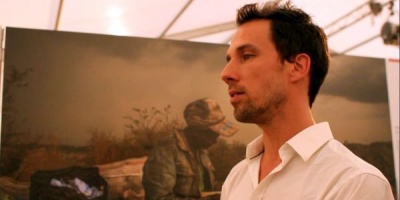

Photography can remind us of the things we still share. And that’s also what Roie Galitz is looking for: a way to translate the world and find common ground. For two decades, Galitz has been exploring and documenting our planet’s wildlife. His photographs have been presented in local and international exhibitions, featured in magazines including National Geographic and honored with international awards over the course of his career.
"The themes I return to again and again are fragility, adaptation, climate change, and the relationship between humans and the natural world. I am interested in places where beauty and danger exist together", says Roie.
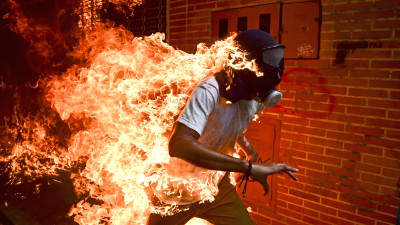
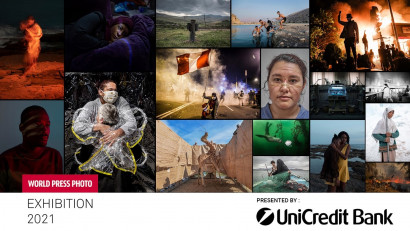
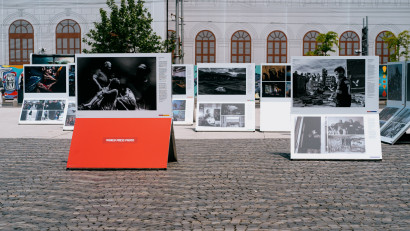
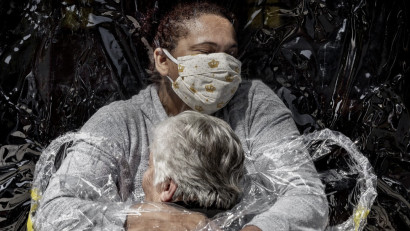
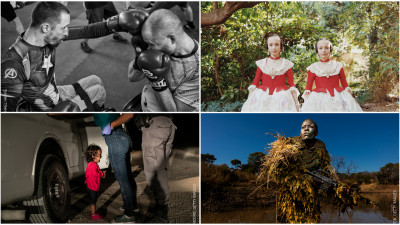
Roie Galitz is an award-winning wildlife photographer, entrepreneur and educator and his work has been selected for the annual World Press Photo exhibition. Until June 19, people can see selected and award-winning images from around the world in Piața Universității. The most powerful stories of the past year — about the excesses of power, the climate crisis, conflicts, but also about resilience, rebuilding, and the dignity of those who refuse to give in — are brought together in the selection for the 2026 edition, marking 71 years since the founding of World Press Photo.
We continue our conversation with Roie Galitz about the role of authenticity in photography, the ethical compass that makes him put the subject first, and a few pieces of advice for those just starting out in photography.
First contact with the world of photography
I think I always felt like a photographer, even before I had a camera. I had this instinct to look at the world in a certain way — to notice light, shapes, movement, small moments — but I did not yet have the tool to capture it.
When I got my first camera, it felt almost magical. Suddenly, I had a way to see the world differently, and more importantly, to share that point of view with other people. Photography gave me the ability to take a slice of time, capture it forever, and then share it with millions of people around the world. There is something very romantic in that idea — that a fraction of a second can become permanent.
In the beginning, I photographed anything and everything. Sports, macro, infrared, landscapes, silhouettes — everything that allowed me to show something the naked eye does not normally see. I was fascinated by the ability of photography to reveal hidden worlds: the small details, the invisible light, the dramatic shapes, the moments that pass too quickly.
That is how I started. Not with one specific subject, but with a deep curiosity and the feeling that photography was a way to translate how I see the world into something others could experience too.
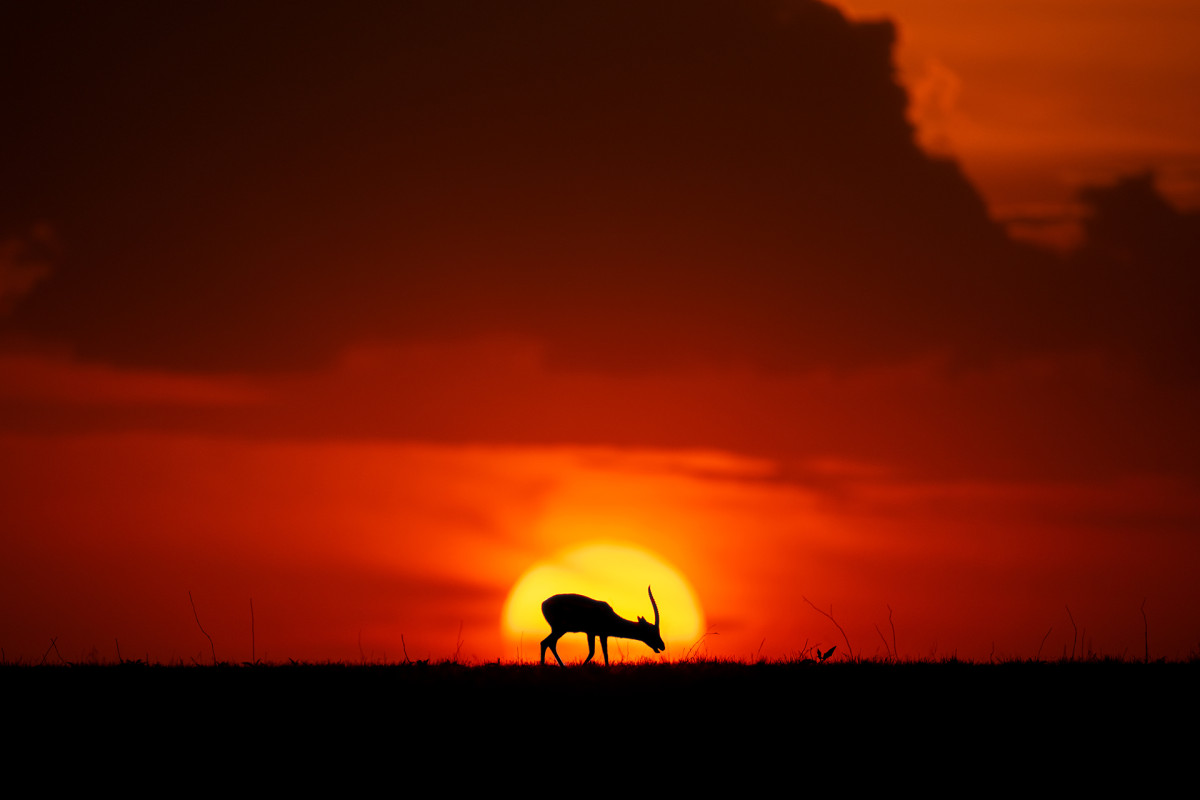
Photo credit: Roie Galitz
The defining steps in your career
The first defining step was actually my first job, working in a camera store. After I bought my first camera, I wanted to understand the industry from the inside — not only the creative side, but also the equipment, the clients, the business, and the way photography functions as a profession.
From there, I started photographing almost everything in a commercial sense: events, catalogues, products, and different kinds of commissioned work. That stage was very important because it taught me discipline. It taught me how to deliver, how to work under pressure, how to solve problems, and how to understand what clients need.
But the real breakthrough came when I started teaching photography. Teaching became another great passion of mine. I discovered that I loved not only taking pictures, but also helping other people see, understand, and express themselves through photography.
In 2007, I founded the Galitz School of Photography, which grew very rapidly. Over the years, more than 35,000 students graduated from the school. For me, that was a huge achievement, because it meant that photography was not only my personal journey — it became a way to influence a whole generation of photographers. Last year, after many years of growth and impact, I sold the school.
During the development of the school, I also created a photography magazine. That opened another important door, because it connected me with many photographers, artists, editors, and professionals from around the world. Interviewing photographers and engaging with their work expanded my own understanding of the medium.
Another major step was founding Phototeva, my photography travel company. Through Phototeva, we take people all over the world to photograph endangered animals, rare wildlife, and unique landscapes in some of the most remote regions on Earth. That connected my photography with exploration, education, and conservation.
Later in my career, I began participating more seriously in international photography competitions, winning awards, and presenting exhibitions. Those milestones helped bring my work to a wider audience.
The next natural step was becoming an ambassador for major photography and outdoor brands, including Nikon Europe, DJI, SanDisk, Gitzo, and Lowepro. These collaborations gave me a larger platform, but also a greater responsibility.
In parallel, I became more and more involved in the environmental side of photography, working with Greenpeace and other NGOs. Over time, photography became not only a profession for me, but a tool for impact — a way to speak about nature, endangered species, climate change, and the fragile places on our planet.
So there was not only one moment that set me on this path. It was a chain of steps: first learning the industry, then working commercially, then teaching, building a school, creating a magazine, leading photography expeditions, winning international recognition, and eventually using photography as a voice for the natural world.
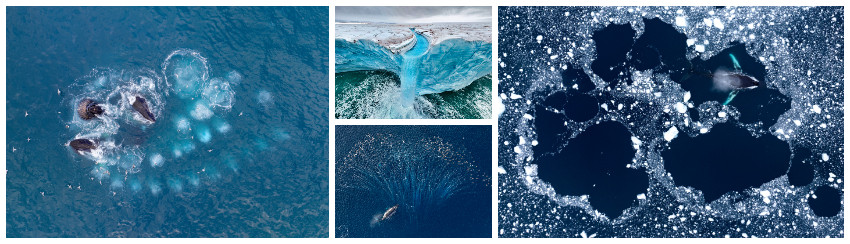
Photo credit: Roie Galitz
Your signature photography
I think my signature photography is very connected to a precise and technical approach. Even when I create images that are more artistic or fine-art oriented, there is always a strong technical foundation behind them. I care deeply about composition, light, angle, background, timing, and the way I operate the camera in the field.
For me, a photograph has to be clean. Even when I shoot wide-angle images with a lot of environment, I still try to keep the frame organized and visually clear. I am always looking for the right angle, the right background, the right separation between the subject and its surroundings, and the right moment when everything comes together.
I also try to create images that have a “wow” effect — photographs that show something people cannot normally see with the naked eye. It can be a rare behavior, an unusual perspective, a dramatic use of scale, a frozen moment, or a visual situation that only photography can reveal.
Over the years, my photography has changed mainly in its storytelling. In the beginning, I was very focused on creating technically strong and visually impressive images. Today, I still want the image to be powerful and beautiful, but I also want it to say something deeper. I look more for meaning, context, and emotional impact.
My compositions have also become cleaner with time. I try to remove distractions and leave only what is essential. The goal is to create an image that is technically strong, visually striking, and also carries a story.
What inspires you
Nature inspires me most — especially wild places that still feel bigger than us. I am inspired by the intelligence of animals, by their resilience, by the way they survive in conditions that seem impossible to us.
The themes I return to again and again are fragility, adaptation, climate change, and the relationship between humans and the natural world. I am interested in places where beauty and danger exist together.
The polar regions are central to my work because they are both visually magnificent and deeply vulnerable. They are not abstract symbols of climate change. They are real ecosystems, full of life, and they are changing rapidly.
Through photography, I try to create an emotional bridge. Data can explain what is happening, but images can make people care.
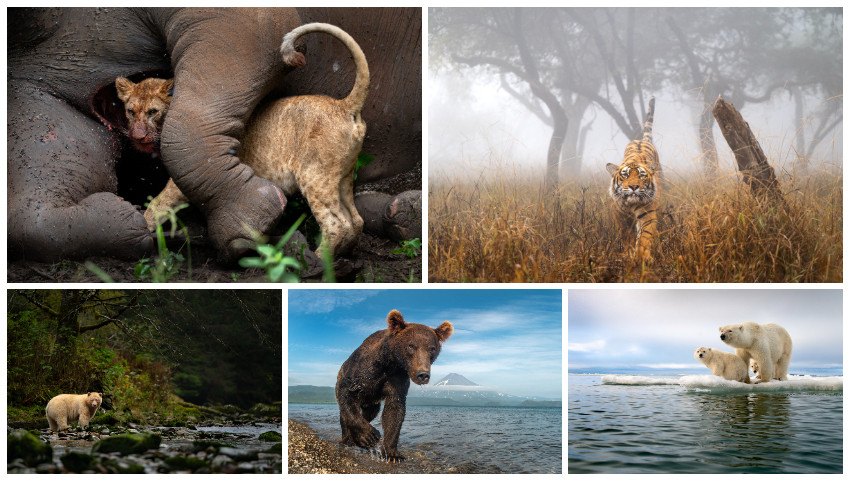
Photo credit: Roie Galitz
Experience & a change of perspective
Experience taught me patience. It taught me that wildlife photography is not only about the camera, the lens, or the settings. It is about understanding behavior, reading the landscape, predicting light, and knowing when not to move.
When I was younger, I wanted dramatic moments. With experience, I learned to appreciate quieter images too. Sometimes the strongest photograph is not the most spectacular one, but the one that feels honest and complete.
My perspective also changed in terms of responsibility. When you work in fragile environments, you understand that the image is never more important than the subject. The welfare of the animal and the integrity of the place must always come first.
Experience made me a better photographer, but also a more careful one.
What has photography taught you
Photography taught me that everything is connected. A polar bear on sea ice, a whale feeding in Antarctica, a forest, a city, a person — none of these exist separately from the larger system.
It also taught me humility. Nature does not perform for us. You can travel very far, prepare for months, carry the best equipment, and still come back with nothing if nature decides not to reveal itself. That is part of the lesson.
Regarding people and society, photography showed me how powerful visual communication is. People may disagree about politics, science, or ideology, but a powerful image can bypass many barriers. It can create an immediate emotional response.
I have seen people change their perspective because of one photograph. That is a huge privilege, and also a responsibility.
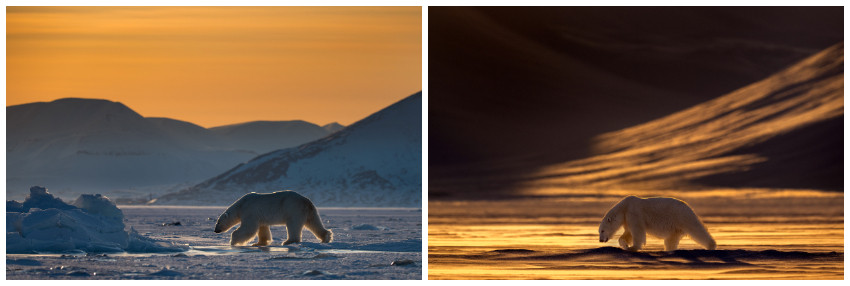
Photo credit: Roie Galitz
What makes a good photo
A good photograph is not only technically good. Sharpness, exposure, composition — these are important, but they are only the foundation.
A good photo makes you feel something. It holds your attention. It has tension, emotion, mystery, beauty, or meaning. It gives you a reason to keep looking.
For me, the strongest images usually have several layers. First, they attract you visually. Then they reveal something deeper: behavior, context, vulnerability, conflict, or a story.
A great wildlife photograph should respect the subject and say something larger than “this animal exists.” It should make us think about the world the animal lives in, and the world we are shaping around it.
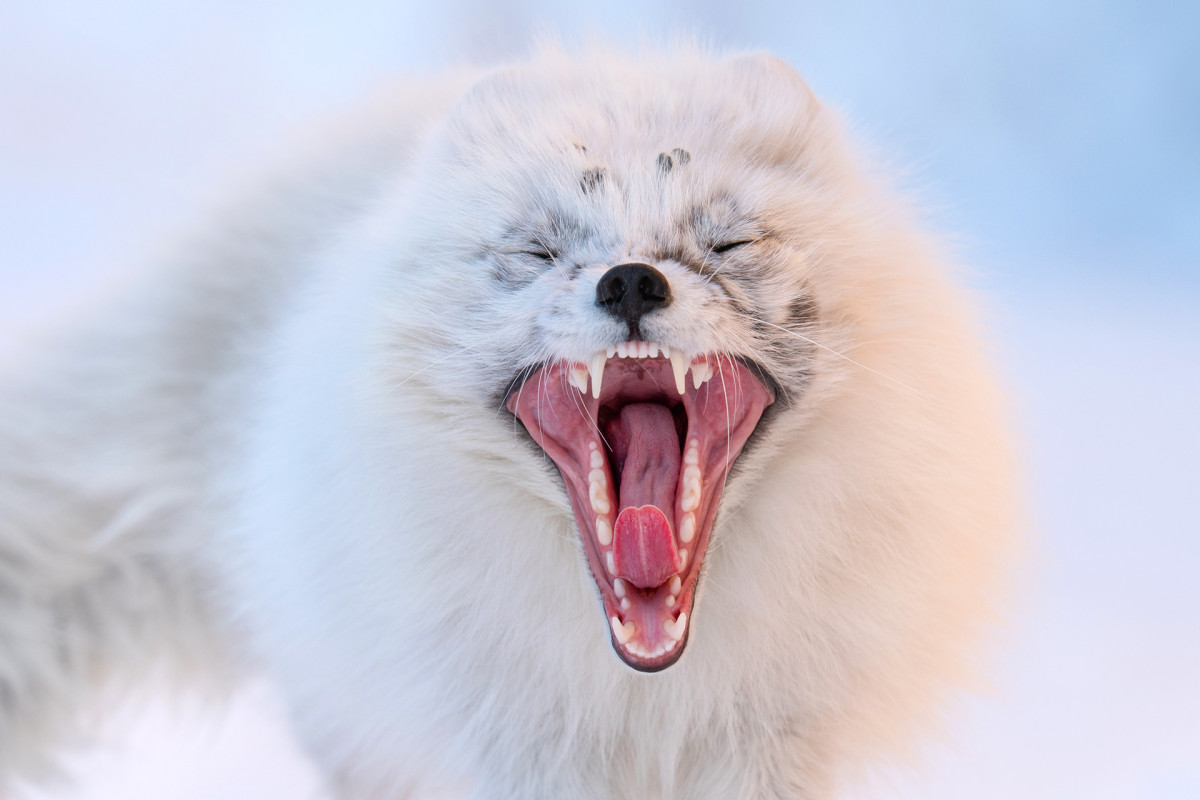
Photo credit: Roie Galitz
A topic that you would like to explore
There are always more places and stories I want to explore. I feel very connected to the polar regions, and I still believe there is so much more to say about the Arctic and Antarctica.
I am especially interested in stories that show the connection between wildlife, climate, and human decisions. I would like to continue working on long-term projects that show change over time, not only isolated beautiful moments.
There are also regions I would love to explore more deeply: remote parts of the Arctic, sub-Antarctic islands, and places where wildlife still exists in a relatively untouched way.
I do not like to think in terms of regret. I prefer to think in terms of unfinished work. There are many stories I have not told yet.
AI revolution and the imagery abundance
I think AI is a tool that is here to stay. It is not going anywhere; it will only expand. And like every major technological shift in photography — the move to digital, editing software, autofocus, denoise tools, and everything else — we can either learn how to use it, or we can ignore it while the rest of the world moves forward.
So for me, AI is both a threat and an opportunity.
On the opportunity side, we already use many AI-based tools in photography. Tools like AI denoise, advanced masking, sharpening, sorting, and editing assistance can be very helpful. They can improve workflow and allow photographers to work faster and better, especially in difficult conditions such as low light, high ISO, or challenging environments.
But the threat is also very real. The biggest danger is not the existence of AI images. The danger is when people create images with AI and present them, directly or indirectly, as real photographs. That creates a serious problem in the way people understand what is real and what is fake.
Today people are very triggered by AI because there is so much fake visual content around us. As a result, authenticity is losing part of its credibility. This is especially damaging for photographers who work in the field and invest enormous effort, time, money, and risk to create real images.
When I post a photograph that required years of experience, expensive expeditions, extreme conditions, patience, and sometimes a once-in-a-lifetime moment — and people immediately accuse me of using AI — it damages the value of that real effort. It creates suspicion around authentic work.
I believe this will be one of the biggest transformations in photography: authenticity will become more important than ever. Serious photographers, competitions, editors, and media organizations will need to be very clear about what is real, what is edited, and what is generated.
AI can be a powerful tool, but it must not replace honesty. For documentary, wildlife, and nature photography, trust is everything. The real value of photography will be in showing something that truly happened — a real moment, in a real place, created through real fieldwork.
Photography in an age when everyone takes pictures
It is both. It is fascinating because photography has become the most universal language in the world. Almost everyone is communicating visually now. That is incredible.
But it is also exhausting because we are surrounded by endless images, and many of them disappear almost immediately. The speed is very high. People scroll, react, and move on.
As a photographer, this forces me to ask: what makes an image last? What makes someone stop? What makes a photograph meaningful beyond the first second?
I do not think the abundance of images makes photography less important. I think it makes strong photography more important. In a noisy world, images with depth, truth, and emotional power still stand out.
What is your personal ethical guide
My ethical guide is simple: the subject comes first.
In wildlife photography, no image is worth harming an animal, changing its behavior, stressing it, feeding it, chasing it, or damaging its habitat. The photographer’s ambition must never be more important than the wellbeing of the subject.
Ethics also include honesty. A viewer should not be misled about what they are seeing. Editing is part of photography, but manipulation that changes the truth of the scene is a different matter, especially in documentary and wildlife work.
There is also an ethical responsibility in storytelling. When we photograph nature, communities, or fragile places, we must ask ourselves: are we respecting them, or are we using them?
For me, photography is not only about taking. It is also about giving back — through awareness, education, conservation, and respect.
World Press Photo
World Press Photo is one of the most important platforms in visual journalism and documentary photography. It represents photography that is not only beautiful or dramatic, but meaningful. It recognizes images that help us understand the world.
For me, being connected to that world is very meaningful because it places photography in the context of public conversation. It is not only about aesthetics. It is about impact.
My favorite photographs are usually the ones that stay with me after I stop looking. They do not have to be the most dramatic or violent images. Sometimes the strongest images are quiet, but they reveal something essential about humanity, conflict, loss, resilience, or the environment.
I am always drawn to photographs that combine strong visual composition with moral clarity — images that make us feel, but also make us think.
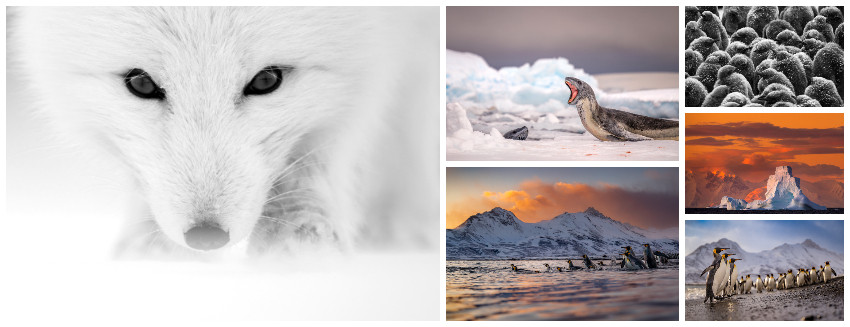
Photo credit: Roie Galitz
The role of photography in 2026
The role of photography in 2026 is to create trust, attention, and meaning in a world overwhelmed by visual noise.
What has changed fundamentally is that photography is no longer rare. Everyone has a camera. Everyone can publish. Everyone can create images instantly. And now, with AI, not every image even has to come from reality.
So the role of the serious photographer is changing. It is not enough to simply show something. We must provide context, credibility, and depth.
Photography still has enormous power, but its power now depends more than ever on trust. Real moments, real fieldwork, real witnessing — these are becoming more valuable, not less.
In a time of artificial imagery and short attention spans, authentic photography can remind us what is real.
What advice would you give to youngsters or people just starting out on their photo journey
My advice is: photograph what you genuinely care about. Do not start by chasing likes, trends, competitions, or other photographers’ images. Start with curiosity.
Learn the technical side, of course. Understand light, composition, exposure, and editing. But do not stop there. Learn about your subject. If you photograph wildlife, study behavior. If you photograph people, learn to listen. If you photograph landscapes, understand the place.
What helped me most when I was young was persistence. I made many bad images. Everyone does. The important thing is to keep going, keep looking, and keep improving.
Also, do not wait for perfect conditions or perfect equipment. The most important tool is not the camera. It is your ability to see, to care, and to tell a story that matters.