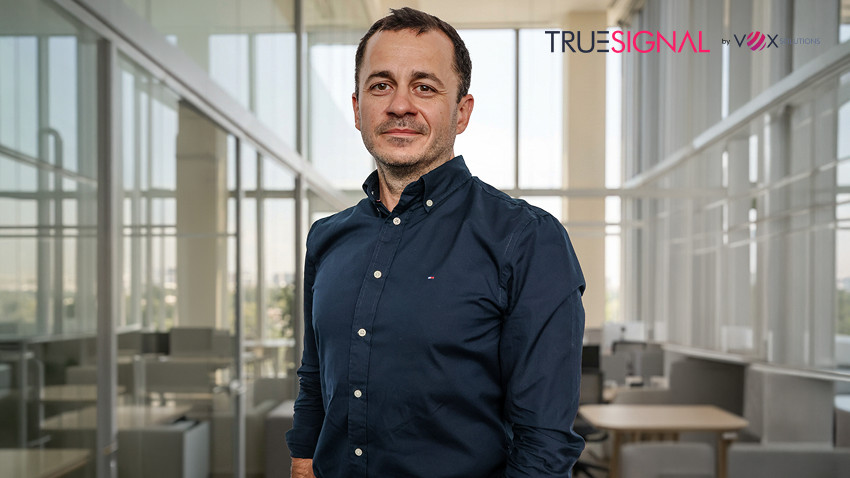

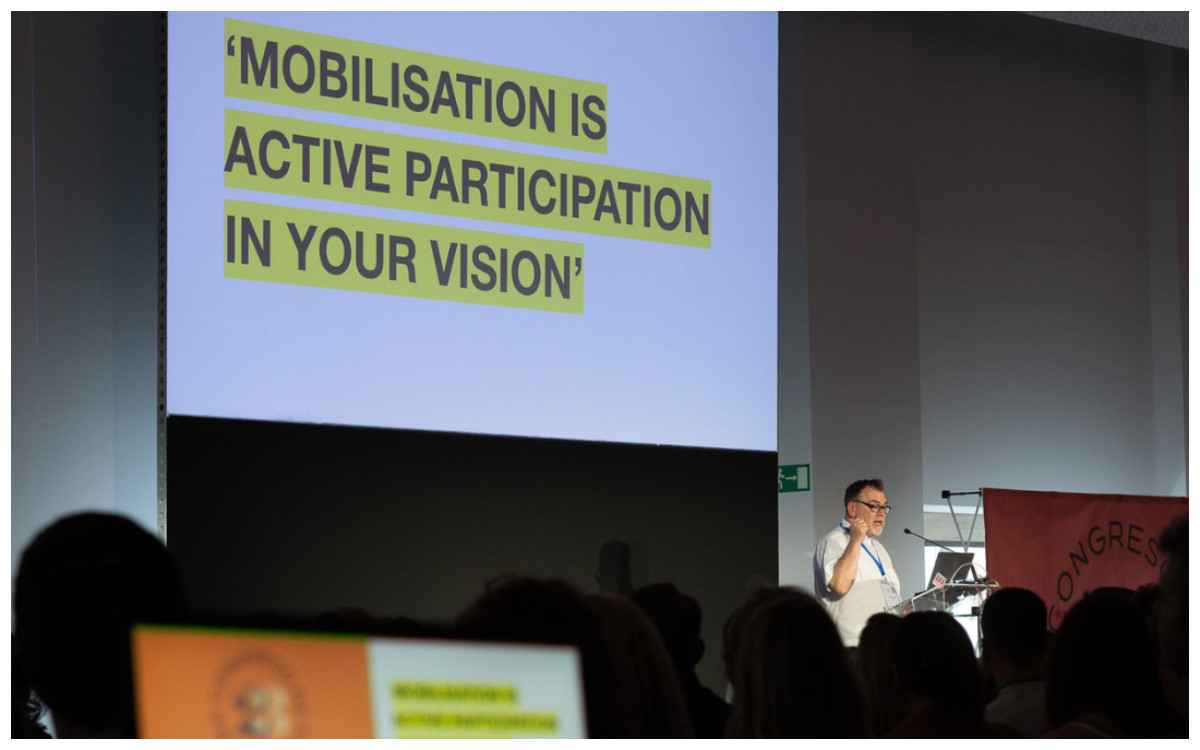
We need to show up. Because solidarity is not a concept, says Paul de Gregorio, founder of Rally and a digital mobilisation strategist. Paul works with charities & campaign groups to mobilise the public to take the actions, fighting for a fairer, healthier, safer world. In Romania, he collaborated with FILIA and he will be in Bucharest from May 26–28 for the National Fundraising Conference, organized by the Association for Community Relations. More than 200 professionals from the nonprofit, communication, and corporate sectors take part in the event.
He will lead the masterclass “Building Big Digital Movements,” where he will show nonprofit organizations from across the country digital mobilization techniques that can help strengthen their mission and bring them closer to their communities.
"The public is not apathetic. They are often left uninspired by our communications and given actions that feel disconnected from actual change and impact. We need to fix this for ourselves rather than blame the people we seek to inspire", says Paul.
We talked to Paul de Gregorio about the courage to do good and the choices we make every day, how perspectives on social involvement are changing, and what it takes to motivate people to take action.
Your journey
I run Rally, a small but hopefully mighty mobilisation consultancy based in London. We work with progressive organisations, some (not all) political parties, charities, campaign groups and NGOs all over the planet, helping them attract the public at scale and inspire people to take action.
I don’t want Rally to be a traditional agency, so it’s not. I try to run Rally as a mobilisation hub. We’re a network of activists, strategists, campaigners, fundraisers, comms specialists, creatives and digital practitioners. Rather than try to do everything for our partners, we find and bring together the right people for each project and build around the teams and skills they already have. We want our clients to be able to do the work themselves, not become dependent on us to do it for them.
Main chapters
If my journey had chapter titles, they'd probably be something like:
Chapter One: Learning to Fundraise:
I spent a long time in direct fundraising. This is where I learnt how to talk to people, what moves them, what doesn't and how we can inspire their support.
Chapter Two: Realising Fundraising Wasn't Enough:
It took me a while to realise this, but as important as money is, it doesn’t change the world on its own. We need to inspire people to give us a share of their time, money and voice to make real and lasting change with them.
Chapter Three: Finding Mobilisation:
There was a moment, just before I set up Rally, where I realised that traditional agencies were not structured to think beyond the traditional way of doing things. If I wanted to change the models civil society used to communicate with the public - I needed to leave my job and find a way to do it. So I left my job and set up Rally.
Chapter Four: The Fight Gets Harder - where we are today:
The political context is shifting fast. The internet is being shaped in ways that don’t favour civil society and progressive causes and the stakes are higher than they’ve been in years. That’s the environment we’re working in now. I want Rally to be part of the response to that, helping civil society and progressive organisations compete in a space that increasingly isn't designed for them.
Key lessons of the past few years
Three things stand out.
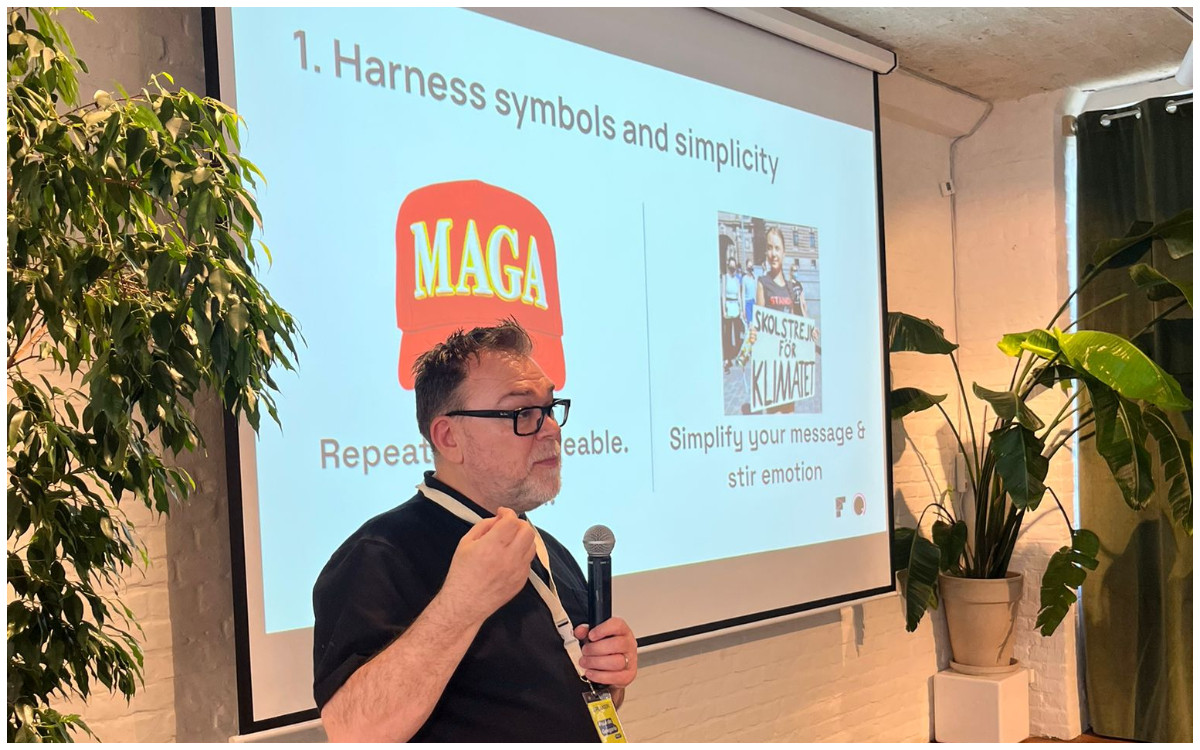
First: simple wins. Populist movements have shown, again and again, that a clear, repeatable message travels further than a complicated, carefully caveated one. Progressives have been slow to learn this. We over-explain. We hedge. We seem to be happy to talk to ourselves.
Second: the internet is not neutral. It doesn't automatically work for good causes. The platforms have biases baked in. The right invests in digital influence in ways the NGO sector doesn't. We need to be honest about that and respond accordingly.
Third: people are not apathetic. They are uninvited. When organisations speak clearly, frame people as part of the solution and give them something real to do, people show up. The public wants to take action, the problem is we don’t make it easy for them.
How do you see the world in 2026
What worries me is the pace at which hard-won rights and norms are being reversed. The rollback of LGBTQ+ rights. The collapse of overseas aid. Climate inaction dressed up as economic realism. The normalisation of disinformation. These aren't abstract concerns, they're happening fast, and the sector is often struggling to respond at the same speed.
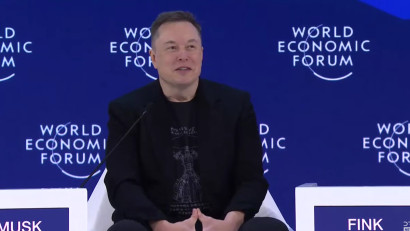
What excites me is the counter-movement. Every time a populist overcorrects, people organise. We saw it with Elon Musk and Tesla. We see it in grassroots campaigns all over the world. People push back when they're given a way to. That instinct doesn't go away.
Hope, for me, comes from the people doing the work. People in rooms like the one I'll be standing in in Romania, fundraisers, campaigners, communicators, the people who turn up every day and fight for something better.
What shaped the world more than technology in recent years
Narrative. Specifically, who controls it and who doesn't.
Technology is how it spreads. But narrative is the force behind it. The reason Trump won, the reason Brexit happened, the reason populist movements are gaining ground? It's not algorithms. It's because they built simple messages and repeated them over and over again. MAGA isn't a sophisticated message. But it's memorable, it travels and can easily become part of someone's identity.
The most common challenges for NGOs
The most common challenge is internal silos. Departments that don’t collaborate well.
Fundraising over here. Campaigns over there. Communications somewhere in the middle. Each team protects its own supporter relationships and budget. The result is organisations that talk at people from multiple directions with no joined up story.
The second challenge is short-termism. Digital spend is expected to show an immediate return. That culture works against investment in awareness, persuasion and long-term movement building.
What works? Starting with shared values and a clear story. Getting leadership buy-in that mobilisation is not a campaign, it's a model of operation and ensuring we invest in digital infrastructure. And being relevant - we’re always asking our clients ‘what's the most impactful thing our supporters can do with us today?’ and building our campaign actions from there.
Romanian society. What surprised you?
I’m full of admiration for what I see in Romania.
I often wonder if your recent history since the 80s, the public’s lived experience of political upheaval and the changes the public have fought and won adds to why I am so impressed by civil society in Romania!
As a country Romania has been through things that Western European civil society hasn’t and couldn’t possibly understand. Maybe this gives people a different relationship to activism, a more grounded and less theoretical approach to achieving big change. Whatever causes it, I find it genuinely inspiring.
As an example, I’m lucky to be working with Centrul Filia, helping with their digital campaigning. Their energy, creativity and enthusiasm for new ideas is inspiring. We talk, we share ideas and then they act. The work they’re doing is so exciting and I’m proud to watch them use digital tactics to connect with the public who share their feminist values. I learn as much from them as I hope they do from me.
Masterclass in Romania
I want to leave people with the inspiration and belief to put into practice some of the things we cover. Give them things that they can do straightaway as well as feed into their longer term strategies. I also want to listen and make sure that the ideas and models we promote are relevant to the Romanian context.
The masterclass I’m planning is built around one core idea: that in 2026, people want to do more than simply fund others to do the work and that organisations don't have to choose between fundraising and campaigning. The mobilisation model as we define it fuses them. When you attract people on the basis of shared values, give them easy ways to get involved, and build from there, you raise more money, win more campaigns, and build something more durable than a donor list. You build power.
The conference theme, ‘Courage is a Decision’, is exactly right. Because moving to a mobilisation model does require courage. It requires leadership to back a different approach. It requires communicators to speak differently. It requires fundraisers to measure success differently. That's the conversation I want to have.
Redefining social engagement
Social engagement used to mean showing up, a meeting, a march, a door knocked. Then digital arrived and we started measuring likes and shares and calling it engagement.
But a click is not a commitment. You can have a million followers and no movement. The right understood this before we did, which is why they don’t just build audiences, they build communities. People who act together, not just scroll together.
What's being redefined in 2026 is the question we ask of digital. Not "how many people saw this?" but "how many people are now ready to do something?" Digital should be the entry point, we call it ‘an easy door to walk through’, the moment someone realises they're not alone in what they believe. But the goal is what happens next. The conversation, donation, campaign action or in person action.
The organisations winning right now are the ones using digital to find people who care, and then giving those people something real to do.
How has people's perspective changed
The positive shift is awareness. It feels like people are more politically alert than they were ten years ago. The stakes feel much more visible. Trump, climate, human rights, these aren't small concerns, they're now in the mainstream conversation.
The less encouraging shift is overwhelm. When everything feels urgent, it's hard to know where to focus. When you feel small against large forces, inaction can feel rational. Our challenge is to convince people that they have power and inspire them to use it.
How do you get people to take action
You have to give people something worth doing. That sounds obvious but most organisations fail at it.
The easiest doors to walk through are statements of values, not petitions with political targets, but invitations to say "I believe this too." That moment of agreement is the beginning of a relationship. From there, you build. Low bar to higher bar. Sharing to donating. Donating to campaigning. Campaigning to leading others.
And the thing that makes someone act hasn't changed. Make them feel their action will make a real difference. Not a vague, long-term, caveated or maybe difference. A specific, concrete, tangible difference. Show them the impact and make it feel real.
The public is often described as apathetic
I think this is mostly a myth. Maybe used as an excuse by organisations to explain their own failure to communicate. I don’t see our opponents or the right coming up with excuses, they work hard to promote their world view and move public opinion in their direction.
When people are given a clear story, a simple action and a genuine sense that it matters — they respond. We've seen it with tens of thousands of sign-ups off single campaigns. We've seen it in streets full of protesters. We've seen it in crowdfunders that hit their targets in hours.
The public is not apathetic. They are often left uninspired by our communications and given actions that feel disconnected from actual change and impact. We need to fix this for ourselves rather than blame the people we seek to inspire.
Common mistakes in public campaigns
Leading with complexity is the big one. Organisations spend months watering down their own messaging and then wonder why no one engages with their campaigns.
I also think many organisations think about moments and communicate in bursts. In 2026 we need to be always on and relevant to the news cycle and finding ways into the conversations people are already having. Rather than trying to force our narratives onto people.
The fix is usually the same, get out of your own bubble, speak to the people you're trying to reach as if they're capable of changing things, because they are.
Advice for young people who want to get actively involved
I always encourage young people to start where you are. You don't need permission, a platform or a big budget. Find the people who share what you believe and do something together. Even small things, done consistently, build power.
Learn how to tell stories that move people. Make the person you're trying to reach feel like they're part of the story, that they are important and can help change happen and not just a bystander.
And find the people and organisations already doing the work. Connect with them. Offer your time, energy and commitment. The sector needs more people who care enough to do something.
What words would you include first in a "dictionary of good"
Solidarity. Action. Courage. Values. Community.
I'd put *courage* first, actually, which feels appropriate for this conference. Because doing good, consistently, in difficult times, requires you to make a decision to act even when the context makes it easier not to.
We learn to do good by being around people who do it. By watching it happen. By being given a small chance to participate and feeling what it means to be part of something bigger than yourself. That's why I always say, find the people already doing the work and get close to them. The learning comes from doing and observing, not just theory.
Principles that guide you
I want to be generous with my time, knowledge and network to the benefit of others. Earlier in my career I benefitted from so many generous people, so I want to pay that forward and share any power I’ve accumulated and the platform I’ve been given, to the next generation of changemakers.
I’m obsessed with learning from others, especially from people doing amazing work outside of my London bubble where everyone is trying to do similar things.
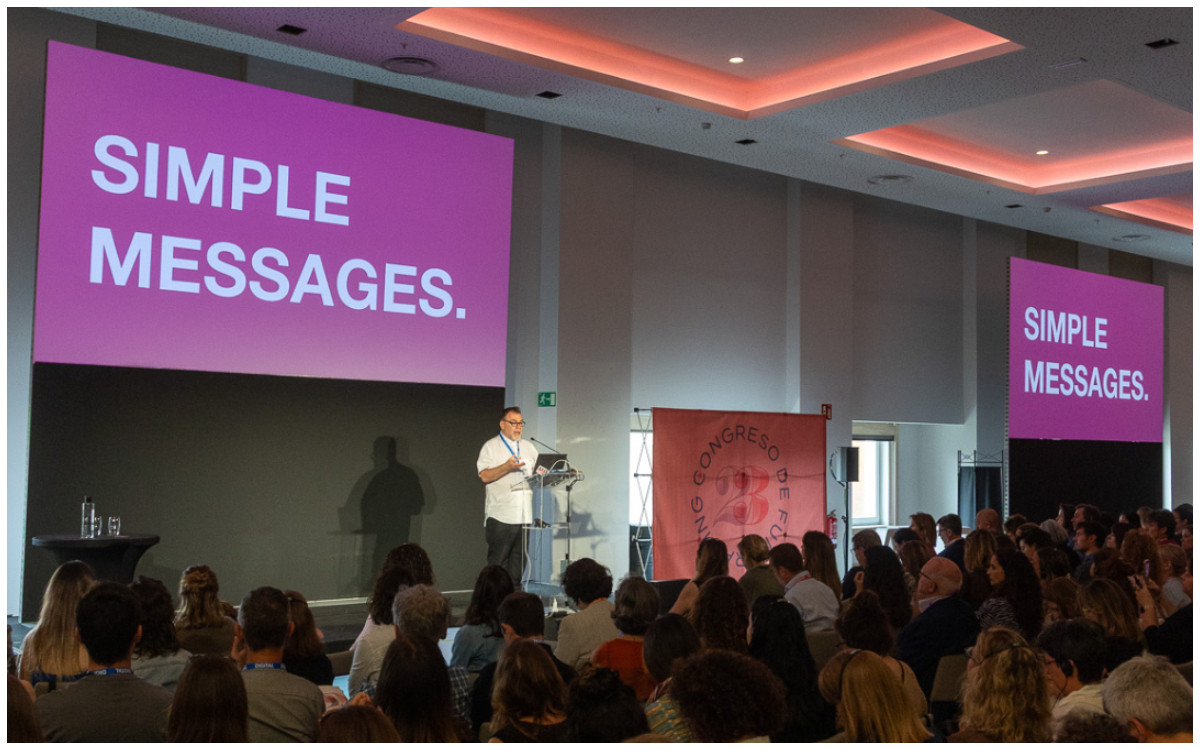
And the simple principle. Say it simple. No one likes (or understands) complexity.
And ultimately, I want Rally and the people we work with to help tip the balance. The opposition is organised, well-funded and clear about what it wants. We need to be all of those things too.
If you could change one thing about how society understands solidarity
I'd want civil society to treat solidarity as an action. Not a concept.
Our values should be more than copy for the website. They should guide the things we do and the actions we take. Solidarity in action means standing with others because it’s the right thing to do, irrespective of the consequences. We need to show up.