![[FITStories] Brice Butane: Everywhere we go, we encounter the same kindness, the same capacity for wonder. The desire to share a simple, almost carefree moment of joy appears to be profoundly universal](https://media.iqads.ro/2026/06/fotojet5-cover-850.jpg?v=202606041200)
Can street art still surprise us in a dense forest of screens? Brice Butane, the leader of the French company Tac O Tac, certainly believes so. For the past 15 years, Brice and his team have been creating moments of wonder, artistic experiences that bring surrealism into the streets, blending illusion, art, and vertigo. Their latest creation, Elefantaisy, which will be presented in two consecutive days at FITS 2026. This year marks his sixth participation in the festival.
"Since my beginnings in street theatre, what has always moved me deeply is the diversity of audiences. Performing for those who think they have seen it all, as well as for those who have almost never had access to such experiences, creates a unique and essential encounter", says Brice.
The Sibiu International Theatre Festival (FITS) takes place from June 19 to June 28 and features 848 events and more than 5,000 artists from 83 countries.
We spoke with Brice about art, humanity, wonder and what performing on streets around the world has taught him about people.
The signature of Tac O Tac’s creations
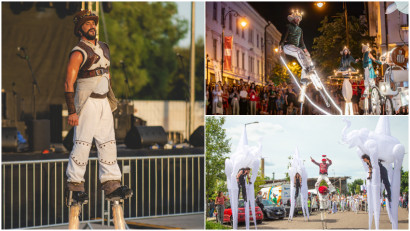
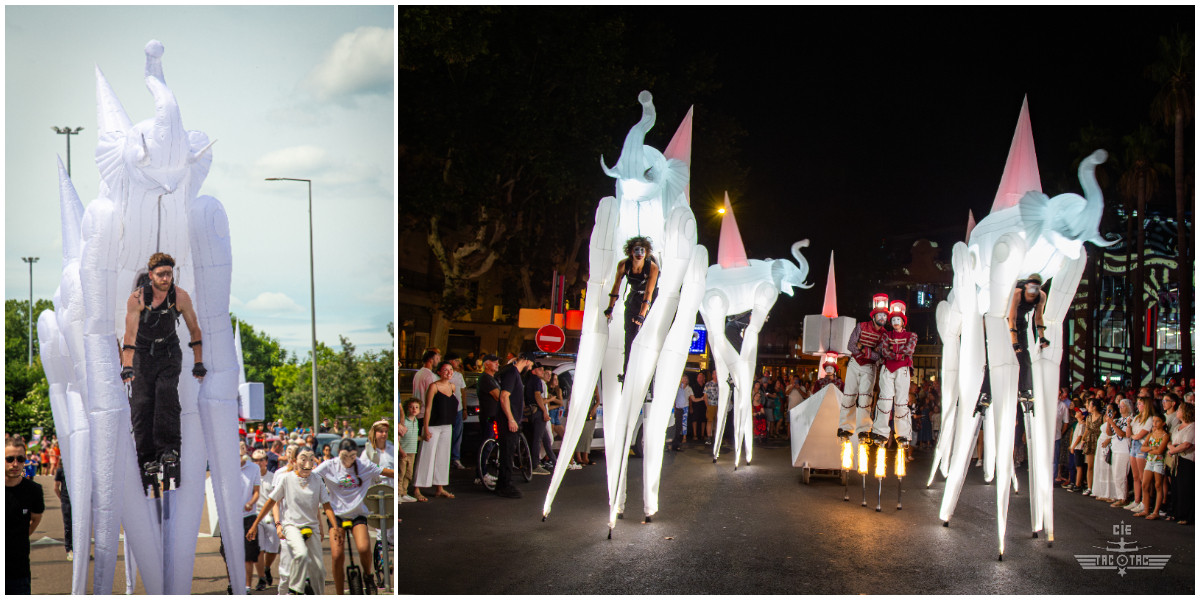
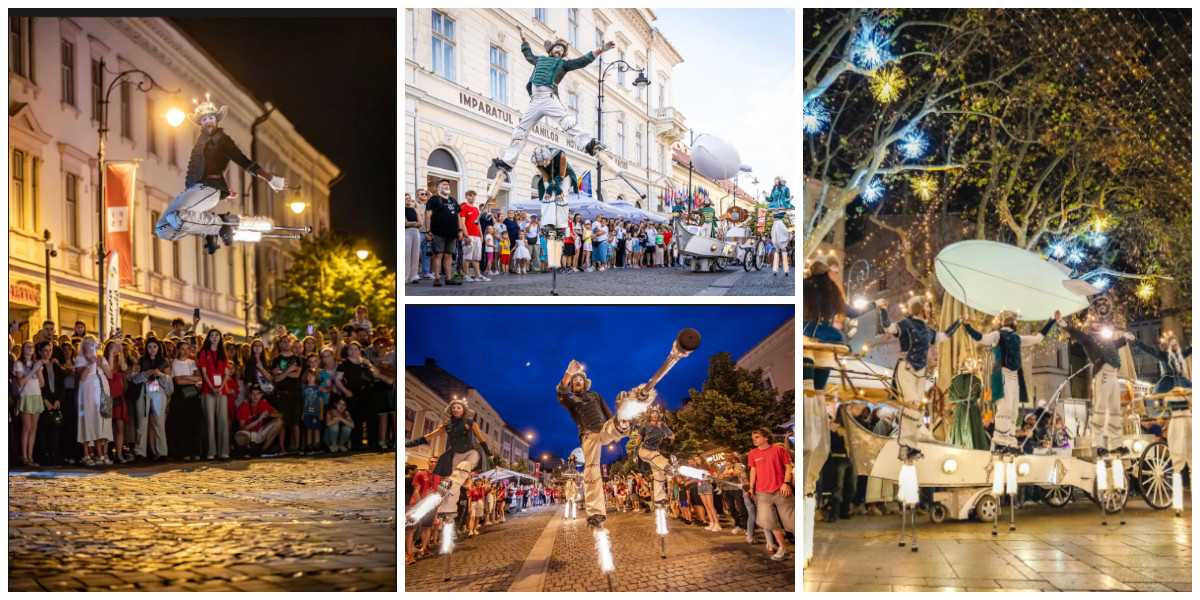
For nearly 15 years, our company has established itself as a leading reference in the world of pneumatic stilts. As true performance tools, they allow us to push the boundaries of movement, developing a unique aerial acrobatic language. To this day, we are the only company to offer genuine acrobatics on this type of stilts.
It is from this singularity that Tac O Tac’s identity was born: a strong visual language, raw energy, and a constant drive to push beyond limits. Over the course of our creations, our signature has become increasingly defined, blending technical precision, graphic power, and intense stage presence.
Stilts remain at the heart of our artistic approach, explored in all their forms: pneumatic, fixed, quadruped… as many variations that allow us to keep surprising audiences and reinventing our playground.
From the initial idea to the final performance
The company’s creations most often begin with an image, a dream, or an apparition. This initial element, both visual and evocative, forms the basis of each project.
At the heart of the process, a “machine” quickly emerges as a central element. Carrying a strong visual identity, it is never designed in isolation: it engages in dialogue with public space and is embedded in a living environment. Its design therefore responds both to technical constraints and to issues of sonic and spatial integration.
The creation of the characters is based on a dual foundation: the theme of the piece and the personalities of the performers. Each element : costume, posture, presence is designed to adapt to the performer and strengthen the coherence of the whole.
Finally, emotions play a decisive role. They structure the staging and ensure the link between music and choreography, in a constant search for harmony and intensity.
What sparked the first idea for "Elefantaisy"
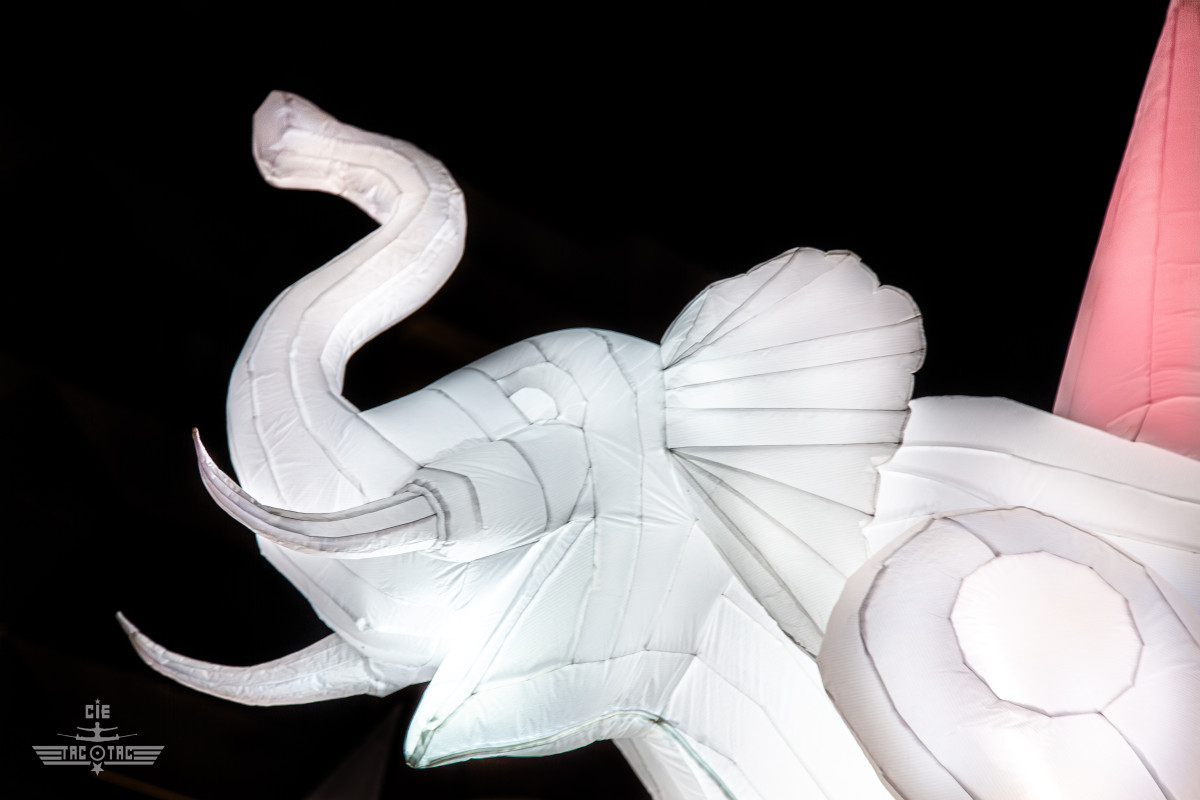
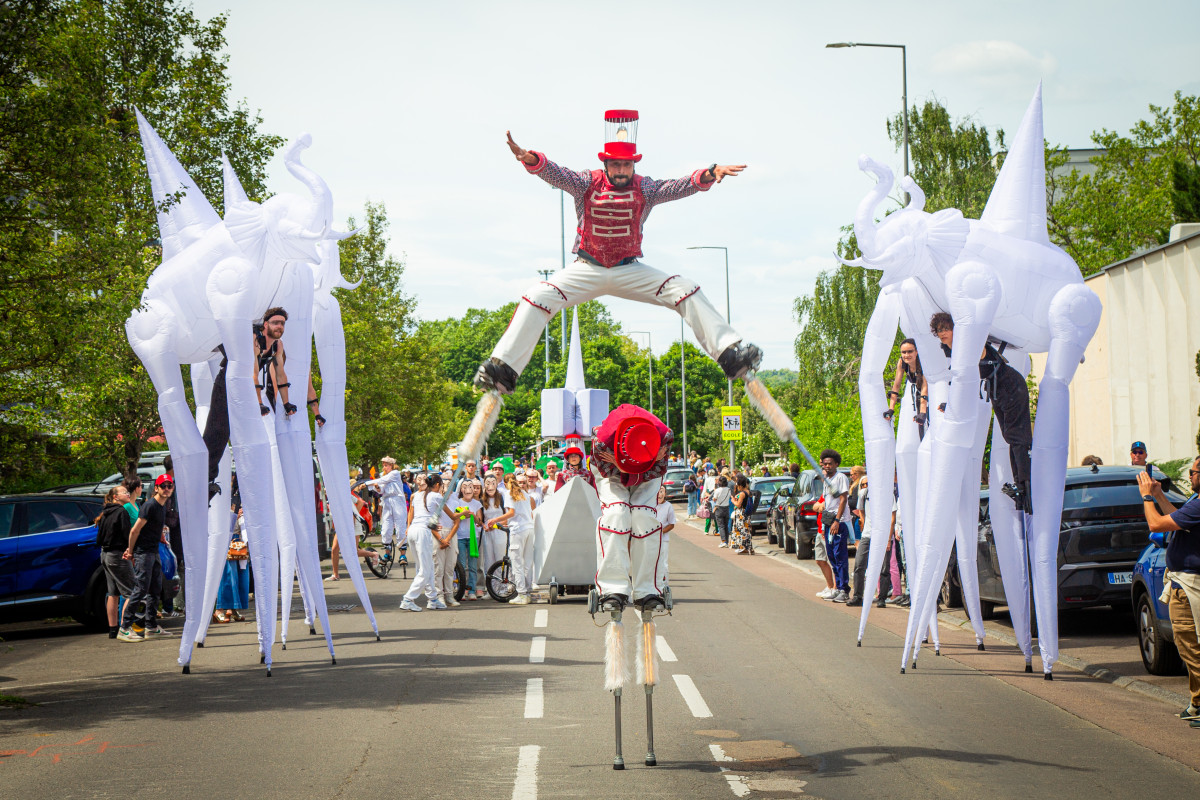
“Elefantaisy” is a performance created around a surrealist universe. It draws extensively on imagery from the works of Salvador Dalí and René Magritte, two major figures of this artistic movement.
One of the project’s aims is to take these references out of the museum context and make them accessible to a wider audience. The show relies in particular on emblematic figures, such as elephants or the birds of the “cage of peace,” which allow the audience to immediately recognize the imaginary world of the great surrealist masters.
By transposing these images into public space and movement, “Elefantaisy” offers a direct immersion into this artistic universe, between visual recognition and poetic reinterpretation.
The biggest artistic or technical challenge in bringing this world to life outdoors
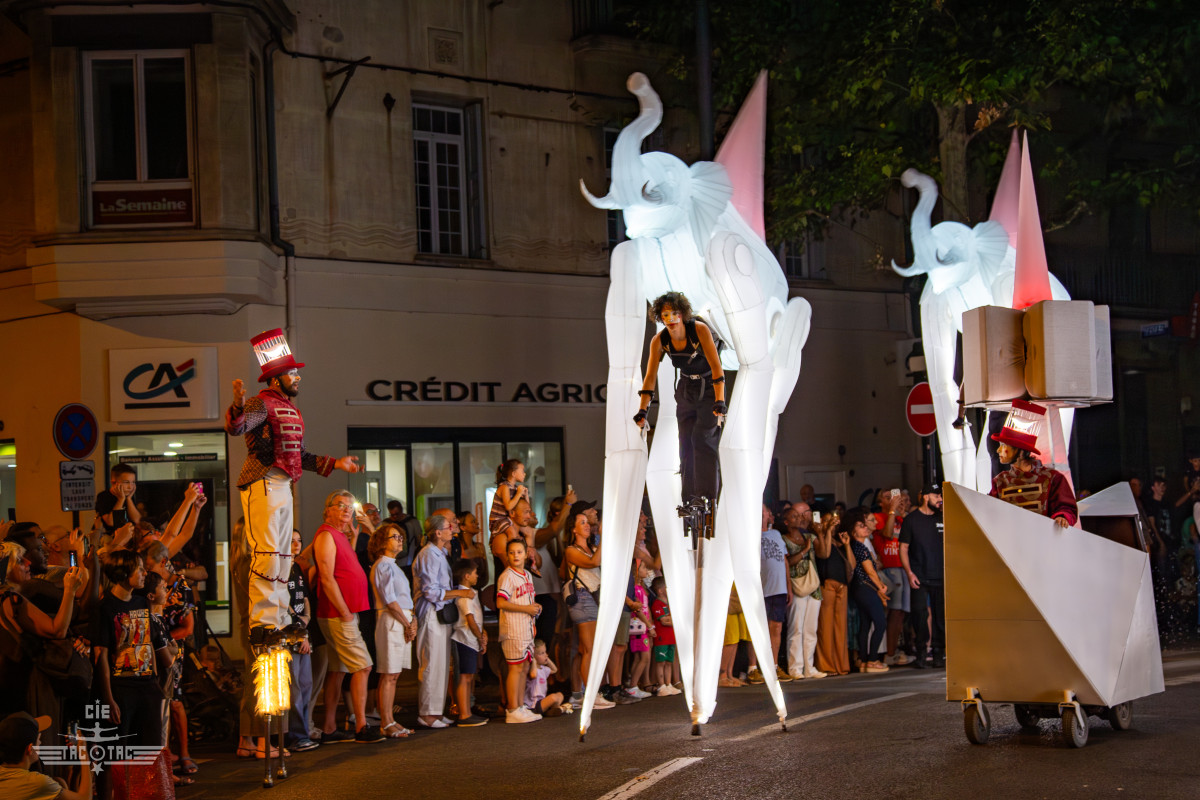
“Elefantaisy” represented a major technical and artistic challenge for the company. The first step was to design elephants reaching nearly five meters in height, while respecting particularly strict weight constraints. Each structure is carried and operated by a single performer, already subject to significant physical demands due to the simultaneous use of stilts on both the arms and legs.
The project also required recruiting performers capable of meeting this extraordinary challenge, and then training them specifically for this practice.
In addition, the elephants incorporate continuous lighting and ventilation systems, whose integration required numerous technical adjustments. Several testing phases, particularly regarding the batteries, were essential to achieve a reliable and high-performing version.
In the end, these structures stand as genuine feats, at the intersection of engineering and artistic creation.
How has street art changed in the age of technology
For my part, I am not alarmist about the integration of these technologies into our lives. I have even observed that, despite their omnipresence, audiences continue to attend festivals in growing numbers. There is a real need to experience things live, to see and feel them “in real life.”
Social media, however, remains an essential tool for cultural communication. It allows us to reach a wide audience: many people discover us through our videos and then contact us to learn more about the company or our practice of stilts.
It is true that, in front of us, we sometimes see a veritable forest of smartphones. One may question this desire to capture the moment rather than fully experience it. But everyone remains free in the way they choose to engage with a performance.
What role can street art still play in surprising people
In a Europe marked by successive financial crises, where access to culture is becoming increasingly unequal, certain contrasts raise questions. While international stars can fill massive venues within hours, with ticket prices sometimes reaching the equivalent of a monthly salary, part of the public is gradually being excluded from these offerings.
In this context, I express the wish that festivals, municipalities, and institutions continue to support accessible forms of art, such as street culture: free, open to all, with no conditions.
Since my beginnings in street theatre, what has always moved me deeply is the diversity of audiences. Performing for those who think they have seen it all, as well as for those who have almost never had access to such experiences, creates a unique and essential encounter.
Your FITS experience
This year marks my sixth participation in the festival. If I return so regularly, it is because the experience is always conducted under excellent conditions.
My first memory remains quite striking: an incredible storm that did not manage to discourage us. I should have run away, but the welcome was so exceptional that I came back five times, and since then, everything has gone perfectly.
This festival stands out on a European scale, both for its scale and its artistic commitment, as well as for the quality of the hospitality offered to artists.
What are you looking forward at this year's FITS
I expect nothing more from the festival: everything is already remarkably well organized. I go there above all with the desire to give.
I am particularly happy to share this experience with the artists of Elefantaisy, some of whom are discovering the festival for the first time. It is also a great source of pride to present this new show in such a setting, and I am committed to living up to the renewed trust of the organizers.
What kind of energy do you feel from audiences in Sibiu
The audience is demanding: over the years, a genuine street theatre culture has developed in Sibiu.
For all that, the welcome remains consistently warm. We regularly receive messages of congratulations after performances, and we know that some spectators follow us year after year.
With this new show, we fortunately have what it takes to continue surprising this knowledgeable audience.
What have you learned about people from performing in the streets of different cities and countries
What one comes to understand through travel is that certain fears circulating in Europe are often based on unfounded perceptions. Everywhere we go, we encounter the same kindness, the same capacity for wonder. The desire to share a simple, almost carefree moment of joy appears to be profoundly universal.
Children, wherever they are in the world, are alike, just like their parents. This year again, our itinerary will take us from China to Quebec, passing through Sibiu. And everywhere, it will be the same smiles, the same humanity, that will move us and do us immense good.