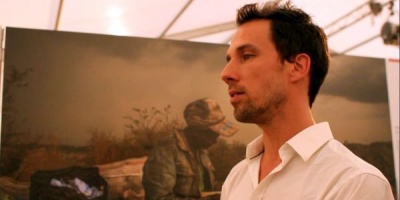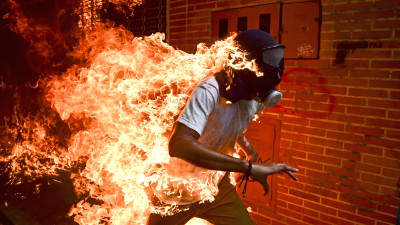

For the photographer Diego Ibarra Sánchez, based in Lebanon, searching for stories can resemble falling in love. The intensity, the uncertainty, the emotional urgency of wanting to understand another human being and the need to share it with the world. He says that we are now living in a post-photography era, where images are no longer rare or sacred objects, but rather an endless stream.
Ibarra Sánchez has documented key global conflicts, including the wars in Syria, Ukraine, Iraq, and Lebanon or the Yazidi genocide. Since 2012, he has been a regular contributor to The New York Times. He collaborates with major organizations including UNICEF and UNHCR, is a Canon Spain PRO MASTER, and a lecturer in visual storytelling. His awards include an acknowledgement for the Pulitzer Prize (2023), POY Asia (2024), NPPA (2025), and Getty Images and he is also a 2026 World Press Photo Contest winner.
"Tell the truth. Do not manipulate. Do not make promises you cannot keep. Do not align your work with power. We should be messengers of pain, but also of hope — carrying both with the same honesty, without distortion, without agenda beyond witnessing. That is the responsibility of the image", says Diego.
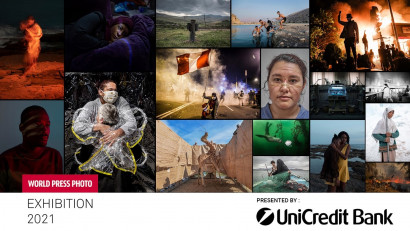
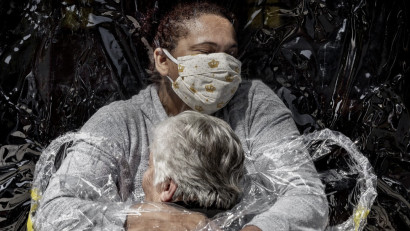
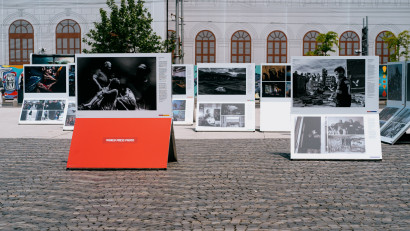
Until June 19, people can see selected and award-winning images from around the world in Piața Universității at the World Press Photo exhibit. The most powerful stories of the past year are brought together in the selection for the 2026 edition, marking 71 years since the founding of World Press Photo.
First contact with the world of photography
My parents. My father awakened in me the idea of looking at the world through a camera, while my mother taught me how to love art. I was never a good painter. I tried, but I never felt comfortable at the art academy. So I decided to paint with light instead. But rather than using a canvas, I used a negative.
What memories does your first camera bring back
Memory itself. The meaning of loss. The need to remember. My father passed away when I was 13, and I began using his camera as a way to connect with him, to keep him close, to remember him.
The defining steps in your journey
Life is personal and photography is personal too. I don’t see this as a career, but as a way of living. I’m still trying to find my path.
There have been many important moments. I’m still trying to grow and to learn. Of course, some moments stand out, especially crossing paths with close friends, my life partner, my family, and my son. He changed everything in my life.
Your signature photography
I try to paint with light, to raise questions rather than provide stereotypical answers. I want to take the viewer outside their comfort zone. But one of my greatest strengths is the empathy I feel toward the protagonists of my stories. I’m able to tell their stories because they invite me in, because they accept me. Let’s face it: we do not save lives. Without respect, we cannot tell other people’s stories.
What inspires you the most
My son is an endless source of inspiration. Photography is a personal window through which we reframe reality with our experiences, fears, and hopes. I’m deeply obsessed with cinema and art. Life inspires me. Art inspires me too. I want to create compelling images against oblivion. We are lobotomized by millions of pictures every day. How can an image last? How can a story endure within this endless flow of information and fake news?
What came with experience
Humility — and the willingness to keep learning.
How did your perspective on photography change over time?
Through life experiences, and through the friends I met along the road.
What has photography taught you?
Everything.
How has it changed your perception of people and of society
Photography taught me that life is never black and white. It exists in a fragile and endless grayscale. As a teenager, my ideas were more rigid, more direct. But through photography, through the people I met and the stories I witnessed, I learned that society is far more complex than easy answers or fixed truths. Photography became a bridge — a way to connect, to understand others, and sometimes, to understand myself.
What makes a good photo
That’s a difficult question. What makes an image “good”? Social acceptance? A historical moment in which culture and collective perception suddenly align? I don’t really believe in good or bad photographs. Reducing images to that binary may itself be a philosophical error.
Susan Sontag wrote that there are no bad photographs, only images that are less interesting, less revealing, less mysterious. Perhaps the only truly bad photograph is the one we never dared to make.
A topic you would like to explore
Millions of stories remain untold. But today we also need to rethink the way we tell them — to move beyond the colonial gaze, beyond the photographer’s ego, beyond the machinery of the industry itself.
Searching for stories can resemble falling in love. The intensity, the uncertainty, the emotional urgency of wanting to understand another human being. And sometimes, when something deeply touches you, you feel the need to share it with the world — almost as if meaning only exists once it is witnessed collectively. But photography cannot be about extraction. It must be about connection, respect, and shared humanity.
AI revolution and the imagery abundance
Skynet is already here. AI is everywhere. And what frightens me most is how technology, instead of bringing us closer together, often pushes us further apart.
We are living through a new industrial revolution, yet very few people are asking how we can embrace it ethically, not only through the lens of productivity or efficiency, but through human rights, social justice, and collective responsibility.
Perhaps we are still only seeing the tip of the iceberg. Have we stopped to think about the immense natural resources consumed to sustain this digital machinery? To endlessly produce disposable content while much of the world still struggles for something as basic as access to water?
In photography and journalism, these transformations are already creating dangerous empty corridors: ethics, truth, rigor, trust, credibility. Sometimes it feels like Crónica de una muerte anunciada, form Gabriel García Marquez, the slow announcement of a collapse we all see coming.
And maybe, in the future, audiences will no longer trust institutions or media companies, but only individual storytellers whose integrity they believe in. Journalism stopped being guided solely by journalists a long time ago. Too often, it is now shaped by business interests that place profit above the social responsibility information should serve.
Photography in an age when everyone takes pictures
It is both beautiful and exhausting. Photography has been democratized. We moved from an image culture controlled by elites to a world where photography has become part of our daily human behavior. As Joan Fontcuberta says, we have become Homo post photographicus
Every day we consume millions of images almost unconsciously, without stopping to think about what we saw the moment we woke up. A new “Gutenberg Galaxy” floods every corner of our lives with visual noise. We are now living in a post-photography era. Images are no longer rare or sacred objects; they are an endless stream , immediate, disposable, and constantly evolving.
Today, the challenge is not simply to create photographs, but to create images capable of resisting oblivion and a to create new meanings by reappropriating the images that already exist.
Your personal ethical guide
I try to hold an unbreakable ethics. I try to raise questions rather than impose answers. I don’t pretend I am saving lives. What I cannot accept is when photography is used to lie or deliberately distort reality.
But photography is also the “Judas kiss.” It carries both truth and deception at once. We tell the world through our own personal window, shaped by experience, bias, and perception.
That tension is always present: between responsibility and interpretation. I assume my own mistakes — and I accept them. They have taught me that I must become better, more aware, more accountable.
And perhaps they also remind me of something else: that we have a responsibility to the next generation of storytellers. We must share, question, and transmit what we have learned. That is part of the work.
What does the ethics of images and of the photographer consist of
Tell the truth. Do not manipulate. Do not make promises you cannot keep. Do not align your work with power. We should be messengers of pain, but also of hope — carrying both with the same honesty, without distortion, without agenda beyond witnessing.
That is the responsibility of the image.
World Press Photo
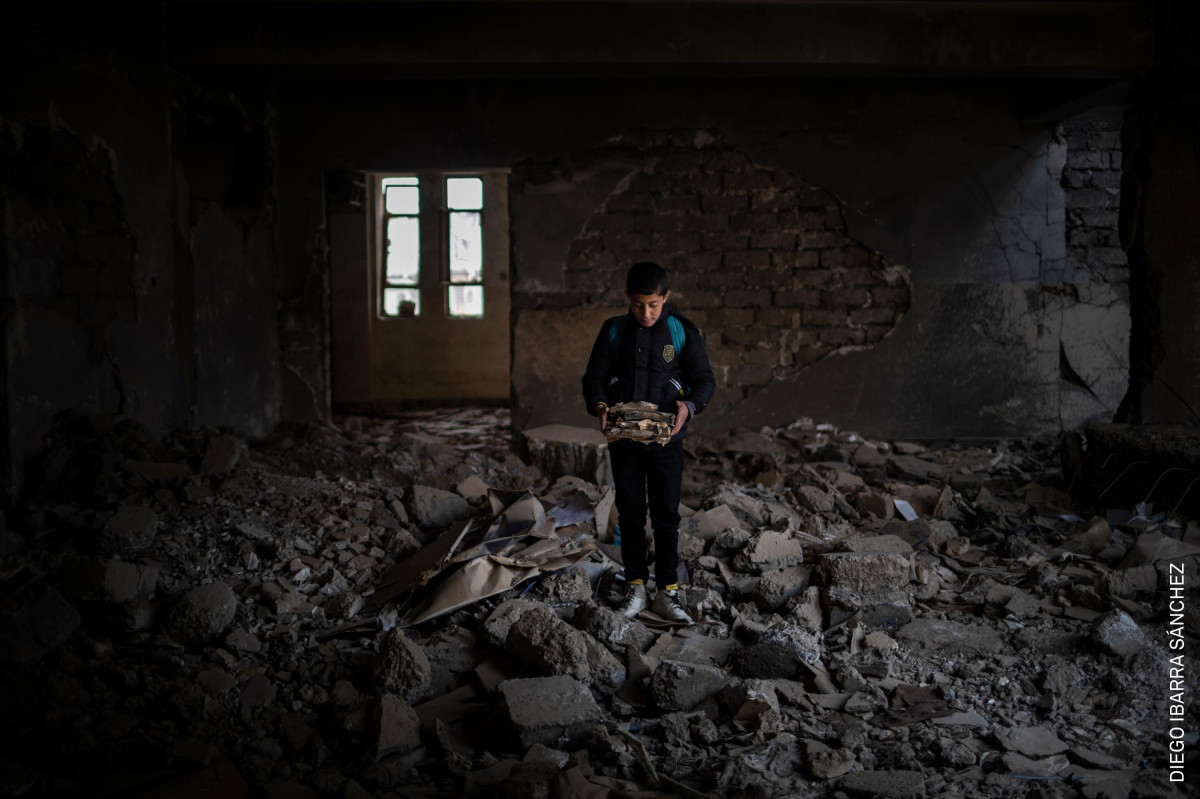
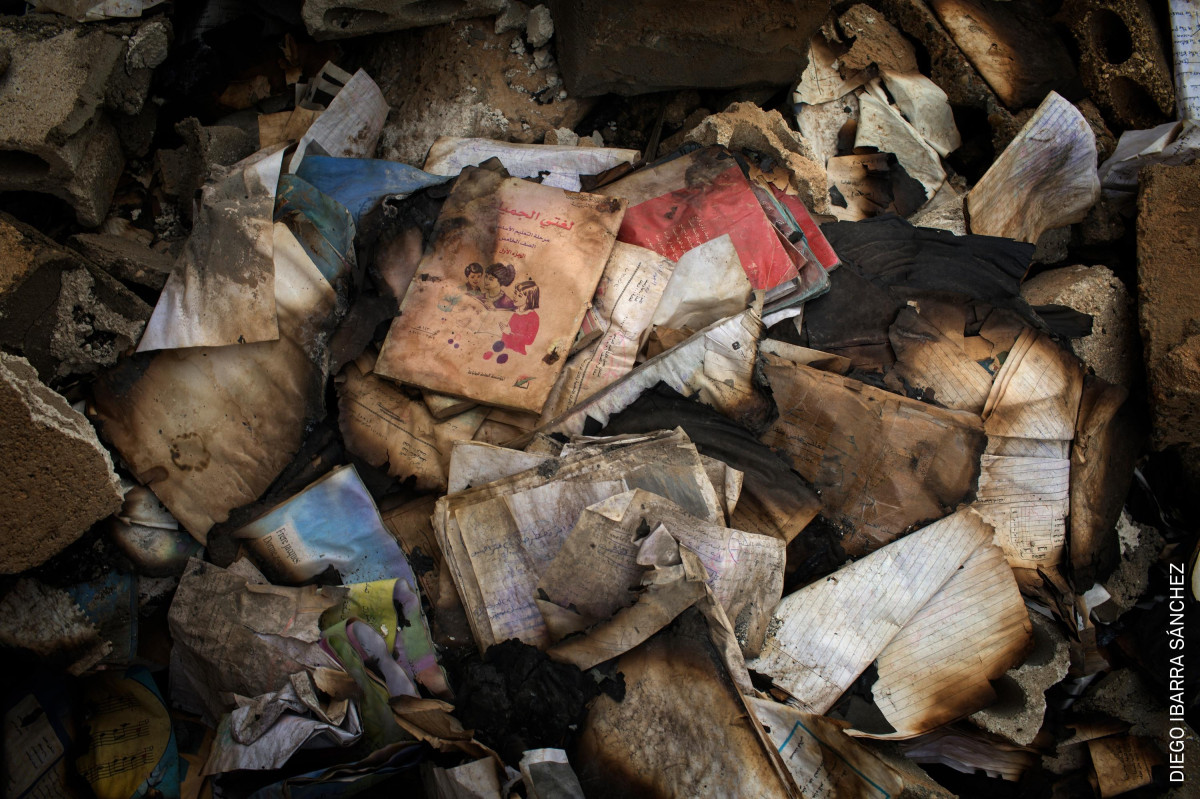
Still can’t believe I won the World Press Photo competition. This work is the result of a long-term investigative project I have been developing for more than ten years, with very little support from the media industry.
What moves me most is that I can finally bring these questions into the public space — to make them visible, to confront realities that are often ignored, to take the reader out of their comfort zone, and to ask them to think. When it was announced, I was covering the war in Beirut, my city, so I didn’t even have time to fully realize it.
Education should never be a battlefield. It is not just a right or a slogan. It is structure, continuity, dignity — the architecture of the future. Schools can be rebuilt. Childhoods cannot.
What is the role of photography in 2026
Survive. Never give up. And whatever you do, love it — truly love it. As Cinema Paradiso reminds us, passion is what sustains you when everything else becomes uncertain. That love is what keeps you moving forward in photography, even when the path is difficult.