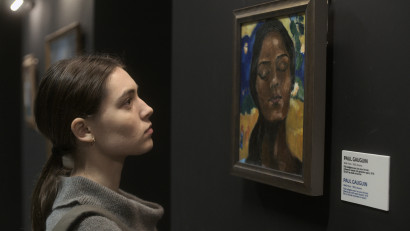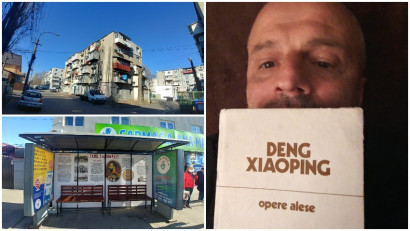

She didn’t know, at first, what she wanted to study. So she chose Law, as many in her generation did when they had no real idea what they wanted to become.
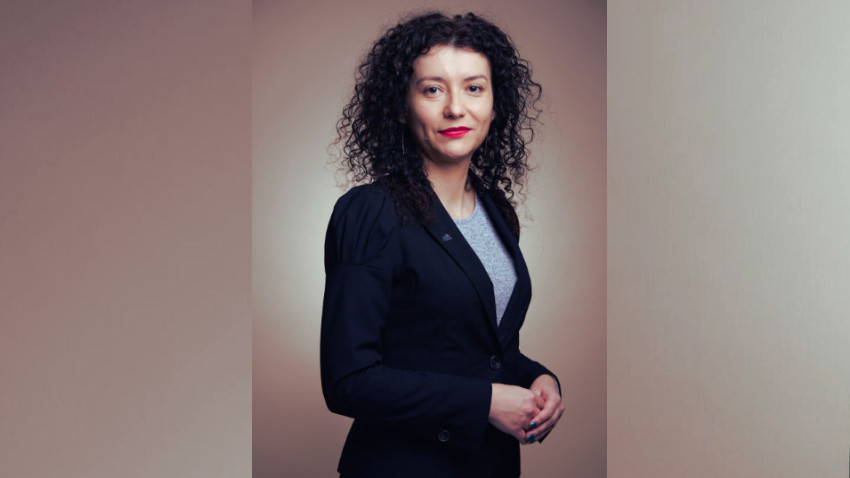
Her first encounter with directing happened alongside friends who were studying Film Directing. Three years into university in Belgrade, Ivana Mladenović made a decisive shift. She came to Bucharest to take the exams for Directing. That was twenty years ago. Since then, she has studied, evolved, and directed five films.
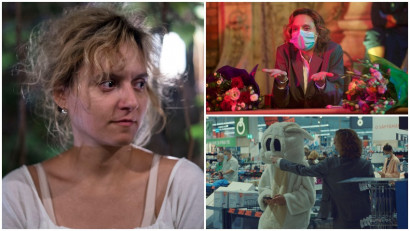
Her most recent feature, „Sorella di Clausura”, is inspired by the book written by Liliana Pelici and tells the story of two sisters: Vera - beautiful, visible, carrying a kind hippie energy and Stela - withdrawn, fragile, solitary. In this film, Mladenović explores the radically different ways women inhabit freedom and sexuality.
"What was particularly important to me, even though the film shows two very different women, was to save them from stereotypes. While working on the script, but also later in the process with both actresses, we kept coming back to this idea — that we don't want to reduce the characters to easily recognizable patterns", says Ivana.
We speak with Ivana Mladenović about the process of working on her latest feature film, “Sorella di Clausura.” The movie hits theaters in Romania on March 6th.
Formative stages in your career
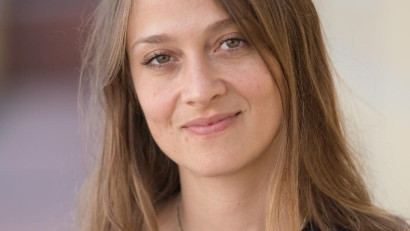
Hi, I’m Ivana. I come from Serbia, from a small town on the Danube, near the Romanian border. Before moving to Bucharest to study the art of directing, I studied Law in Belgrade. I did three years of Law School, although I never truly wanted to pursue it. Then I decided to come to Romania, initially just to try my luck for ten days. I ended up staying… and this year marks twenty years since then. In Romania I’ve made four films; three of them are co-productions with Serbia. I speak about people on the margins of society, people who haven’t had the same opportunities that we—at least some of us—have had. Also, music has always been part of my life. I was a rocker girl and I think I still am. My most important memories are connected to Nirvana, Alice in Chains, and a few Serbian bands like Obojeni Program.
The decision of making movies
I didn’t know what I wanted to study. I went into Law School because that’s what people who don’t really know what they want tend to do. I was just waiting for the right moment to “switch lanes” and apply to Film Directing. I had a few friends who were studying directing at the time, and through them I first came into contact with cinema. We watched films every day—sometimes even five a day—and at night I studied Law.
Your first projects
My first projects were school films, where we acted in each other’s movies and “ruined” them—it was fun. When I moved to Romania and enrolled in directing, I had good colleagues. I remember shooting student films on 16mm, both black-and-white and color, and calculating everything in rolls of film. Film stock was the most precious currency, and I think it still is for me. My latest film, Sorella di Clausura, was also shot on 16mm, and working with cinematographer Marius Panduru was the most creative directing/shooting experience for me.
How it is now that you’ve gained more experience
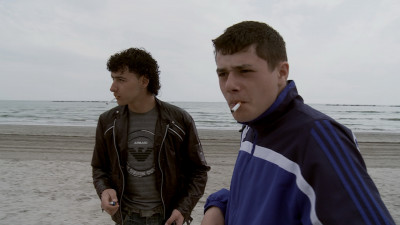
After Turn Off the Lights, my first feature film—a hybrid documentary about life after prison—I made three more films: Soldiers. Story from Ferentari, based on Adrian Schiop’s autobiographical novel. It is about an anthropologist who moves to Ferentari to write his PhD and becomes entangled in a deeply personal relationship; Ivana the Terrible, where I turned the camera on myself, recreating my return to a small town after a psychological breakdown; and Sorella di Clausura, adapted from Liliana Pelici’s autobiographical manuscript—a story about obsession, precarity, and life on the margins of society. So far I’ve worked mainly with personal histories and reenactment. Now I want to shift this method towards collective memory and a recent historical moment in Romania, reenacted together with today’s youth. I’m interested in how political transitions silently shape private lives.
The idea of making „Sorella di Clausura”
I discovered the incredible Liliana Pelici and her autobiographical manuscript through our mutual friend, Romanian singer Anca Pop. I met Anca in 2016 and we quickly became close; later she also acted in Ivana the Terrible. At the time, she was deeply involved in trying to publish Liliana’s manuscript—the story of a young woman from Timișoara who was almost obsessively in love with a singer-songwriter. She followed his concerts, stalked him online, and her entire emotional life revolved around this illusion. The day after I met Anca, she asked me to read Liliana’s book and told me that maybe one day I could make a film to help her story be heard. I was immediately drawn to the incredibly strong narrative voice—the punk tone, sharp humor, merciless self-irony, and astonishing courage to write about herself without restraint. I set the manuscript aside for a while because I was finishing Ivana the Terrible. Then, toward the end of the shoot, a tragedy happened: Anca died in a car accident. The shock of losing her brought me back to Liliana’s text and made me rethink the unusual relationship between two seemingly very different women.
The stages of writing the screenplay. How you worked collaboratively
In all my films so far, the characters fight the hardships of life through humor—and so does Liliana in her manuscript. In the past I may have been guided by this unconsciously, but in this film, thanks to my long collaboration with writer Adrian Schiop, I became fully aware of it. We’ve explored lives on the margins and what in Romania is often called “truck humor”— raw, direct, sometimes harsh, but deeply authentic and rooted in everyday life outside centers of power. In Sorella di Clausura, humor has a clear function: it invites the viewer in. Faced with the characters’ eccentricities and the harshness of marginal life, someone might easily turn away—humor becomes a bridge toward empathy. Our thirteen-year collaboration is based on spontaneity and an energy that constantly tries to break form. From this clash between authenticity, humor, and social analysis, the complex character of Stela was born.
The themes and human conflicts that the film covers
Beyond Stela’s obsession with Boban, the Balkan singer, the film focuses on her jealousy toward a pop female artist and, deeper still, on the bond between two women from completely different worlds: Vera—beautiful, successful, fighting for emancipation from within the system through ideas and theory—and Stela—withdrawn, almost invisible, emotionally fragile, struggling from a place of precarity and loneliness. Trying to understand their connection led directly to the film’s core idea: two radically different forms of female struggle.
Sorella di Clausura is based on Liliana Pelici’s autobiographical text. But when you turn a life into a film, you inevitably change it: you compress events, rearrange them, and protect people’s intimacy. That’s why people always ask, “How much of this is true?” In this case, the answer is: almost all of it… and yet not quite. The film is rooted in Liliana’s life, but filmmaking means cutting, redistributing, and protecting details—and that inevitably “contaminates” the truth.
The shooting process and locations
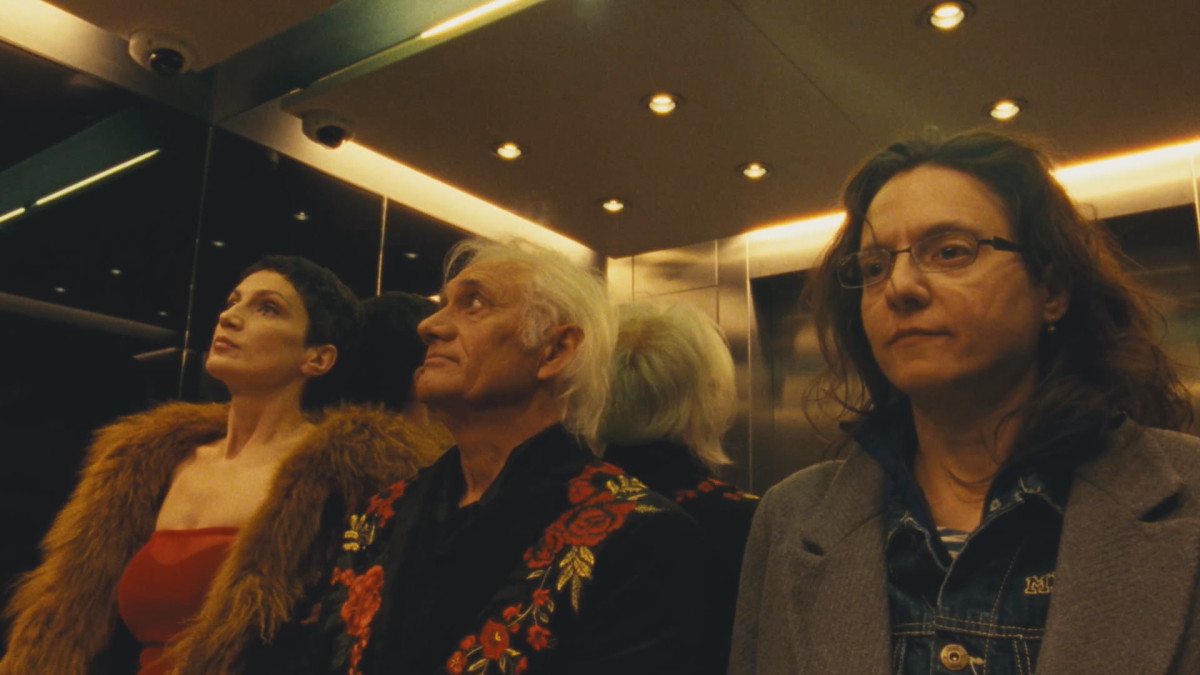
Work began many years ago, from the moment I first heard Liliana’s story. The script kept changing, but my love for Stela remained, as did the locations described in her manuscript: Timișoara, Bucharest, Moldova Nouă, the Danube, and the Serbian–Romanian border. I loved filming in Timișoara the most, especially because of the large crowd scenes, from markets to concert halls.
Challenges during filming
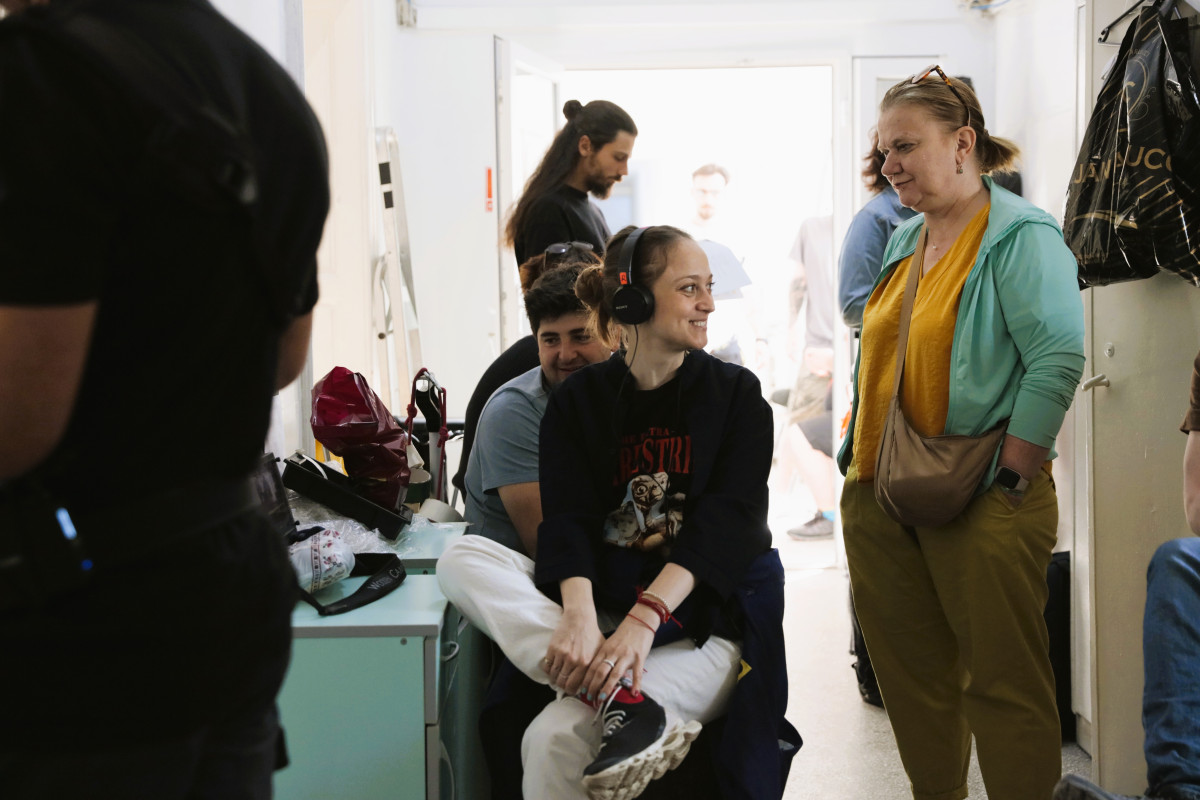
I tried to be brave and sometimes asked for things that weren’t planned for that day but that I knew would bring something essential to the film. It’s not easy and often frustrating for everyone, but those moments brought the greatest joy and unpredictability. I was lucky to have an understanding production team.
How you chose the cast
The characters could easily be labeled eccentric, so I looked for people I could genuinely love—people who, even when they annoy you, you can’t help but care about or at least understand.
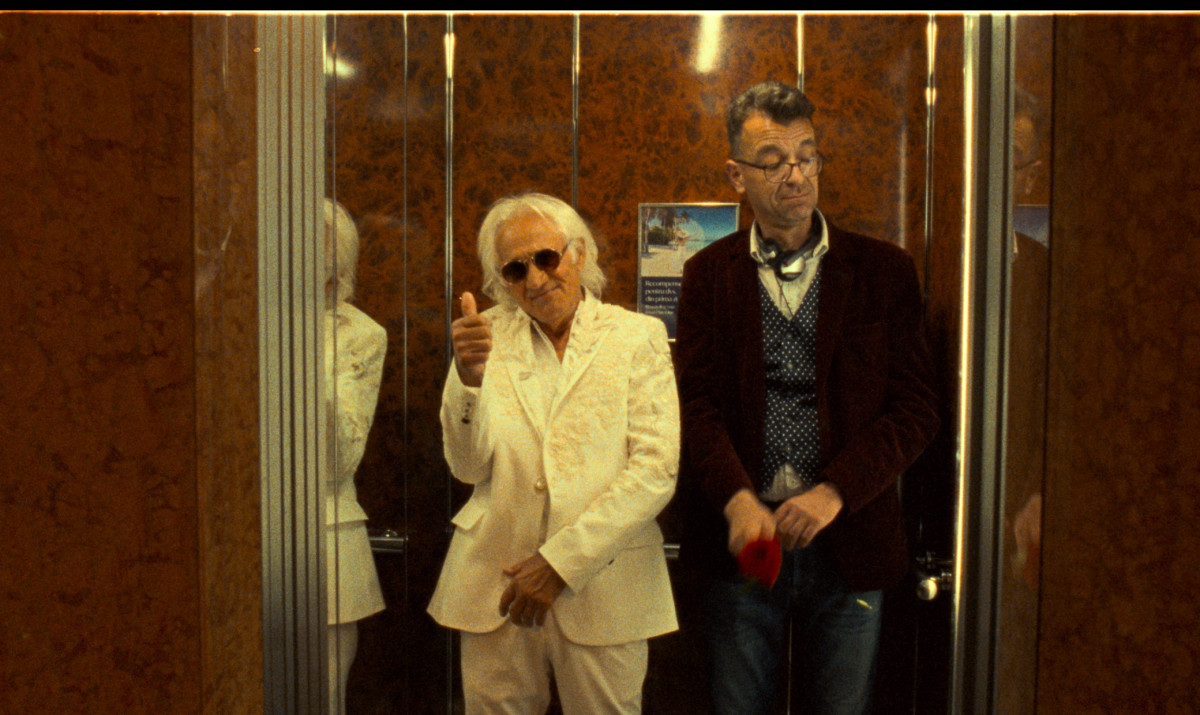
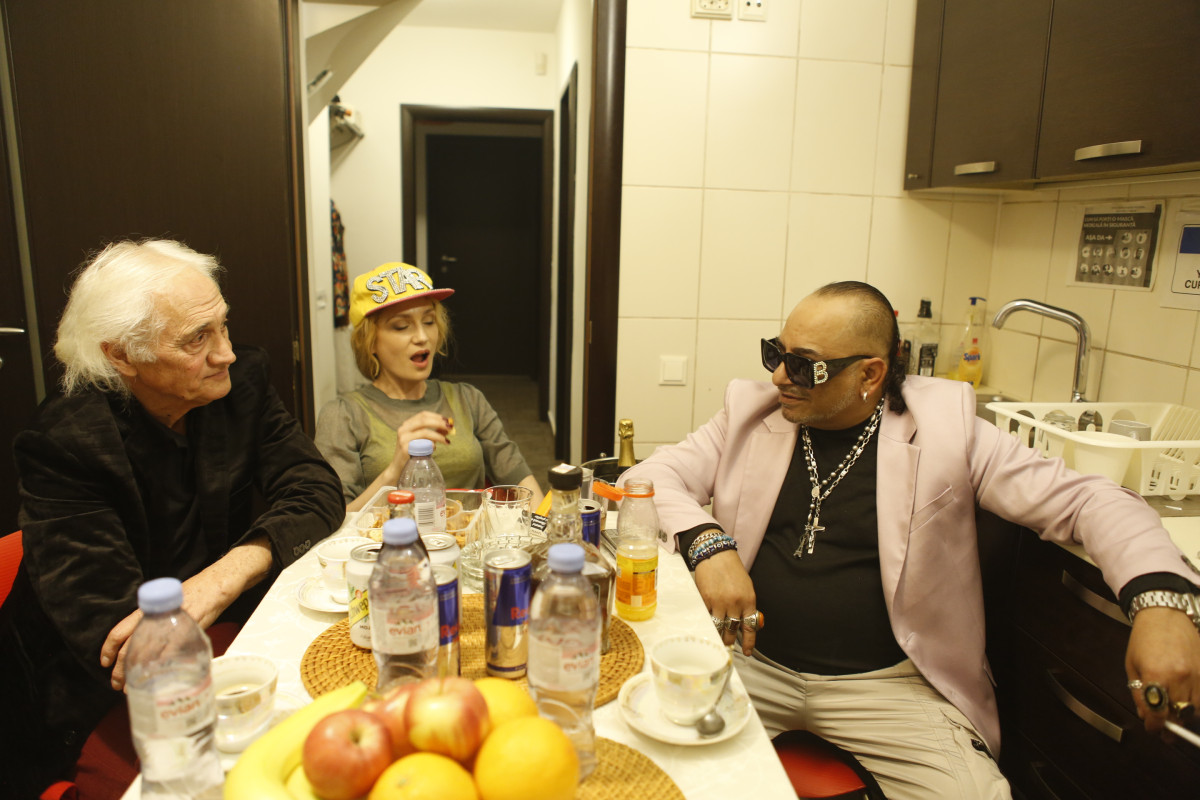
Besides Katia Pascariu and Cendana Trifan, most of the cast are non-professionals. The three male characters Stela meets are played by people I know from real life. Charlie (Arnold Kelsch) I met in a market in Timișoara. Mister X is my casting director, Cătălin Dordea. Gabi is someone I’ve known since he was about ten. And Boban, the musician Stela is obsessed with, is actually my father—a 75-year-old veterinarian from Kladovo—who eventually agreed to play along with us. That playfulness, that lack of solemnity, was exactly what I was looking for.
Your kind of creative negotiation with actors
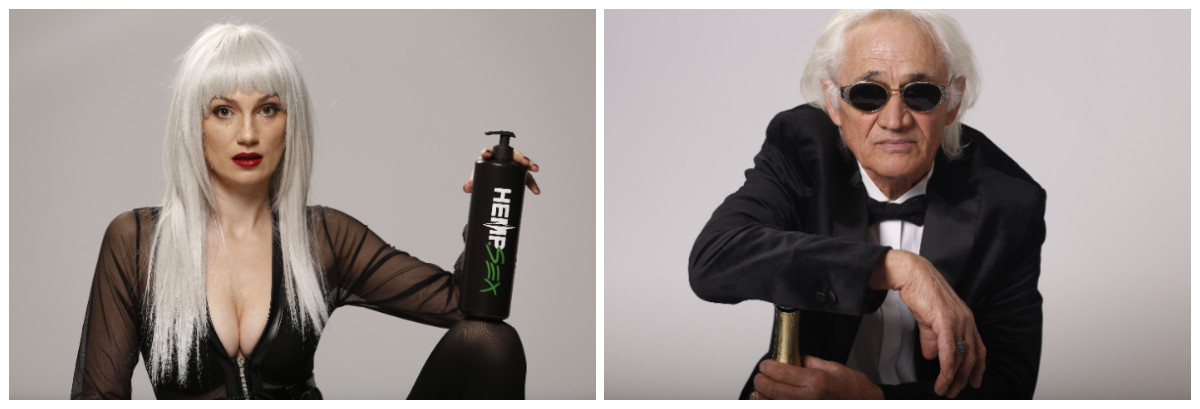
It depends. In the past I worked only with non-professionals reenacting parts of their own lives. Here it was different because I worked with two professional actresses who brought many ideas and a freedom I hadn’t anticipated.
Working with Katia and Cendana
Through two very different female figures—one open and relatively fulfilled, the other withdrawn and struggling—the film explores the space where women today live and express their freedom and sexuality. It’s about the clash between past ideals of freedom and contemporary mechanisms of the market and self-presentation, which creates a more complex image of female identity. What was particularly important to me, even though the film shows two very different women, was to save them from stereotypes. While working on the script, but also later in the process with both actresses, we kept coming back to this idea — that we don't want to reduce the characters to easily recognizable patterns.
The advantages and challenges of making a film co-production
The film is a co-production between Romania, Serbia, Italy, and Spain. It’s not easy, but producer Ada Solomon has the talent to make things run smoothly. The biggest challenge for me was in post-production, coordinating processes across four countries.
What this project brings new to your artistic journey
I haven’t changed much in terms of themes, but in how I approach them. I still speak about people on the margins searching for their voice. Here, I listen more to my characters and let them guide me. The film is more intimate, but also more political in a deeper way, because it starts from an inner experience rather than a message. I’ve freed myself from the need to “explain” the world—I now simply observe and record it.
The take-ons you want the audience to leave after seeing the movie
I hope viewers approach it openly, without looking for a clear moral. The story isn’t meant to comfort, but to touch that feeling of vulnerability and misfit many recognize in themselves. Some will connect intimately; others through its humor and roughness. What I hope they feel most is sincerity—that the film was born from the need to tell a small story from the margins, and that these margins say a lot about society as a whole. If someone leaves the cinema feeling they’ve briefly stepped into someone else’s skin, that would be the greatest success for me.