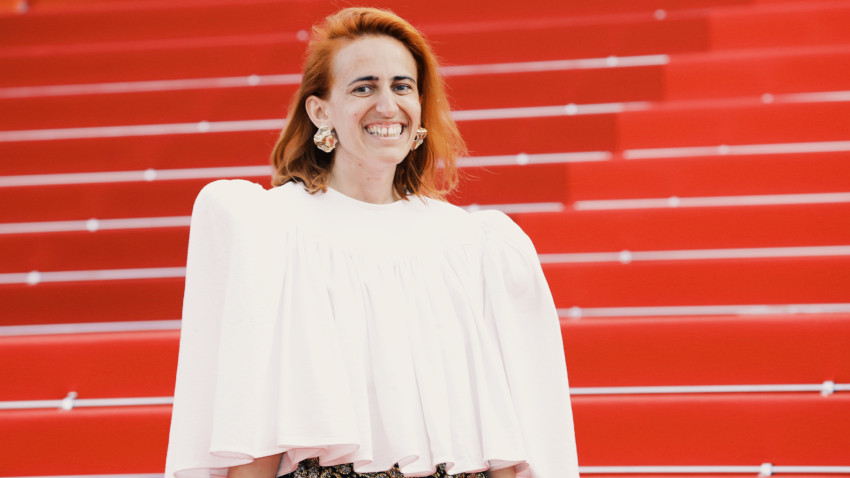
At the Festival de Cannes, immersive storytelling is no longer a peripheral experiment—it is becoming a prioritized infrastructure. Through the Cannes Immersive competition and Cannes Curators Network hosted yearly at Carlton, the festival reveals every year a visionary approach towards immersive art.
In its second edition, the Cannes Curators Network brought together approximatively 50 immersive producers and 50 museum representatives from around the world, marking a decisive step toward consolidating a global ecosystem for immersive art.
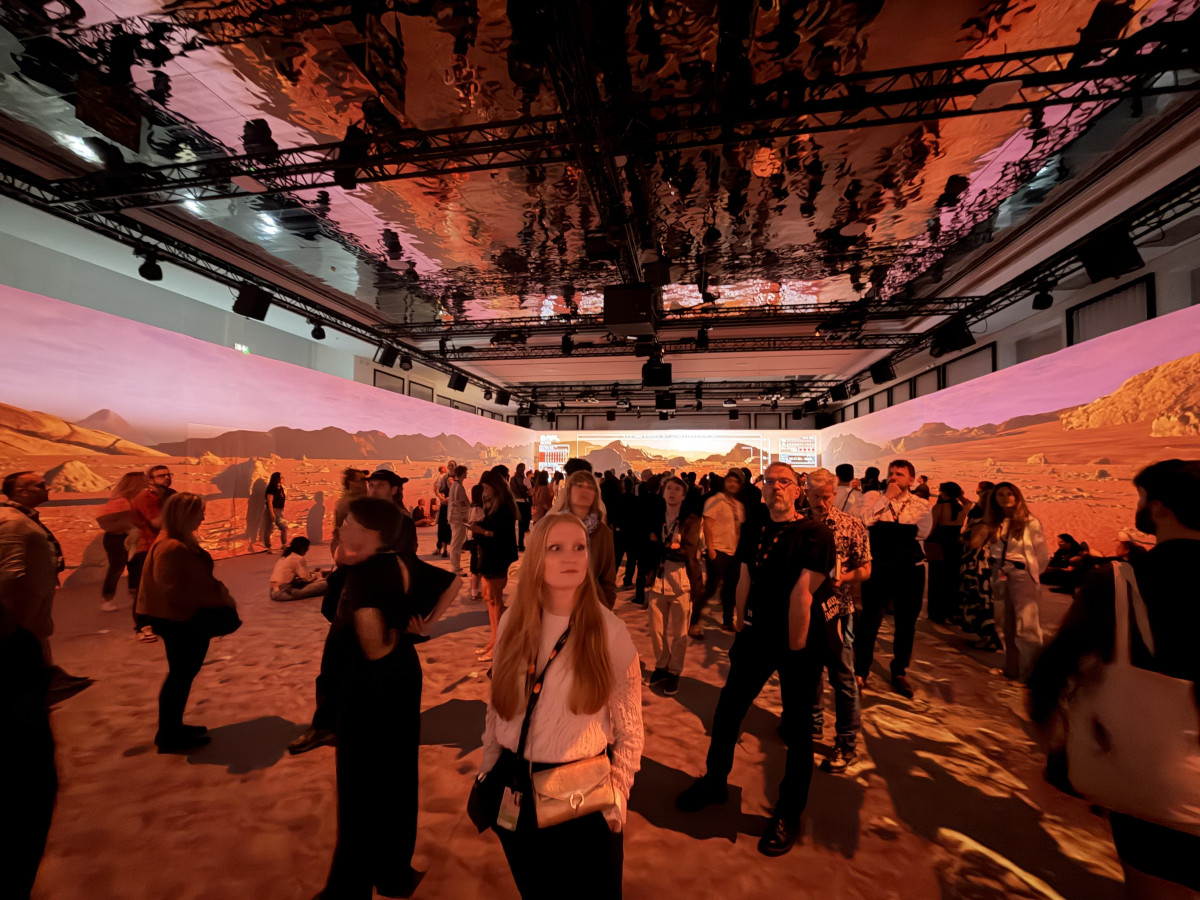
The initiative, developed within the Marché du Film’s immersive strand and led by Elie Levasseur (Head of Immersive) and Mathieu Gayet (Immersive Market Manager), is designed as a working bridge between creators and curators with the purpose of scaling the international circulation of immersive works.
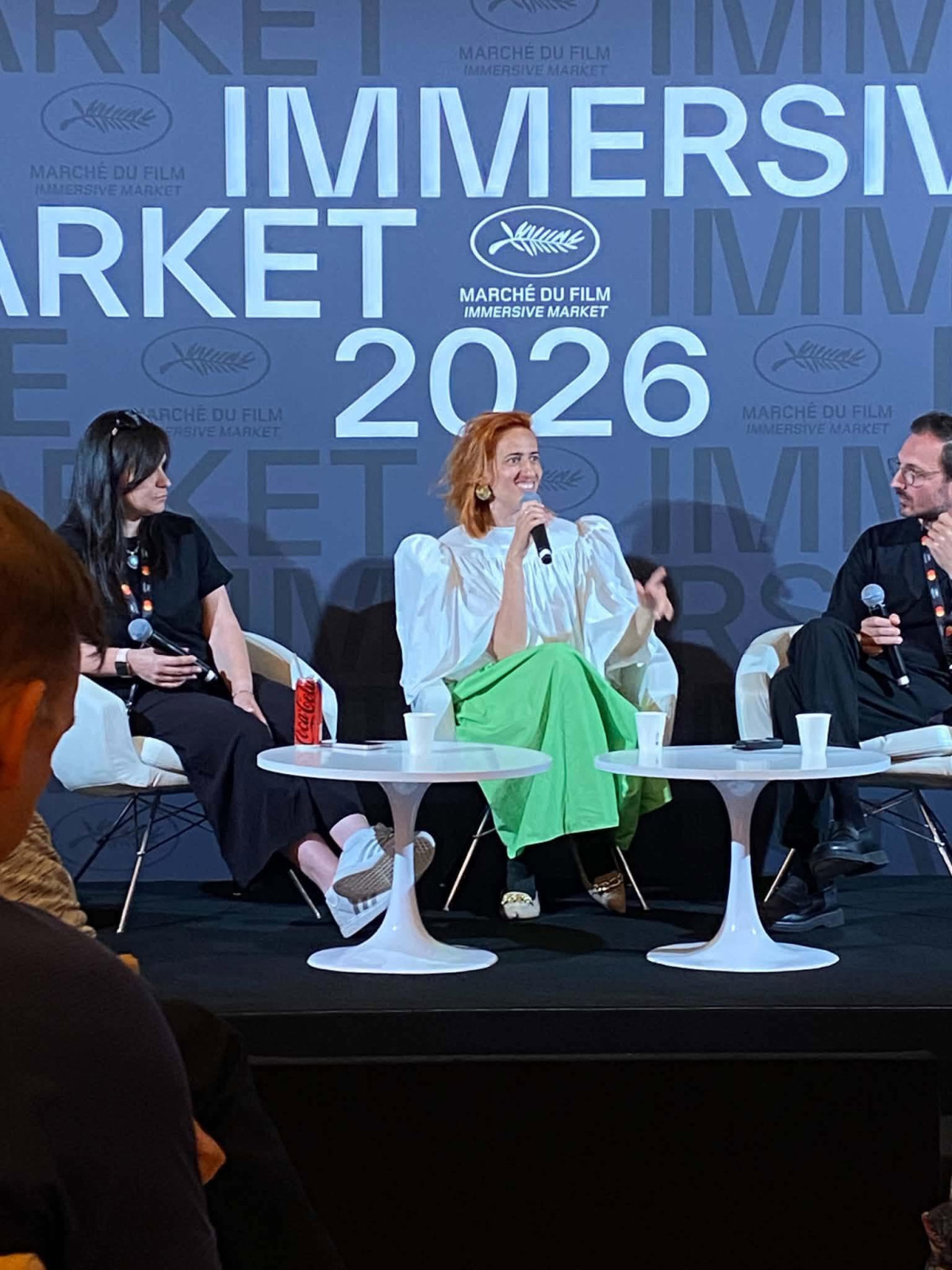
“The Immersive Market is the natural extension of the Immersive Competition launched in 2014 and illustrated our ongoing ambition to develop innovation at Cannes.”, Guillaume Esmiol, Executive Director of the Marché du Film.
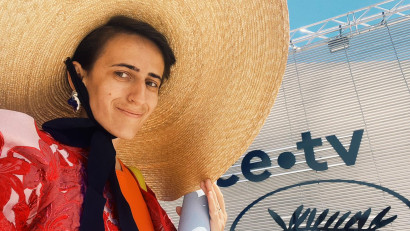
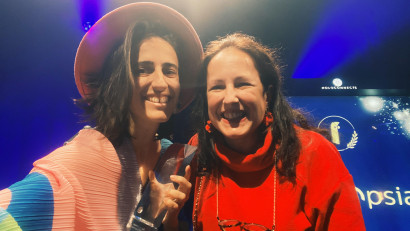
Within this framework, Romanian transmedia pioneer Ioana Mischie, through her studio Storyscapes, was among the first selected immersive creators invited to the network, along with established producers such as Atlas V (France), Felix and Paul (Canada), Reynard (Germany).
Storyscapes emerged as the first Romanian transmedia storytelling association in 2014 and has previously been associated with some of the most internationally recognised immersive works in the world. The entity produced unconventional transmedia franchises (film, XR, immersive) and released the first stereoscopic feature, the first multi-player VR, the first neuro-VR tests in Romania, among many.
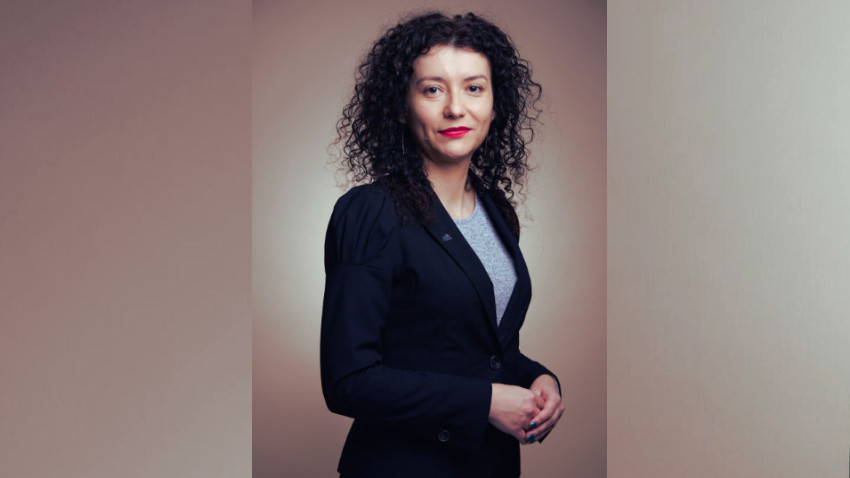
“Our highest ambition is to develop bold immersive narratives that can travel with ease and touch a multitude of hearts. It is increasingly important for meaningful stories to be able to scale globally, while remaining culturally and emotionally grounded.”, mentioned Ioana Mischie, artist and futurist with a background in advanced storytelling.
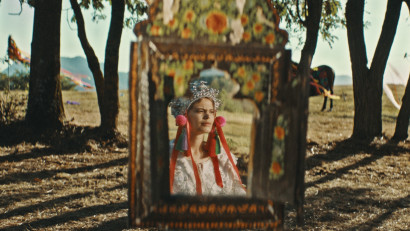
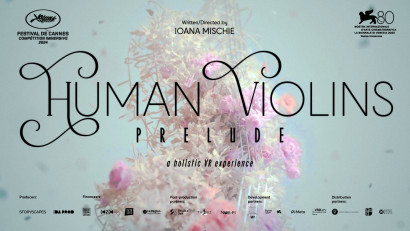
“Human Violins: Prelude” was the first Romanian project selected in Cannes Immersive competition in 2014, considered to be one of the top 8 VR experiences worldwide by the curators of the festival, a milestone that elevated the creators of the project into trendsetters in the field of immersive storytelling. The project revealed a new playable architecture concept, transforming a virtual world into a collective musical instrument. The VR experience was part of A class festivals such as Venice Biennale or Shanghai and brought numerous awards to the Romanian team: European XR Award for Best Art Direction, Fipadoc Smart Award and many more. It became, as well, the first Romanian-French co-production in XR, advocating for European co-production in immersive realms.
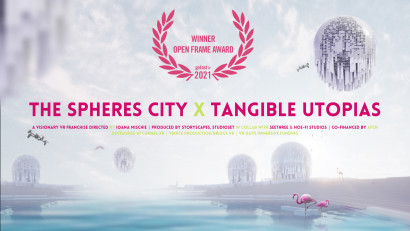
However, other VR experiences created and directed by the artist such as “Tangible Utopias” or “DreamNA” marked even more provokative long-term milestones, setting the foundations for meaningful immersive franchises.
“In the past years, many professionals have used immersive art as an extension to film, books, games. Our question is mostly what types of storyworlds are native to immersive storytelling and how may we expand them qualitatively for more formats and audiences? What are the affordances of immersive art? This is why most of what we do is original IP worldbuilding that has a strong concept, a very daring art direction and a layer of social impact and community research. We gradually aim step more into immersive museums as spaces of collective engagement.”, mentioned Ioana Mischie.
For Ioana Mischie, the significance of the Cannes Curators Network program is pivotal to the expansion of qualitative storytelling:
“The immense epiphany of having a unique playground for both creators and curators seems the wisest manner in which we can advance storytelling organically, creative-wise, technology-wise, community-wise and business-wise. In the recent years, as the word “artificial intelligence” started to become more practiced, I believe more in more in what I call “innovative wisdom” which is inviting us all to co-shape not just short-term goals, but rather long-term futures able to advance technology, but also simultaneously empathy, compassion, collaboration.”
What distinguishes the current moment, Ioana Mischie suggests, is a “long-awaited” structural shift in how museums and cultural institutions engage with storytelling:
1. Embracing transmedia differently:
“For many years, transmedia storytelling was a philosophical approach with an almost impossible feasible infrastructure. Now, most museums look naturally for transmedia concepts in order to create continuous journeys for their audiences. This shift is an incredible upgrade that finally re-connects theory and practice in an harmonious manner. The most compelling immersive works are those that can move fluidly between entertainment, education, and emotional resonance, without losing coherence.”
2. From novelty-driven activations to legacy:
“Many immersive museums were propelled at first also through the novelty factor. As the infrastructure grows and as the audience matures, museums aim to become holistic cultural ecosystems that entertain, educate, provide legacy, not just Insta-friendly snapshots,” Ioana Mischie observes. “In 2025, it became evident how rapidly the field of immersive museums has expanded, being perhaps one of the most important cultural revolutions of our times. What we are seeing now is a demand for more sophisticated transmedia narrative architectures—stories that are not single-use, as grants often force them to be, but capable of evolving across multiple spaces, times or cultures. And perhaps this generalized need of both creators and curators, can attract an improvement in the funding infrastructure as well.”
3. From a linear process of creation succeeded by curation to synchronous co-design:
“In the past, the process of producing an immersive story or film would have successive steps rather than synchronous ones. Now we seem to step into a timp of live synchronisation. From our meaningful intersection in Cannes a new project and methodology emerged during one of the meetings and will be developed by the end of the year. This is the most beautiful outcome of a program from my point of view - to reach an intersectional mindset that is so strong and solid that it gives birth to new angles, new perspectives on the world that reunite both visions at once.” mentioned Ioana Mischie.
4. From individual journeys to collective journeys:
“Museums today are not only spaces of mechanical display, but spaces of groundedness, rediscovery, radical collaboration. There is a strong drive to redefine how a collective experience could look like?”
5. From local meaning to global meaning:
“After a decade of local prototyping, we now finally have the technologies need, the powerful stories to tell. The real challenge now is if we can succeed to collaborate equitably in order to have increased universal meaning and increased reach as a collective organism,” she reflects. “How may we design more impactful stories that remain alive?”
As the immersive sector matures, Cannes appears to be positioning itself not simply as a top-notch immersive competition or as an immersive marketplace, but as an ever-growing hub for visionary storytelling, an increasingly transnational manifesto of our times.
Cannes Curators Network signals a unique transformation: immersive media is moving from isolated innovation to shared and lasting cultural infrastructure. And in that shift, new questions emerge—not only about technology or form, but about longevity, adaptability, and narrative design across time.
Despite the rather decreased cultural support, Romanian immersive artistry has already been recognized for its quality, the challenge comes from maintaining the high standards in a world dominated by crisis:
“Most of the immersive projects that we have created emerged from a labor of passion, involved often an immense effort financially, creatively and culturally in order to be able to come to life. Now, as many qualitative works have been created and exponentially more are in the works, the support of Romanian and European cultural sectors is crucial. This is why it is more needed than ever to practice solidarity and design easier co-production workflows. Immersive art, in comparison to film, can be done remotely with ease, it is perhaps one of the most fluid collaborative processes in the cultural sector.”
During the Immersive Market, Ioana Mischie was invited to be a speaker on Eastern European advancements and tapped into systemic advancements:
“If we analyze it objectively, Romania is one of the best equipped European countries from a technical standpoint, having high speed internet and one of the highest densities of IT professionals in the continent, it just needs artistic training and a wise and functional cultural strategy to bring innovation at the forefront and to maintain it systemically. Immersive storytelling could become such a strong national and global brand.”
For Ioana Mischie, the significance of Cannes lies precisely designing a shared grammar between curatorship and creatorship.
“In Cannes, there is a rare alignment, perhaps unique in the world, happening between those who design experiences and those who exhibit them,” she says. “When this equitable dialogue is facilitated, it generates not only new projects, but also disruptive methodologies—new ways of thinking about storytelling or humanity itself.”
Cannes Curators Network remains a game-changer that taps into new questions:
“How to expand the good practices on a continental level? How to have ongoing communication between artists, technologists, ethicists? How to advance storytelling in manners that are not separated from the audiences, but rather in tandem with them? How to map stories of the future in manners that feel both local and global simultaneously?” concluded Ioana Mischie.
Ioana Mischie is a notable Romanian artist and futurist working across film, immersive art and transmedia storytelling. Fulbright Alumna, her work has been selected for over 250 international festivals, including the Cannes Film Festival and Venice Biennale, and developed in leading programmes such as Berlinale Talents, Sundance workshop or Biennale College Cinema VR. She is a recipient of awards including the Webby Awards, European XR Awards, Fipadoc Smart Award and GoEast Open Frame Award. Over the past decade, she has contributed to publications by MIT Press and NYU Press and lectures at UNATC, focusing on expanded cinema, new media and transmedia practices. Fulbright Ambassador and TEDx speaker, her credo is that artists are the most playful inventors of our times.