Last week, Internetics celebrated 25 years of digital transformations, great campaigns and tech changes, in which it awarded the best creative works. It was a special edition, going down the memory lane with some of the best moments and people that really shaped the digital context in the past quarter of a century.
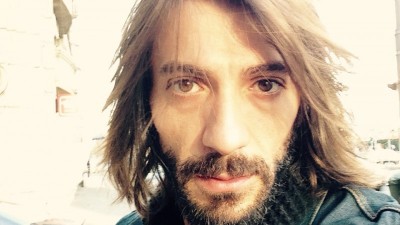
Rimantas Stanevičius, Creative Director of Milk Agency Vilnius, was this edition’s Jury Chair, moderating the final round of discussions. Before the Awards Gala, we talked to Rimantas about the creative ideas that manage to cut through the noise of the algorithms. For Rimantas the word “human” with all its imperfections is the main driving force behind every campaign.
“Tech and trends are variables; empathy and judgment are non-negotiable” says Rimantas.
How industry shaped him, what changes has got to him, what gets his creative juices flowing and how he adapts are some of the ingredients for a good 7 minute read below.
How would you define the digital ecosystem in 2025
They used to say “there’s an app for that.” Now it’s “there’s an AI for that.” Half the articles online are already machine-written, and soon artificial content will dominate. That’s both good and bad. The quality curve, which used to look like Snufkin’s hat, is turning into Moominpappa’s cylinder: the very low-end stuff is disappearing, the big mediocre middle is swelling, and the truly great work is still rare - maybe even rarer. Which means its value should go up. Look at the latest CocaCola AI spot versus Apple’s new intro: one gets slammed for feeling lazy, the other gets praised for feeling human. We have slow food and slow fashion. Maybe “slow creativity” is next?
Your background. Accordion, bee keeping, psychology, WWW
My path is a Frankenstein mix of psychology, web design, music and bees. Psychology taught me how people think and feel; the early www years forced me to bluff my way into coding and design and then actually learn it; the accordion became a form of meditation - you can’t think about deadlines when you’re trying to hit the right notes; and beekeeping was simply a way to connect with my dad and talk about something other than health issues or corrupt politicians. James Webb Young said ideas come from two reservoirs: the specific one (your brief, your audience, your problem) and the broad, messy one filled with everything else. Quantum physics, Egyptian burials, whatever. My odd mix of hobbies is basically my second reservoir. When those unrelated elements collide with the specific task at hand, that’s when the interesting ideas show up.
On the Internetics jury
Internetics was three days of intense discussions with very opinionated, very passionate people – which is exactly how a jury should be. I enjoyed the energy in the room: Romanian creatives and marketers argue hard for the work they believe in, and the debates were anything but polite small talk. I was pleasantly surprised by how much local cultural nuance sat inside the ideas, and how often I needed someone to decode a local reference for me. The most satisfying moments were when a truly great piece of work cut through all the noise and everyone, from different backgrounds, instinctively agreed “okay, this one wins.”
The elements that you pay special attention
I keep it simple: first, am I genuinely jealous I didn’t think of it; second, would I share it with a friend without being paid? If both answers are yes, we’re in strong territory. After that, I check the basics: is there a real human insight, is the execution serving the idea (not the other way around), and does it feel like something that could actually work in real life? And now that it’s over, I can admit I tried to be as subjective as possible. ChatGPT can be objective; humans shouldn’t pretend to be. Our value as jurors is our taste, our gut, our passion. The magic happens when all those subjective opinions collide and the pendulum swings back to something objective and credible. A good jury is basically Twelve Angry Men with better coffee and fewer murder charges.
How do you perceive Romanian advertising
Romanian advertising feels a bit louder, warmer and maybe a bit more theatrical than Lithuanian – there’s a Latin temperament to the humour and storytelling, a willingness to go big emotionally. You guys seem less afraid to be messy and flamboyant to get attention. We in Baltics often aim for clean, distilled clarity. Neither is “better” – they’re just different flavours, and seeing Romanian work actually reminded me that Lithuanians could afford to be braver in some places.
The role of creatives in the context of social & technological transformations
The role of creatives has shifted from “make a nice ad” to “navigate chaos.” We’re now part strategist, part technologist, part cultural antenna: turning messy social and tech shifts into something understandable and useful for people and brands. I adapt by staying a permanent student – learning new tools, new platforms, new ways people communicate – while being boringly old-school about one thing: the idea still has to start from a real human truth. Tech and trends are variables; empathy and judgment are non-negotiable.
How has your perspective on advertising changed
I don’t think my perspective changed dramatically. It just got broader. The more I learned about the different “advertising schools,” laid out so brilliantly by Paul Feldwick (salesmanship, seduction, salience, social connection, spin, showmanship), the more I understood the full spectrum of what advertising can be. His work is basically my advertising bible, Old and New Testament included. And while I respect all the schools, my favourite hasn’t changed: the human one, what Feldwick calls social connection. That’s the lens I keep returning to.
How did you see your role at the beginning and how do you see it now?
I’d say that I have become less radical. I learned to imagine that I might be wrong. At the start I was a classic junior copywriter: the “line machine” obsessed with my own ideas and portfolio, ready to die on a hill for a headline. Now I see myself primarily as a curator, coach and hopefully a culture-builder – someone who sets the bar, grows other creatives, and protects the conditions where good work can happen. I still jump into the trenches when needed, but my main job is to make sure many people can do their best work, not that everything has my fingerprints on it.
The most important creative lessons of the last years
As a maturing creative you have to learn to let your ideas go (or at least know to pick your battles). And as an industry we have to learn to let our ways of working go. Resilience and curiosity are survival skills – you have to be okay with ideas dying, tools changing, and still be hungry to learn the next thing.
The word that defines your vision as a creative
For me, creativity is first about people – not channels, not tech, not awards. If the work doesn’t talk to a real person in a respectful, honest, interesting way, I don’t care how clever it is. “Human” is also a reminder that our job is to bring empathy and imagination into systems that are becoming more automated and algorithmic. If I keep that word in front of me, most other decisions fall into place.
Routine, inspiration, creative habits
They say your day is a miniature of your life, so I start mine with good intentions: get up early, go for a run, maybe meditate… and then I ruin the purity of it with eight cups of coffee and doing a hundred things at once. I usually end the day with some sci-fi binge or another Liu Cixin book to reset my brain. But what really keeps my creativity alive is spending time with my kids. If I manage to put the phone away, give them full attention and let them lead, I slip into play mode. Doing things I wouldn’t normally choose, wholeheartedly, on their terms - it always pays off. Following someone else’s flow, especially a child’s, takes you to places you’d never get to on your own.
How has the creative process changed in the era of AI
I started my career in advertising doing web design. Writing HTML by hand in Notepad. Then came the software with graphical interface. Then came the CMS. And now you have vibe coding. As you imagine so it becomes. Almost magic. Surely, AI and tech haven’t replaced the creative process, they’ve put it on steroids and added a slightly unhinged assistant. We can prototype, iterate and visualize ideas insanely fast now, which is great – but it shifts our role towards framing, judging and refining rather than just producing. Even a junior copywriter is now a creative director for ChatGPT, Claude or whaterver is their weapon of choice. But it’s like salt. You’d better not overdo it. And not get lazy. When you know that nobody put effort and spent time in producing a piece of content, you don’t want to put effort and spend time reading or watching it either.
The responsibility of the creative industry in 2025
It’s mostly about staying human. Curious, imperfect, a bit chaotic. We have taste, algorithms don’t. Our job is to bring some unpredictability back into a world where everyone is following the same best practices generated by the same machines. Hundertwasser said a straight line is godless, so maybe that’s our role in 2025: to mess up the straight lines drawn by AI and keep creativity delightfully crooked.