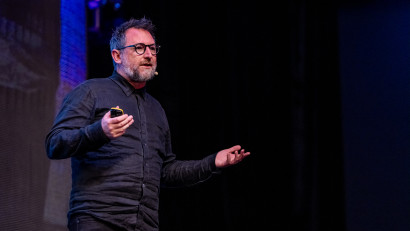

James Hurman doesn’t have opinions, he has data. And the data shows that the most sensible thing you can do is invest in creativity. Director of Master of Effectiveness, he is a New Zealand-based entrepreneur, investor and advertising effectiveness expert. He’s the founding partner of Previously Unavailable, a creative company that partners with, creates and invests into high-growth startup companies.
James is the programme director of the Master of Advertising Effectiveness, a global online professional development programme for marketing and advertising people whose alumni includes executives from Google, Amazon, Airbnb, Disney, McDonalds, New York Times, Salesforce and all of the major advertising agency networks.
"I don’t think we’re in a golden period of advertising at the moment; it feels more like a transitionary period. That’s probably normal, especially with new technologies and tools arriving as quickly as they are. But I think we’ll get better again", says James.
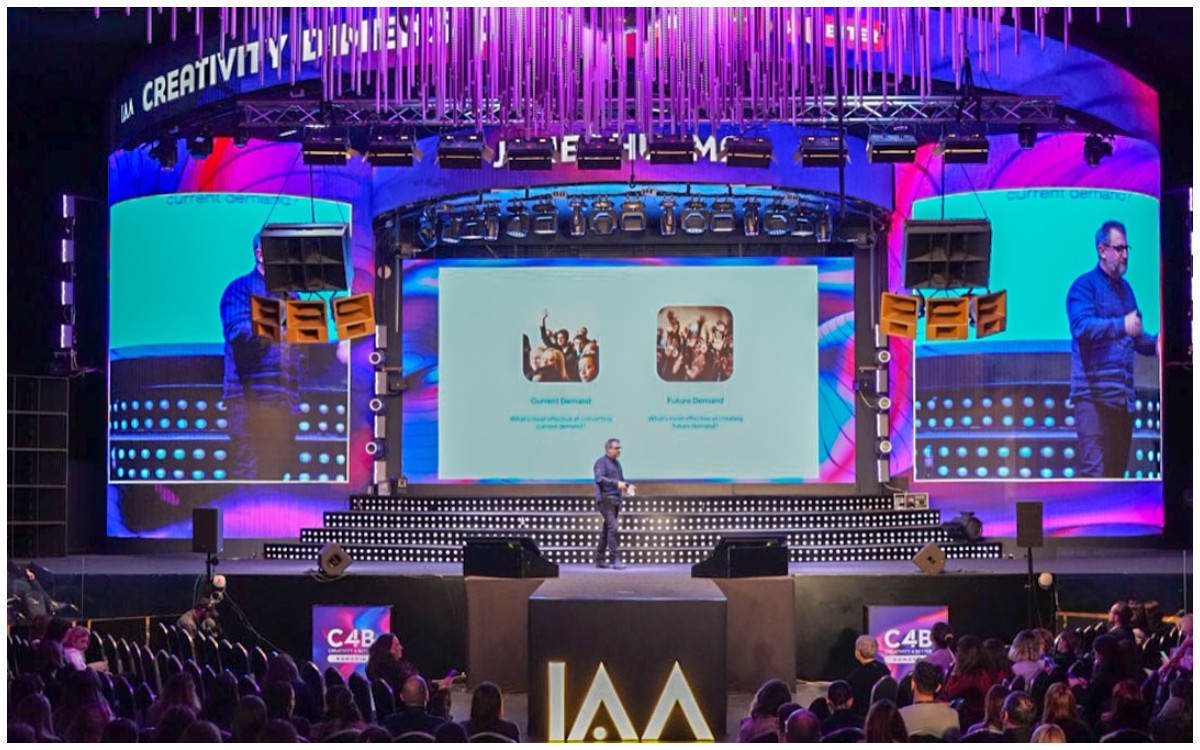
On the Creativity 4 Better stage, the global conference organised by IAA Romania in Bucharest, James talked about more effective way to build brands that truly connect. During a break at the conference, we spoke with him about the power of advertising, brand builders, the need for efficiency, smiles and laughs.
Your unpopular opinion about creativity
To be honest, I don’t tend to have “opinions” in the usual sense, because I work with data. Nothing is really my opinion, I’m just saying what the data says.
What can be controversial is that there’s a lot of passion right now for digital marketing, performance marketing, social, influencer, all of that. And while that’s very good, we tend to focus too much on it. People who are really into that side of things don’t like me saying this, because they believe it should all be that. The data says it really shouldn’t.
So that probably makes me less popular with that particular crowd.
Your definition of creativity
Fundamentally, creativity is doing what hasn’t been done before. But in advertising, there are three qualities that tend to win awards, essentially, what judges look for when they evaluate work.
First is originality: something fresh that hasn’t been done before.
Second is engagement: does the idea draw people in and genuinely engage them, or is it just communicating at them?
Third is craft quality: how good is the execution, the production and the craft.
Those are the three award-winning creative qualities.
The power of advertising in 2025
It’s the same as it’s always been. Advertising doesn’t lose or gain power in itself. We can do more or less effective advertising, but advertising as a mechanism doesn’t really change in its ability to influence people.
The way humans make decisions, the way the brain works, hasn’t changed. If a brand has made itself familiar to you through repeated advertising and presence, you’re more likely to choose it because familiarity bias pulls you toward it. The human brain isn’t changing anytime soon, so in our lifetimes advertising won’t become inherently more or less impactful.
What changes is how we use it. If we make bad advertising, it won’t work as well. If we make really good advertising, it will work better.
I don’t think we’re in a golden period of advertising at the moment; it feels more like a transitionary period. That’s probably normal, especially with new technologies and tools arriving as quickly as they are. But I think we’ll get better again.
What worries you in the advertising ecosystem
There’s a generation of marketers who’ve grown up in a very performance and digital-heavy world. For them, a campaign can mean something you do on TikTok for two days, then you drop it and do something else.
Older people like me grew up with a different model: a campaign is something you do for a long time, you make a real splash in society and culture. Younger marketers haven’t necessarily been brought up with that view. I worry they may not have the skills to be strong brand builders. They have the skills to be strong digital marketers, but that’s different from brand building.
A lot of the work I do, including what I teach, is about passing that knowledge on, so the next generation can understand it and use it.
What have you learned from the new generation
There’s something really interesting happening with creators and the way creators can add a layer of connection to a brand, almost “decorporatizing” it.
It’s kind of absurd: when a brand briefs an agency, it often adds lots of rules. When a brand briefs a creator, it’s more like: “just do whatever you want.” And when you give creative people that freedom, they usually produce better things.
So we’re learning from that generation how to let go a little more and that’s a good thing.
Courage and the need for efficiency
If you’re thinking about budgeting, you should spend about one-tenth of your time asking “can we make this more efficient?” and 90% asking “how do we get more money to scale this?”.
One thing plaguing the industry right now is the belief that doing more with less, being more efficient, will lead us somewhere better. The evidence doesn’t support that. Budget and investment are a competitive act. If you want to beat your competition, investing more than them is far better than investing less.
If you can afford to invest more and you want to grow, not just survive, investment is one of the key ways you do that. Pulling back on investment is a quick way to get smaller and lose.
The social tension and the economic crises
It’s affected budgets. In times of economic contraction, it’s normal for companies to want to pull back and keep themselves safe. But if you look at the data on which companies thrive during and after recessions, it’s the ones that maintain or increase investment through the recession.
Recessions are a great time to invest more because everyone else is investing less. If you invest a bit more, you gain more. And the data is very clear: companies that maintain or increase investment do much better in the one to five years after a recession than those that pull back. You get a double benefit, you do better during the recession and much better after it.
You need the willingness to invest in a recession. I wouldn’t even call it courage. We talk a lot about bravery and creativity, but we’re not firemen. It’s not brave, it’s doing the right thing. The data is very clear that we should be more creative. There’s nothing brave about being creative.
Honestly, you’re being “braver” if you do uncreative work, because the data suggests that will lead to worse outcomes, that’s brave and stupid. Investing more and being creative isn’t bravery; it’s what the evidence says we should do. If we’re not doing that, we’re not doing our jobs.
And if a company says it’s evidence-based but ignores what’s proven to work, then it’s not really evidence-based.
Your start in advertising
When I started, I was the IT guy, I fixed the computers. I quickly realized that what the agency was doing was far more exciting than what I was doing, and I kind of wormed my way into advertising that way.
In my first job doing planning, I spent the first six months thinking: I can’t believe I’m being paid to do this. It’s so much fun.
At school, I didn’t even know advertising agencies existed. I only discovered them when I got a job fixing computers in one. I thought: this looks cool. I found my way into the industry by accident, an industry I loved, and that I turned out to be naturally good at. If you can do something you like and you have an inclination for it, what’s better than that?
How was advertising then
A lot of people describe it as glamorous, parties, lunches, first-class shoots around the world. I’m kidding.
But my real nostalgia is about agency culture. Agencies used to feel like fantastic cultures: people who loved hanging out together, being creative together, being ambitious, wanting to do the best work.
With COVID and everything that’s happened over the last decade, agencies have struggled more, and that affects culture. If people aren’t coming into the office, how do you build culture? If the business is struggling, it’s hard to sustain a vibrant, enthusiastic atmosphere, everyone feels the strain.
I feel fortunate that I experienced some really good times in advertising, and I really enjoyed them.
How has your perspective on your role changed
When I started, my job was basically to figure out what we should be saying in the ads. If someone asked what I did, I’d say: it’s my job to figure out what the brand ought to say, and it’s the creatives’ job to figure out the best way of saying it.
Now, my role is more about spreading the knowledge we’ve gained, making it accessible to more people. I see myself as someone who communicates marketing science and stays an enthusiast for creativity.
Your relationship with creatives
I love creative people. I was always a planner closer to the creative end of the spectrum, and I made it a priority to build strong relationships with creatives. If they didn’t feel I was on their side, they wouldn’t take my advice.
It was important to me, and to the departments I ran, that creative people knew we wanted to help them make great work. What we did was in service of that, not in service of pleasing clients or any of that guff. So I’ve always had a great relationship with creatives.
The best lesson you’ve learned from failure
Learning to let go and learning how to include and empower others. When you’re younger, it’s natural to want to do it all yourself and control the process. You think: if I give it to someone else, they won’t do it the way I like, or as well as I can.
As you get older, you learn people bring different skills and that often creates a better result. I’ve gotten much better at bringing people in, delegating, working as a team, and harnessing different strengths to achieve outcomes that are better than what I could have done alone.
Is there a specific sense of New Zealand advertising?
Interestingly, when I was growing up, up until maybe 20 years ago, I don’t think New Zealand really understood its own sense of humor. But over the last 20–25 years, we’ve learned the way we’re funny, and now we’re really enjoying leaning into it.
A lot of that silly humor shows up across what we do. It’s a nice humor. It’s dumb, but sophisticated at the same time. I’m proud we discovered how and why we’re funny, and leaned into it. The world needs more smiles and laughs.
Funny work is the most effective work. When we look at the average effectiveness of different creative strategies, whether it’s humour, purpose-driven work, or inspirational advertising, funny ads consistently come out on top.
Being funny is very good for business. And again, it’s not about being brave and choosing humour; it’s simply the right thing to do commercially. We should absolutely return to those funny roots and spread the truth that doing funny work is better than not doing funny work.