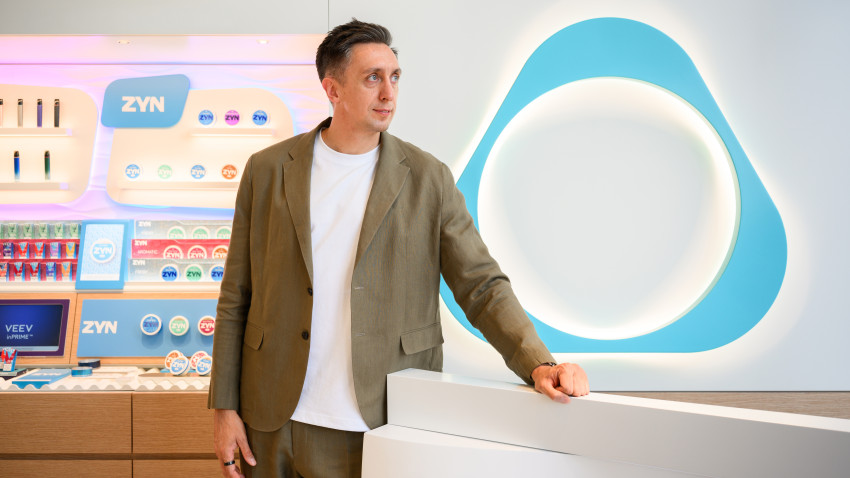
Why should anyone care? This is the question that Pum Lefebure starts from in her creative work. The campaigns that she creates answer that question in a way that leaves no doubt. An award-winning creative director, Pum is co-founder and Chief Creative Officer of Design Army. She currently serves as Chair of the Board at The One Club for Creativity and she has served as jury President for Cannes Design Lions, One Show Design, AdFest, and London International Awards.
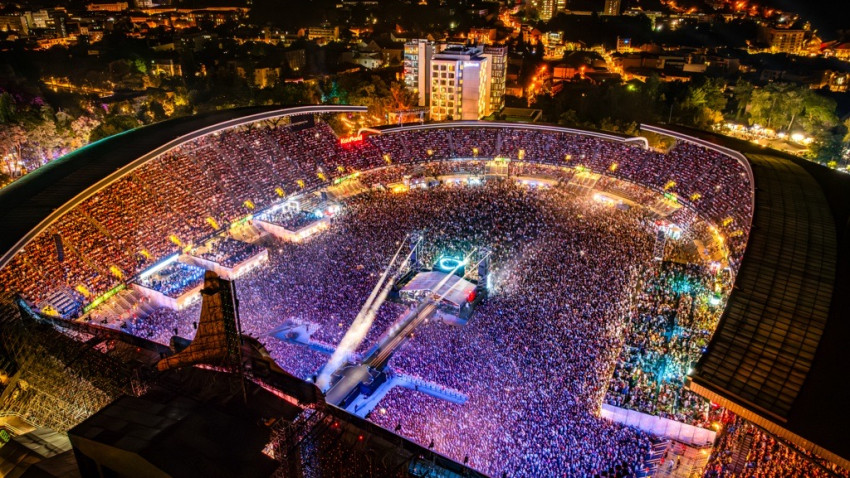
Her vision is a distinctive union of the artistic and the commercial. Present at the Creativity 4 Better, a global conference, organised by IAA Romania in Bucharest this month, Pum talked about the power of design.
"Creativity is something very human. Creativity is a spark, something that's within all of us, an idea that you have in your head or something that you feel like you need to get it out", says Pum.
During a break at the conference, we talked with Pum design, AI, art, Gen Z, creativity, courage, and self-censorship.
What worries you in the advertising world
I think people are very scared right now. People are scared that if they are going too crazy, the client is going to not feel comfortable. And the client is also scared, because we are living in cancel culture. You never know.
Everything that goes out in public can be positive and negative this day. It takes two people to give a bad comment on Instagram, and then that bad comment becomes 20 and becomes 200. So, everyone is extremely cautious, which causes a lot of self-censorship in thinking, in a way.
I feel like we are not as brave as we used to be.
What excites you most
Gen Z. Younger generations. They figured out a way to reject the traditional way of thinking. For example, TikTok. During the pandemic, my daughter was in high school, and she was dancing with her friends. They used to watch TikTok on TV. I was like, what is this thing? I knew that there's something brewing, that it's not TV anymore. They don't watch long form anymore.
Do I like it? Not really, but I learned to like it, because they figured out a way to having their own point of view.
We do a lot of work in makeup, cosmetic arena. And they just figure out a hashtag. #Iwokeuplikethis, like crazy hair, no makeup. And they create that trend of real, raw, authentic. Opposite to the millennial whose everything has to be filtered, the feed has to be perfect. They were the opposite.
They don't care. And I think that careless, carefree spirit is what makes all of us have to change.
Your visual compass
Years of experience.
I was an artist. I love art history, I used to paint and draw. So I knew how to create. From a blank piece of paper, I can draw anything. I believe if you cannot sketch, you cannot see. You cannot see in your head. When we hire a designer, they all know how to draw. They know how to sketch, which is very rare these days. Because kids just go on Pinterest and pull stuff. They don't really create something from nothing.
I like certain things. I like a very thoughtful visual. I like very strong visuals that please the eyes and also stimulate the mind. Like the Benetton campaign, I mean, that is classic. It's stuck with you forever. That is a good visual. Meaning it's something that once you see it, you can never forget about it.
The visual has to be that good or has to be so beautifully executed that it's moving in a way that it just moves you emotionally like a piece of art.
My visual compass, I don't know, I just have a really good instinct of what's good and what's not good. Part of it because I've seen a lot.
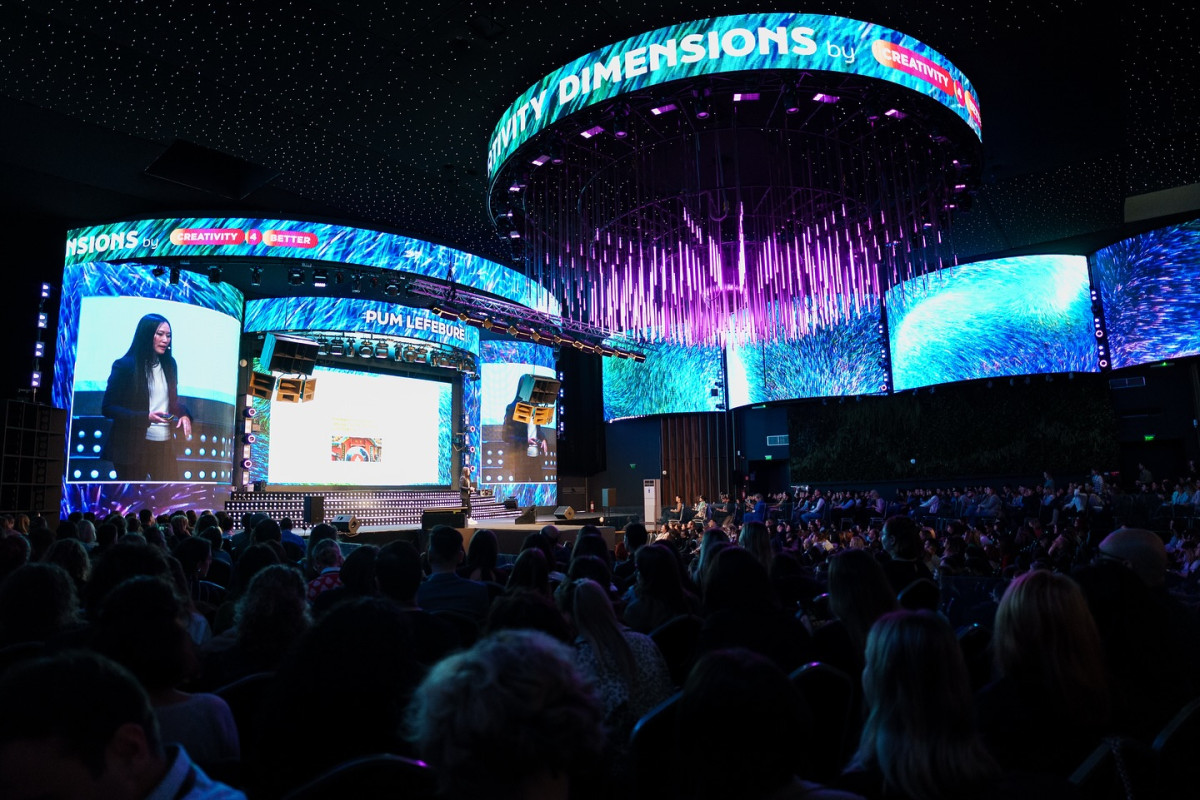
Pum Lefebure on the Creativity 4 Better stage, Bucharest, 2025
Your vision in design
I devote my lifelong career doing really great work for a client, but also great work for society. I want to make sure that through my life and through my career, it's not just about making money. You have to give back.
You have to teach younger generation what good art direction is, what good design is. All my life as a designer, I always balance both, and it's very fulfilling as a creative person.
Your definition of creativity
Creativity is something very human. Creativity is a spark, something that's within all of us, an idea that you have in your head or something that you feel like you need to get it out.
I don't like when people say, oh, I have seen that ad before, or like, oh, I've seen this ad or this design. I had that idea before. An idea is never an idea unless you execute it yourself. That's creativity. It's the idea that gets executed.
A myth about creativity
I'm not a fan of the designer or creative who say like, oh, the client doesn't know. The client doesn't get creativity. They're not creative enough.
I respect my client. I think they are very creative, but they're just creative in a different way. They're very creative with strategy. The term creativity cant be limited to the ad people or the design people.
The term creativity is too limited to the creative people, when actually creativity belongs to everybody that has good idea.
The AI Revolution
I tried AI four years ago, Midjourney, before anyone even know what AI was. We did a campaign called for a glasses company, Adventures in A-Eye. At that time, no one know what to do with this thing at all. And so I did try it. It was fun experiment with that.
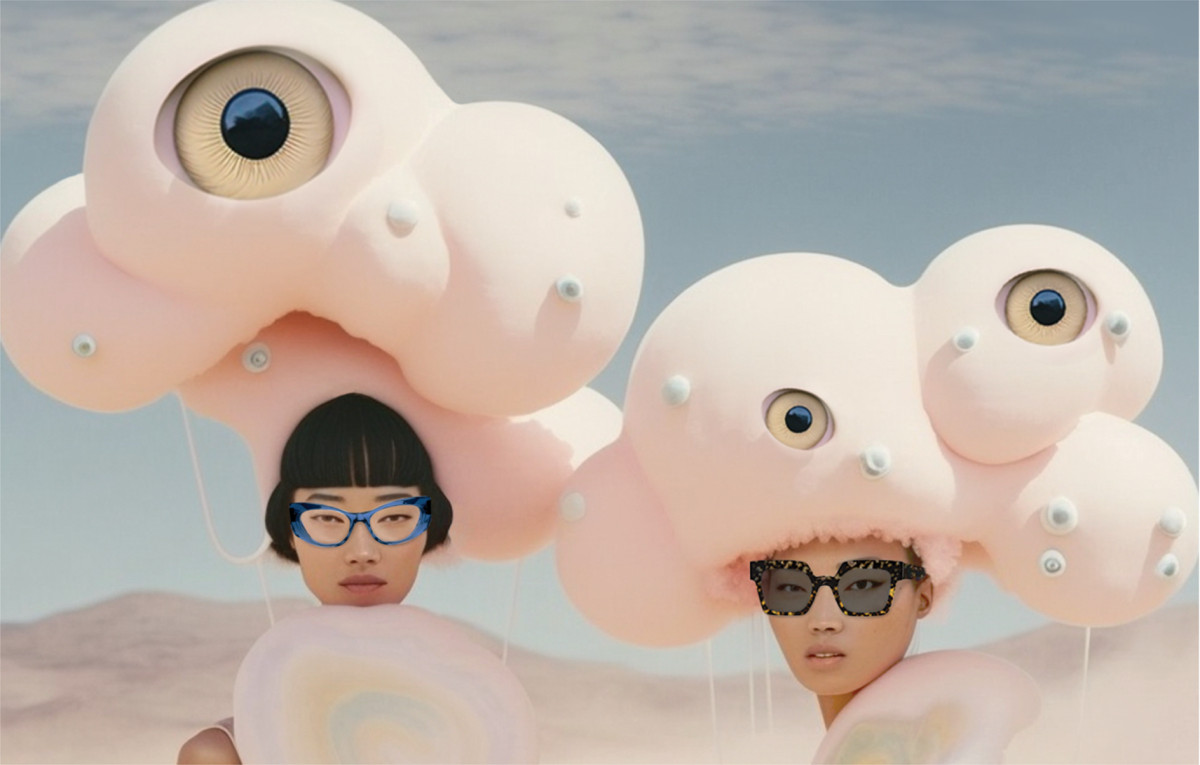
Adventures in A-Eye
And now everyone is able to use it. But it doesn't move me. I think it's quite soulless some of the work that I have seen. To execute the whole thing in AI, I don't think it's quite there yet. Eventually it will be there, but I still much prefer the human imperfection.
The influence of AI in the future
It will be like: I know how to use Photoshop. Everyone knows how to use Photoshop. But you need an expert who's been doing this for a very long time to cut through the noise, because AI is easier than ever for anyone to do it.
Hong Kong Ballet
When you think about ballet, you know, it's classical, it's boring. Nobody likes ballet. So, how do you make someone to like ballet? That is a very difficult brief. It's very hard to make it cool.
You have to really open your eyes and understand what's in the culture. We created this campaign that is a paradox. Can we combine sport, basketball, with ballet? Can we combine food with classical dance? Can we combine hip hop music, with something classic from 1800?
You have to have that human instinct to see what's going on in the world right now. And then, you draw things from the past, to make it authentic.
Cutting through the noise
Usually, people see the videos sound off. So the visual has to be extremely distinctive, and that comes back to the art, you know.
Sometimes I use one color, pink, in the entire compaign. That's it. No other color. It's like simplify, subtract in a way that is breaking through the noise.
If everyone want to be colorful, bright, we're going to go pastel. Whatever people think, think the opposite. That's my rule of thumb. And mixing things like crazy.
A question you always return into your work
Why should anyone care?
I come to this conference. And I can talk about anything. And I'm asking myself, why should anyone care and remember this talk after I'm up there? I want to make sure that they feel empowered. At the end of the day, when they leave this conference, I want them to feel empowered that they can make a difference or they can create a project that they always want to do.
Same with as any campaign that I do. When the design team is presenting something, I ask: why should anyone care about this design? What's in it for them? The audience has to care enough to remember.