Samuel Monnie: History shows us patterns. Fear of change, followed by adaptation

Samuel Monnie: History shows us patterns. Fear of change, followed by adaptation

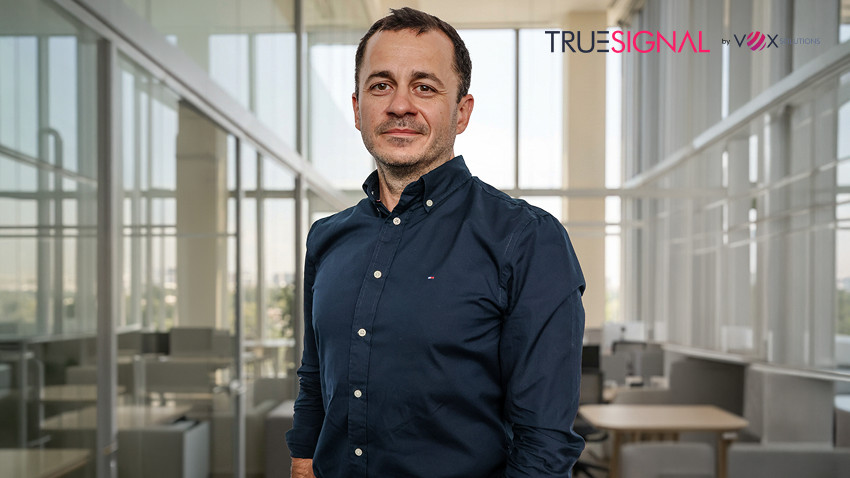
Start where you are. Creativity isn’t about big ideas, but about effort, improvement and curiosity. It’s about learning, unlearning and relearning every day, believes Samuel Monnie, Co-founder & Co-CEO of Purpose Hive, a purposeful growth strategy and solutions company in New York City. Former SVP Revenue at Sustainable Brands and ex-global brand and business management leader at P&G, Braun, Campbell’s, and Grainger, he co-hosts the Marketing Transformed podcast. As an Adjunct Professor, he taught International Business and most recently Brand Strategy at DePaul University in Chicago.

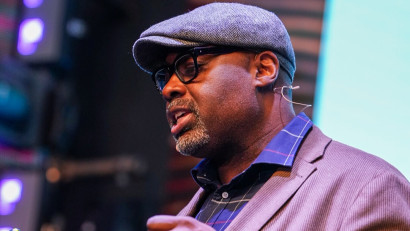
Speaking at Creativity 4 Better, a global conference organised by IAA Romania in Bucharest, Samuel discussed how we’ve entered a new era of brand and business growth, shaped by more conscious consumers.

"Challenging times give us more chances to find common ground. Fear and anxiety, and the fear of being criticized, are the wrong way to look at it. Instead, we should ask: what can we do that people will respond to positively or feel seen by?", says Samuel. 

We talked to Samuel on the sidelines of the conference about purpose and business, anxiety and fear, transformation, and the new era of creativity.
 

Learn-unlearn

For me, learn, unlearn, relearn is a mindset, and it applies to creativity. Hopefully, people walk away realizing they can use this throughout their lives.

The question becomes: what do I need to learn that helps me? What do I need to unlearn? In the world we’re in right now, there is a lot of fear and anxiety, and it’s hard to let that go. Often, we try to avoid risk or avoid play altogether. With creativity, people tend to think it’s about a big idea, but I believe it starts small. Start where you are.


A myth about creativity 

I often refer to a Maya Angelou quote: the more you use creativity, the more you have. Some people may have a higher level of talent, but in many cases, effort leads to improvement. If you tell yourself “I’m not creative,” you limit yourself. I’m not saying I can write a song like Prince or paint like Van Gogh, but we know that if you apply effort, you will get better.

The myth is that creativity is about having a big idea or natural talent. I think it’s about effort and starting. You’ll often surprise yourself. Starting where you are is meaningful.


What was hard for you to unlearn 

Unlearning what’s inside my own brain is the hardest part. That’s why I enjoy this kind of presentation, it forces me to do it. I can’t stand on stage and talk about unlearning without confronting my own fears.

When you look at fear as “false evidence appearing real,” you start asking: what am I not doing? Am I avoiding something not because I dislike it, but because I haven’t tried it? The hardest thing to unlearn is the idea that you just have to do everything yourself, instead of being present and recognizing when fear is holding you back or when you’re avoiding risk.

This applies even now, as I’ve started my own business. Purpose Hive is 18 months old, and asking for help is something I still struggle with. Sometimes I feel like I should be able to do everything myself, even though if someone asked me for help, I’d be there immediately. That’s something I need to unlearn, looking around and asking for help, because others may have new, better, or simply different information.


What have you learned from your students 

Students are great at asking questions. I like to think I ask good questions too, but when they ask something and I realize I don’t actually know the answer, it forces me to learn more. Especially in marketing, students often ask how something applies to their specific demographic, which pushes you to go deeper. Questions open you up to new information.


A mandatory subject in future marketing curricula

Curiosity. Technical marketing skills are important, but mindset and skills like curiosity and creativity are not elevated as much as they should be.


How do fear and anxiety affect creativity 

In fearful and anxious times, people become more timid. They worry about their jobs and paying their bills. What I talked about today is how purpose and meaning create more possibilities. When you feel more human, you find more opportunities.

Challenging times give us more chances to find common ground. Fear and anxiety, and the fear of being criticized, are the wrong way to look at it. Instead, we should ask: what can we do that people will respond to positively or feel seen by?

Brands like Ben & Jerry’s have always spoken up for underrepresented or marginalized people. Deep purpose is powerful and very human. Gallup data shows people are disengaged at work, but when work has meaning, engagement increases. Purpose shouldn’t be a side project, it should be embedded in everything we do, because that’s how we create better solutions.


Samuel Monnie on the Creativity 4 Better stage, Bucharest, 2025


Mistakes that brands do when trying to be purposeful

Purpose gets criticized because of bad examples, greenwashing or inauthentic efforts. But people don’t dismiss all advertising because of bad ads, or all music because of bad songs. There’s a double standard.

I wouldn’t say “fake it till you make it.” I’d say progress over perfection. Some industries are problematic, but transformation takes time. The automotive industry is a good example: it once used leaded fuel, which harmed us, but moving toward electric vehicles reduces emissions. Change can take decades, but you have to start somewhere and give people grace.

In many cases, purpose and profit can coexist. For example, Piñatex is a vegan leather made from pineapple leaves, once agricultural waste, now a valuable material. Farmers get paid, waste is reduced, and a new market is created. That’s creative thinking.

Decisions are made by balancing profit and impact, which allows the company to thrive long-term. This gives me hope.

Purpose and sustainability don’t limit solutions, they expand them. I try to tell stories that inspire people to learn more and understand what kind of purpose actually works.


The advertising ecosystem in the AI era

We’ve been here before. During the Industrial Revolution, people destroyed machines out of fear. TV was once seen as harmful. Andy Warhol was criticized for not making “real art.” History shows us patterns: fear of change, followed by adaptation.

Humanity, love, community, art, and meaning still exist. The question is how we think about them differently.


Your relation with AI

I have an incurable condition called curiosity. AI has improved significantly, especially in simple tasks like writing emails. It’s starting to write in my voice, though it still struggles with nuance.

AI can be helpful, but humans should drive the technology, not the other way around. Humans bring taste, discernment, and nuance, things technology can’t replicate. I believe in coexistence, but humans should always come first. Maybe that’s also because I’ve seen too many sci-fi films.

Technology can be addictive to the point where people need tools to stop using it. That’s concerning, but I’m an optimist. I look for solutions that ensure humanity continues to thrive.


How do you make your way through noise

Brands need to find their core purpose and reason for being. From there, they can define their values and navigate the future. Many brands are distracted by noise, but their values are often already written down—they just need to live them.

If a brand says “everyone is welcome,” then everyone must truly be welcome, even when it’s uncomfortable or controversial. Values require action. When values are real, data and society often support them. That’s where the opportunity lies.

Aboneaza-te la newsletterul IQads cu cele mai importante articole despre comunicare, marketing si alte domenii creative:
Info


Companii

Pozitii

Sectiune


Branded


Related