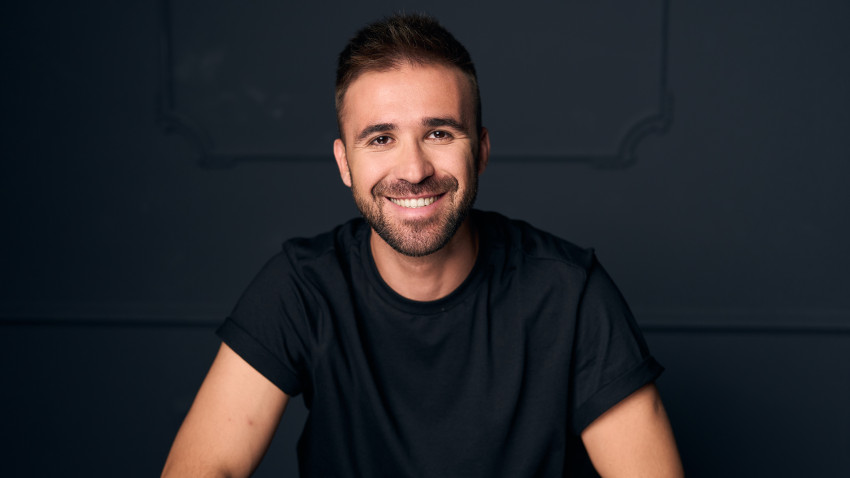
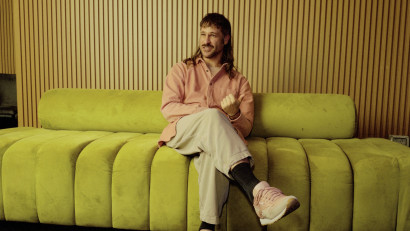
The question in 2026 is not whether the glass is half full or half empty. It's how we keep what's left from spilling. Armando Potter, Executive Strategy Director at 72andSunny Amsterdam, discovered a new breed of optimism in Europe. A messy, chaotic kind of optimism, with room for both worry and hope. He liked it. And it's through this particular pair of rose-tinted glasses that we move forward into a world of AI and all kinds of change. But at what point do things start to border on the absurd? When everyone starts to look and sound like everyone else, and individuality begins to fade.
"The headline would be: what's next? I think more people, if they're not asking that, they have to ask that or they're in trouble", says Armando.
Armando was recently in Bucharest for Creativity4Better, a conference organised by IAA Romania. We caught up with him during one of the conference breaks to talk about the next chapter of advertising, creative myths, our obsession with AI and the paradoxes of our times.
Credits:
Camera Team: Iustin Şurpănelu, Deochi Production | Ovidiu Grămesc, Grizzly Film
Editing & Post-production: Bogdan Jugureanu, Senior Editor & Senior Colorist StudioSet
Sound: Andrei Nechifor, Senior Sound Editor StudioSet
Editorial: Alexandra Bădicioiu Matei, IQads
Filmed at Creativity4Better 2026
Creative Myths
I'm a strategist. And I think that there's always been a myth that there is a wall between strategists and creatives. And if I'm being honest, when I started, there was. You sort of didn't cross the line. The older I've gotten, perhaps it's because of my seniority, perhaps it's because I've changed agencies. I've changed markets, I no longer work in the US, I work out of Amsterdam on global brands.
Actually the best creative comes when those two sides merge, when there is no sort of territorialness between creative and strategy. That is when we get to the best ideas.
Another myth. It's maybe less a myth and maybe a part of the cultural conversation that I think is not necessarily true. We talk a lot about AI and how it could potentially, if not be replacing thinking or creative thinking or even strategic thinking, at least challenging it. But actually what I'm finding is that, I'm not anti-AI, somebody who uses AI all the time, but actually it's causing us to double down on some of the old school research techniques that I learned when I was first young. So ethnographies, going into people's homes, one-on-one interviews, those things. I actually think rather than going away, those things are getting more important and we're learning how to reappreciate them in new ways.
When it comes to efficiency, I think historically strategists have always been underscoped, so our teams run leaner than other teams. I suppose the myth is that's okay. To an extent, we've gotten really good at getting to good strategy even with less people. So on the one hand, perhaps that myth is true. On the other hand, I think we're forgetting that the traditional process is strategy, creative, production in its simplest form. And we think it goes strategy, strategy, strategy, and then it stops. And actually good creative work is bringing strategy further and further into that process, but we're forgetting to scope for that. And so I think the myth we need to break is strategy doesn't just start the process, it actually carries through.
What worries you in the advertising ecosystem
It's maybe not a full worry yet, but it's something I've started watching. I think too many brands are all starting to gravitate towards the same tone and personality. I talk a lot about personality in my presentation, and I believe in the power of unleashing personality, which is why it scares me a bit, because if all the personalities are the same, then what do we do? I think we are reaching a stage of absurdity fatigue.
I'm watching more and more brands try to shift their tone to a place of humor that's over-the-top absurd. Some brands, that's actually right, and I don't disagree with them doing it. Other brands I'm watching and going, "This doesn't make sense for your brand." And I know, on the one hand, I appreciate you're trying to evolve the brand, but you've evolved it into a place that's become a copycat that's not you. And if we all move to that place, then ultimately there's going to need to be a new set of fresher brands that step into a different place. And I don't know where that place is. And so maybe it excites me in some ways. I'm like, "Okay, maybe I want to brand that."
We're getting to a place where if we're not careful, that tone is becoming ubiquitous. It's becoming too much the same.
What excites you
I spoke about next-gen brand behaviors and reaching next-gen consumers. I actually think we're sort of on the brink of the next generation of behaviors. We're getting to the zone where a lot of the brands I talked about have done amazing. And they've done amazing by developing these behaviors, and I think they sort of run in five to seven-year cycles, and I think we're on the brink of needing a new set of cycles.
So what excites me is I want to figure out what those new behaviors are. I think that could be really interesting. And I think they might come from brands that you least expect it. In some ways the brands who have figured out modern marketing have to work even harder to figure out what the next, because they've already sort of, whereas completely new brands or old brands that just fundamentally need to change are going to have an easier way at it. So I think it could come from multiple directions, but I do think we're on the brink of another change.
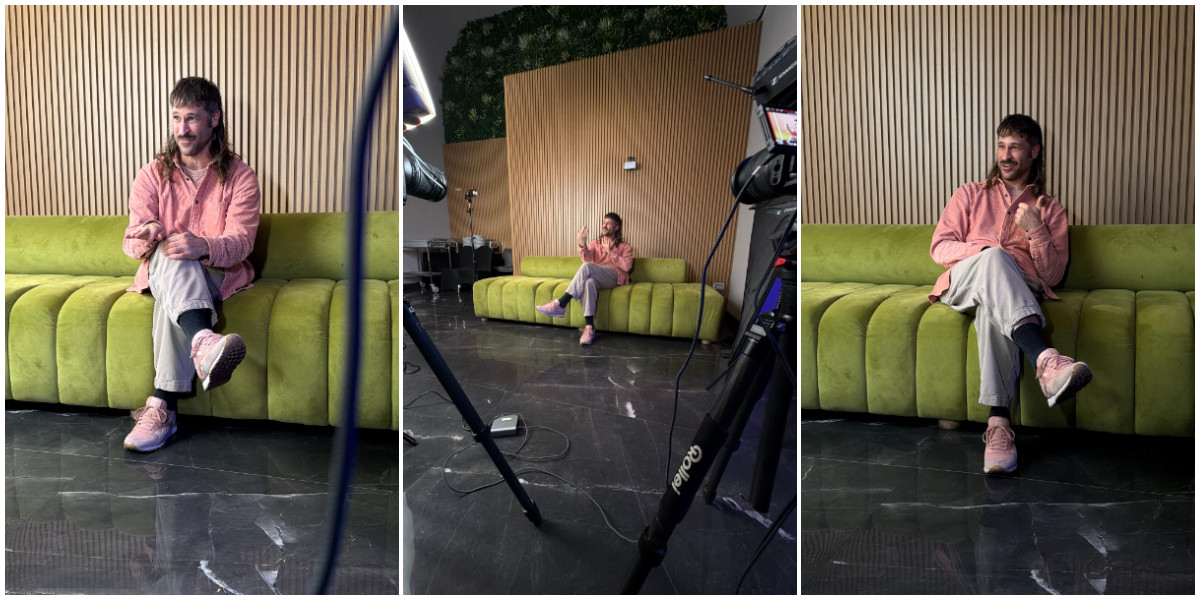
Photo credit: Iustin Şurpănelu
The next chapter of advertising
We're watching this pendulum swing, but advertising started where it was controlled all at the top. I call it the C-suite in my presentation. We're seeing it shift more towards the bottom. It's coming from the bottom up, whether it's coming from fans, whether it's coming from creators. Actually, personality thrives at its best on social, in my opinion. It's no surprise to me because it's a personality. It's not that a brand is a person, but when you can converse in a language that feels more human without feeling cliché, I think it works better on social.
But I think we're also at risk of becoming too from the bottom. I think that there's a narrative like its brands are going to be run by influencers and creators. I don't actually think that's true, and I actually think it's when the top and the bottom can meet more in the middle that we're going to find the next stage of advertising. There's probably going to be, to some extent, I don't want to call it a backlash, but a readjustment of our, maybe not reliance, but overusing creators or influencers. Or for instance, rather than using constant new influencers or creators or whatever, we're going to partner more long-term with them, right? Because then it's still from the bottom, but you have more of a relationship that lasts, and I think that's where brand and community can interact better.
What puzzles you about human behavior
It's funny, for many, many years I had not gotten on the TikTok wave. And then I pitched TikTok, and so as part of that pitch, I started using it, and the algorithm figured me out very quickly. And I went, "Oh, damn. Okay, I get it." And obviously I'm a fan of TikTok. It is entertaining. I like it. But I was thinking today, I was like, oh my goodness, TikTok is just one mass consumer feed. We position it as entertainment, but I'm actually realizing now everything is just feeding you, trying to feed the consumer cycle. Now I work in advertising, to some extent, I am part of that problem, so to speak. But I did wonder, is there a way for this entertainment engine, quite frankly, whether it's TikTok or something else, entertainment does sit at the center of a lot of opportunities for brands. But can you separate the entertainment feed from a constant feed of just like I need to consume and buy more now?
I'm 42 years old, I'm working in advertising and communications. I at least have the skills and the more nuance to sort of separate the two. Younger people do not. And if that is how it's going to be, that does get a little dystopian to me.
On stage at Creativity4Better, Bucharest, 2026.
The weight of our times
I don't think I feel the weight so drastically personally. I'm not even sure I feel it. I see it professionally. And maybe part of that is related, one, to my disposition. 72's founding value is optimism. And when I first came to the agency, I don't know that I ever would've described myself as an optimist. If you ask is the glass half full or the glass half empty, I say, "It's the same damn glass." I've never seen the difference. And so I wanted to understand optimism better, and so I sent a team out across Europe, and we went into people's homes, and we talked to experts about what optimism really means to Europeans. And what we found is this sort of chaotic, messy version of optimism. It was sort of if optimism and pessimism collided, that's how it was behaving. And I went, "I believe in that." I can see it's not toxic positivity. It's not all shiny smiles. But it does have hope. It's just hope that has a little bit of fight in it. It's hope that's a little dirty. It's hope that admits, you know what? Today fucking sucks, but that's okay because you don't have to be perfectly optimistic. And that is just sort of a part of who I am personally and is a part of who my agency is.
I've talked to enough people to realize that actually it's in those everyday messy, optimistic interactions that the future does have a future.
Breeds of Optimism
I think the US has a reputation for that always positive, toxic positivity brand of optimism. Now, that's not who I was, but for instance, if we think about the American dream, right, which is this philosophy that we're all sold as when we're young. That in and of itself is almost an unrealistic. It's especially unrealistic now, but I think it's always been kind of unrealistic for a lot of people from the US. And so even this thing that was held up in culture, it's not looking at the picture fully, right? And so I was always surrounded by that. Even if I didn't fully believe it, I saw it more, which is why when I came, we did this research in Europe. I saw this vision of optimism that just made more sense. However, I think it'd be interesting to do the same research I did in Europe. I think we need to repeat it in the US because I think that the way that optimism is spoken about culturally is not quite the way real people are. And we might find that what the US' cultural version of optimism is not actually matching with the people you talk to, and I think we need to uncover that.
What changed the world more than technology
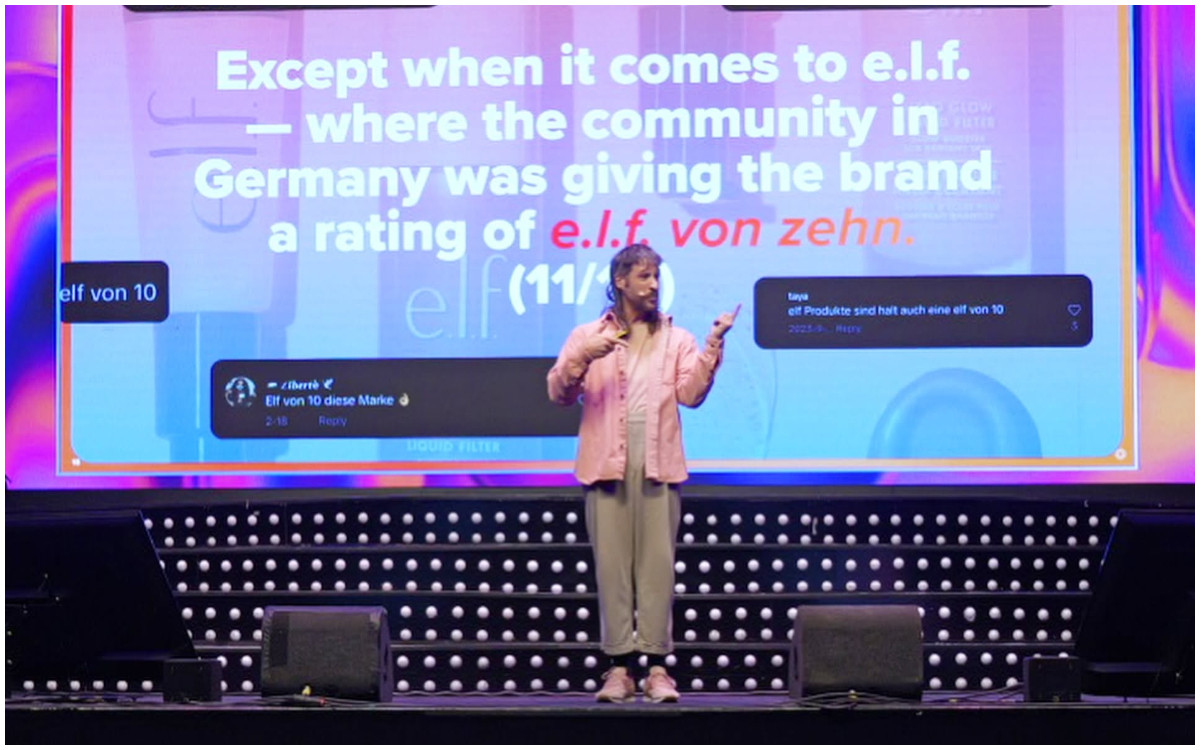
I feel like a lot of things I would say aren't directly technology, but they might indirectly be technology. Because the things I'd want to say are, for instance, younger people are having to grow up in some ways. Well, it's tricky. I think with my parents' generation, we would say young people had to grow up fast because they had hardships. They were working young. But I actually think young people today are having to grow up faster in some ways. Now, on the one hand, part of that is because of technology, because they can see it. But I'll park that for a second. Technology it's just a part of the conversation. The overexposure to the world that young people have, in some ways is amazing. I talked about this on e.l.f. It amazes me how I can put a piece of content out there in German, and people who don't speak German are loving it. And 20 years ago, I couldn't have talked about that. That doesn't really have to do with technology. That has to do with just an appreciation of global culture because it's become more and more merged, but it's also overloading.
If you think the problems in your own country are tricky, compound that with everything else you're seeing. So I think there's just this double-edged sword to the appreciation, especially among young people, with how merging of cultures can be both an advantage but also a disadvantage. Not in that cultures merge a disadvantage, but exposure to everything within that I think creates an overload.
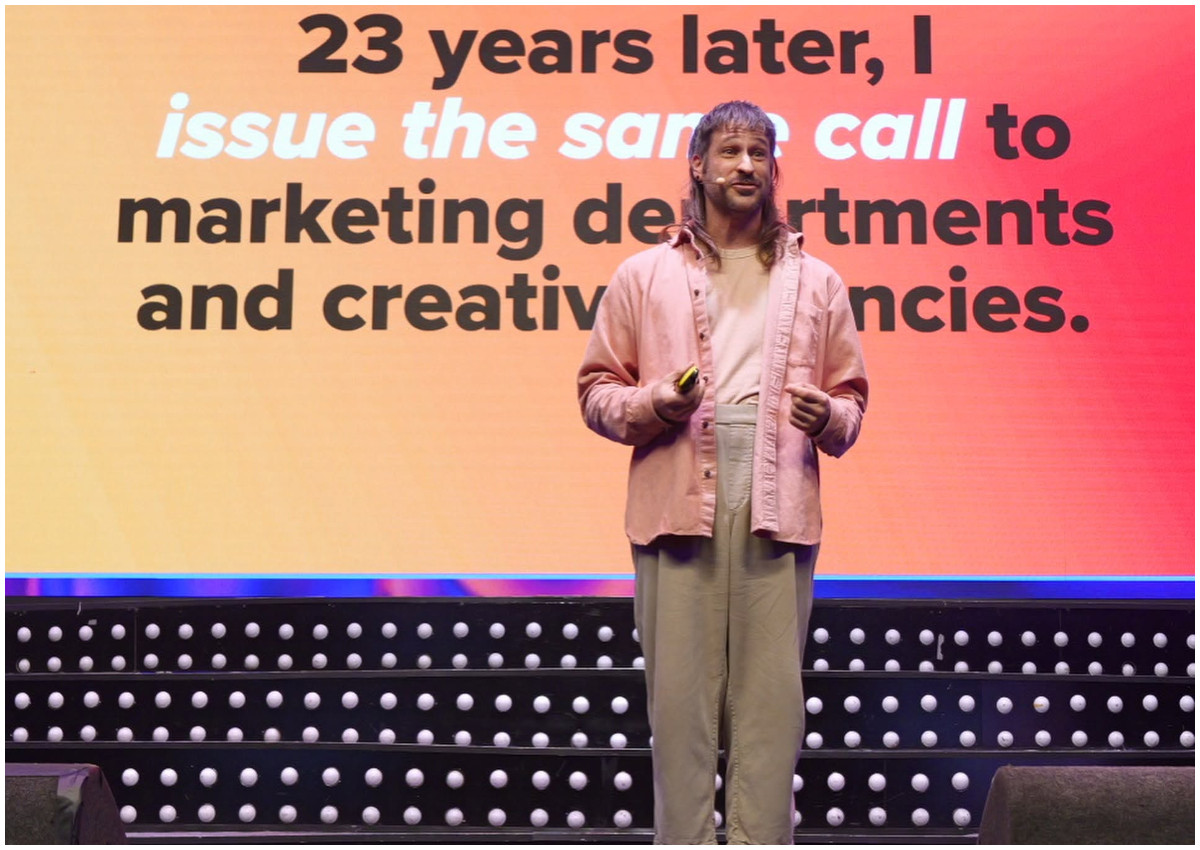
On stage at Creativity4Better, Bucharest, 2026.
AI & Creativity
The initial discourse or conversation around advertising and AI has been AI as the enemy of creativity, right? They put them on polar opposites. There's another myth, right? I think that the conversation around that changed relatively fast and more and more. Well, there are some agencies that, or some companies that are going all in on AI. There are some that are going maybe all towards the human, and there are some that are meeting more in the middle. I think it's the middle that are going to end up succeeding.
AI is not going anywhere. I firmly believe it's not going to go anywhere. How we use it is going to continue to change, and things are going to fall out, but AI, evident of itself, is not going to go anywhere.
And so I think to take an anti-AI stance is silly. It's not going to secure your future. The younger people on my team use AI way better than I do. They understand it way better. There's even other people who aren't as young as them, but they went headfirst into it. I didn't go headfirst into it. I held back a bit. And now I use AI, and I outsource the parts of strategy that I just don't really love, the thing that doesn't give me energy. That's great because then I point that energy towards the creativity that I do. AI and creativity aren't at odds. For me, they're working together perfectly. AI is allowing me to do the creative part that I love. And so I think figuring out the way to make them work together is the opportunity.
I was talking to a younger person on my team who went, "Armando, the way your mind can get to creative ideas so fast, it impresses me. I'm worried I won't be able to do it like you because I've so over-relied on AI to get there." And I went, "Oh, I've never considered that because it wasn't part of my school. It wasn't part of my training. I never had to have that fear."
I think that there's still ways you can use it. For instance, I need to figure out how an idea works across 10 different channels. Never in my life is that exercise ever actually going to be executed. We're never going to make those things. It's just to show the stretch of the idea. Me being able to do that really fast with AI and then concentrate on bringing the idea up to life here, it actually works. And then sometimes one of those things sparks an idea, and I put it back into the non-AI. And so I think it needs to be sort of, I guess to what you're saying and what we need to be aware of, it doesn't fully replace. It just needs to be something that you keep feeding, and it's probably more of a cyclical process than we realize.
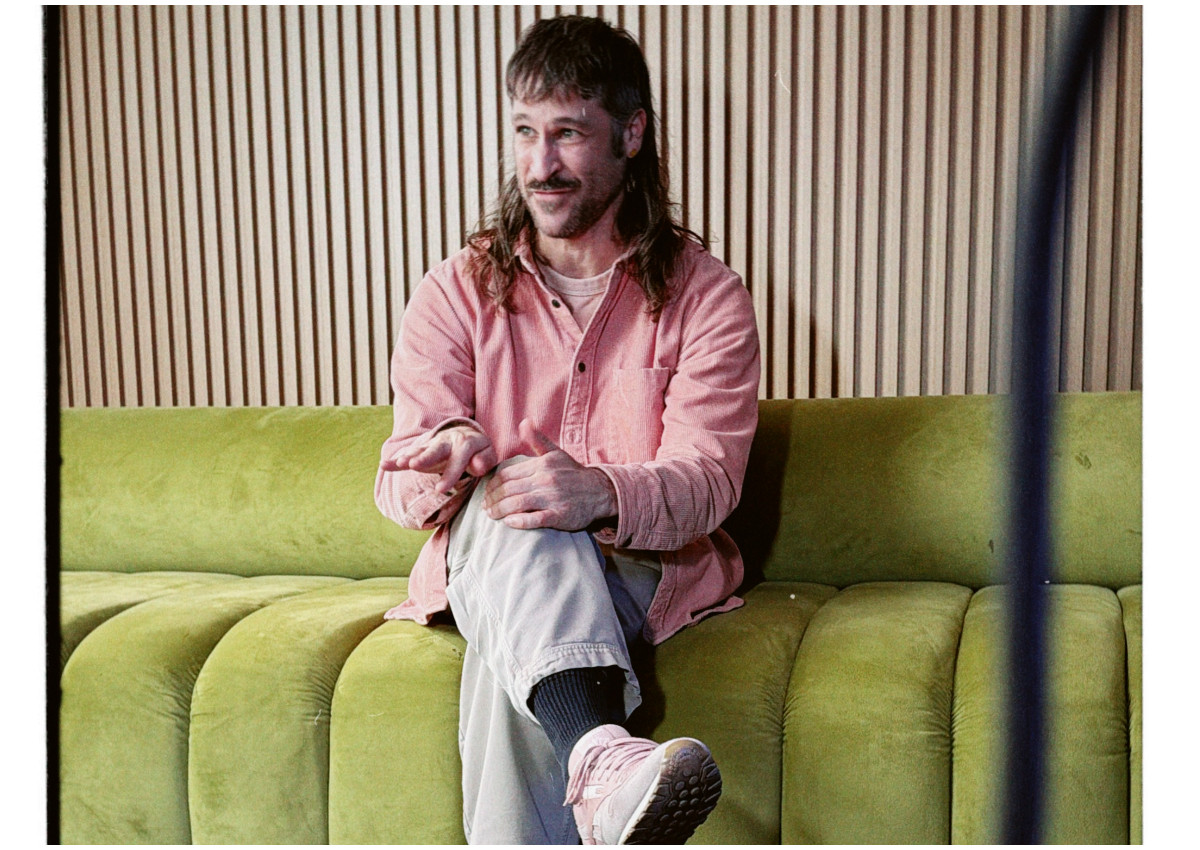
Photo Credit: Iustin Şurpănelu
Ethical boundaries
I won't name the client, but I was working on a project, for instance, and the client said, "I want to do something for Pride this year." This client is massive. This is one of the biggest brands in the world. And I looked at them, this was a couple years ago, and I went, "In 2025, what do you mean you want to do something with Pride? Do you know how outdated of a perspective that is? Pride doesn't need you." And I was like, "What's the real question you're asking?" And they said, "We are losing our inclusivity scores among the queer community." I'm like, "That's a different question." As a queer person, I went, "I'm not going to help you answer how to get into Pride. I'm going to help you answer how do you have more meaningful behavior towards the queer community?" Right? And so there had to be this fundamental shift in what we were asking.
And I will also say, now that we're thinking about boundaries, this is actually the one time where I asked off the project if it were to move forward, because we got to a place where I just didn't believe in it. I was like, after all this research we've done into these communities, we've landed in a place that still feels too selfishly brand and not enough of this community. If this moves forward, I might have to ask myself off this because I just don't believe it. Now, it didn't end up moving forward. It was fine in the long run, but that was the first time in my career where we had done our due diligence. We'd gotten into these communities. We'd spoken to the right people. We uncovered the right insights. We had all the right intention. But as it went up the ladder, and this is how I learned.
Oh, no wonder sometimes people look at ads or campaigns and they go, "How did you make that? Who approved that?" And I went, "Oh, I watched it."
As it goes up the ladder, you lose things in translation.
The power of advertising
I think advertising in its traditional sense, which is you buy media to communicate a message to influence a behavior, doesn't actually have much power. Now, you could argue, are influencers, creators, media? Possibly, but then I don't think you're using them right. If you're just using them for reach, I still don't think there's a lot of power there. If you're using them as a partner who can help you sort of understand an audience or get closer to an audience, that's where I think the power is. But then as it starts to shift there, I'm not quite sure it's advertising anymore. It's a form of marketing, but it's not advertising in its traditional sense, which that's what I grew up on.
Okay, I'll contradict myself. In the same sense, sometimes a really well-placed billboard or a really well-done TV ad does have impact. Only the best, I think, are actually having the power right now. Most of it is not cracking through, but there's still some times with the best. And you're seeing that with Effie Award winners, for instance. There's a lot of times where those award winners you might consider a traditional campaign, but it was done so well. The media was bought correctly. The idea and the insight were that there's still power in that, but they're becoming fewer instead of the mass.
Good advertising is not a mass business anymore.
Unlearnings
We've been talking a lot about at 72 is we need to unlearn the creative process a little. I think the sort of historical scoping process of, two to three weeks for strategy, which we never get anyways, by the way. But let's pretend in an ideal world. Two to three weeks for strategy, five weeks of creative development, which is actually maybe very fast on some of the brands I work on. And four weeks of production, right? It doesn't work anymore. It's not working enough. And no matter how many times we say we should try and do this differently, all our collective minds still keep going to that format for scoping and building the creative process.
I kind of want all of us to unlearn it and force us all to find new ways. Because even if we have the intention of finding new ways, that is such a deeply ingrained thing. And it's not just agencies. Clients understand that process, too, so they understand that scope, and so they'll agree to it, right? But clients are wanting things faster. Production is not looking the same as it used to, nor should it. When more people can pick up their own phones and film to a degree of quality that we couldn't in the past, each step has to reevaluate. And so I wish we could just forget it, and then I want to see what happens, which fresh things we're forced to learn.
A title for 2026
2026 is still a pivot zone for me. So the headline would be: What's next? I think more people, if they're not asking that, they have to ask that or they're in trouble.