
When you meet the public and they didn't ask to meet you, you have a responsibility, says Susan Credle, Global Creative Advisor, Interpublic and Former Chair & Global CCO FCB. Susan led FCB to an impressive series of international recognitions. Responsible for the iconic M&M'S "human" and Allstate's "Mayhem" campaigns, first female chairperson of The One Club for Creativity, she has received numerous industry accolades, including Ad Age's "100 Most Influential Women" and Business Insider's "Most Creative Women in Advertising".
Present at the Creativity 4 Better, a global conference, organised by IAA Romania in Bucharest this month, Susan spoke about the power of brands and the responsibility carried by the people who shape this industry.
"We got sucked into honoring content to help fill these spaces without thinking, does the brand need to be there? Is the brand even really there? Or is it so hidden that we're just providing free content? That's not good", said Susan.
During a break at the conference, we talked with Susan about creativity, noise, the flies and the fairies of advertising.
Cutting through the noise
I think brands and people are very similar, and when people are at their best and brands are at their best, they behave similarly. Strong brands know who they are. They know what their soul is, and they don't change it. We used to say: why are you in this business beyond making a profit? Why is this brand in existence beyond making a profit? I would say that the more universally human the reason you exist is as a brand, the stronger your brand is going to be. The more universal people can relate to.
Brands have to get back to being disciplined and standing for something that's authentic, and I think brands start inside the company. They're not the result of advertising. A great brand internally will define what products, what businesses, what services they're in. If you understand your brand, those decisions get a lot easier.
In a fragmented media market, if you consistently honor the brand's soul or reason to exist, even if you're doing it in different ways, for different audiences and different platforms, it will start to line up as one big brand story.
The role of the builder
If every time I go out, I'm going out with some original new way of talking about something, who can remember it? Somebody said: you have to create work for our platform. I'm like, no, I have to create work for my brand that's going to run on your platform. And I'm going to create work that people enjoy seeing on your platform, but it's going to be from my brand.
We got sucked into honoring content to help fill these spaces without thinking, does the brand need to be there? Is the brand even really there? Or is it so hidden that we're just providing free content? That's not good.
We serve two things. We serve that audience respectfully within the platform and the tools of that platform, but we also serve our brand. And if we forget that, we're only delivering half of the equation. We're in the business of marketing and advertising. We're not in the business of content creation for the sake of content creation. We have something to serve. And I actually love that.
We're thinking that those things that were done in the past, they're old and they shouldn't be done. And it's like, no, actually, we need to go back to really loving what we do, loving the brands that we serve.
I was talking to a CMO and I said, I can tell how strong a brand you have if you answer three questions for me. Can you wear your brand? Meaning, do you have enough recognizable brand assets that if you were to wear it and walk out of here, people would know? Have you worn your brand? And are you wearing your brand? If you can answer all three, I know you've got a pretty damn good brand. If you can answer the first, but you can't say yes to the other two, I know you don't believe in your brand.
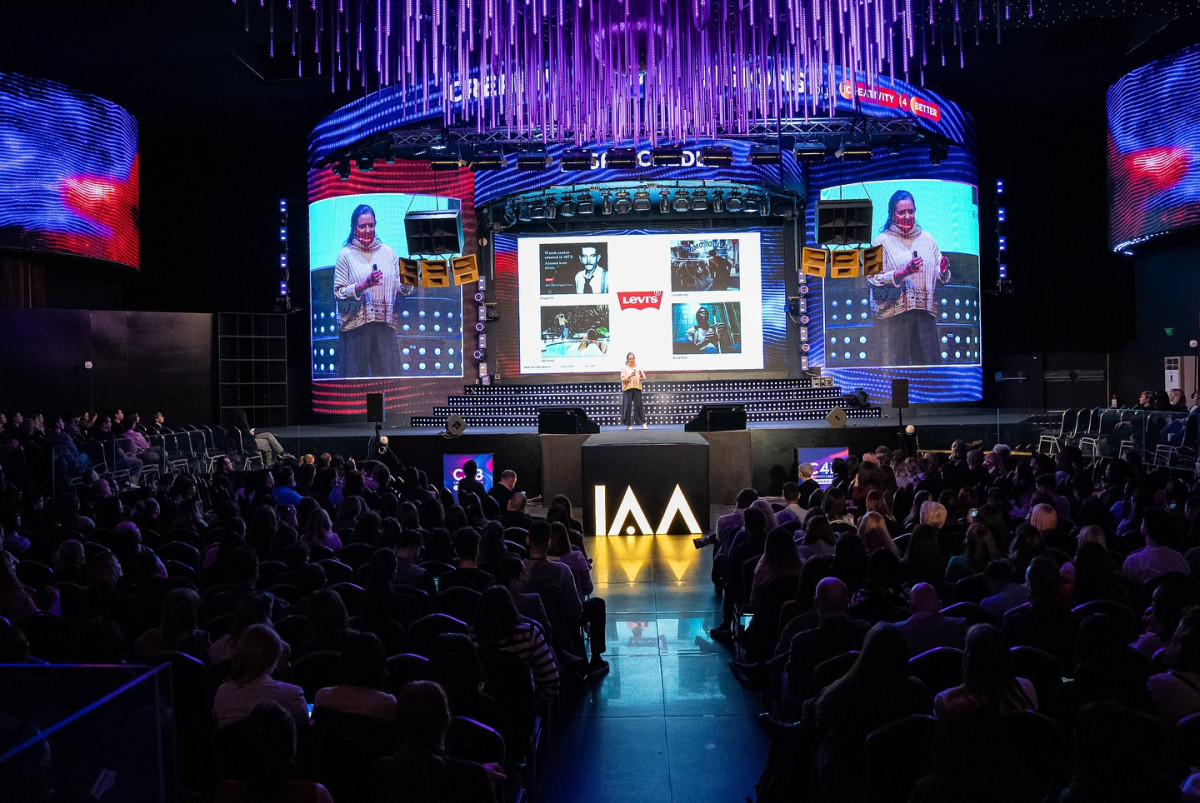
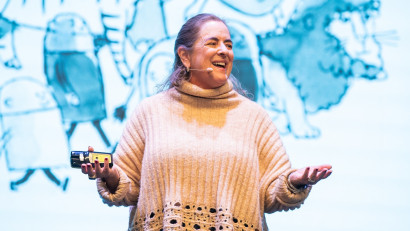
Susan Credle on the Creativity 4 Better stage, Bucharest, 2025
When you started in advertising
I thought I was a decent writer and a decent creative, but I didn't think I was amazing. I was clerking for a law firm one summer in high school, and I had to deliver a subpoena to an advertising agency. I'd never heard of an advertising agency, and I walked in and all the adults were wearing blue jeans and I'd only seen people go to work in suits. I was like, what is this place? There was a little teddy bear on display in a plexiglass thing, it was a teddy bear for a laundry detergent product. I was like, what do y'all do here? And they were like, we write advertising. I thought I could do that.
I thought it was an interesting outlet for creativity, but structured around more business and when I got in, I remember I was saying, oh, so you write things like autumnal nail polish for the fall, and then I got into the business and I inderstood that's the lowest standard of what we're trying to do. I started looking at the work that really stands out and I was like, that's the work we have to do. That's hard, because to do okay advertising is easy. You can do it in 15 minutes. But to do something that people want to meet and see and embrace and talk about, the difficulty goes up.
I remember my first CCO, he said: Susan, just make the stuff you create better than what it sits between. I was like, what do you mean? He goes, so if you do a magazine ad, make sure that people want to tear out your ad. Make sure they want to read your ad.
Howard Gossage had this beautiful quote that said: people read things that are interesting to them, sometimes it's an ad.
As I watch the world shrink down into shorter and shorter content, memes, 60 second little videos, for some reason we went the opposite way and said we want to do documentaries and long form features for our brands. That's not wrong, but why would we let go of the thing that was so dynamic and easy to consume when it was great? When it's not great, it's annoying as hell. Are we creating flies or fairies? Flies that you're just like, Jesus, get away, or fairies where you're like, I want to follow you. I want to follow you down this woodland forest and see what you're going to create for me.
Share the fantasy
When I was growing up, advertising was amazing. We quoted it. We put it into culture. I remember Chanel. There was a Chanel ad, I think I must have been 13 years old. I was living in a middle class neighborhood. And I was downstairs in the basement watching TV. And this ad for Chanel comes on. It was elegant and beautiful. The swimming pool just had grass around it, not concrete. I'd never seen a pool like that. And this man in very tight bathing suits that we don't have in America dove into the pool and then came up. There was some weird, poetic sort of thing about what was going on. And at the end it said, share the fantasy. They just invited me into that world.
Now I'm 13, middle class, South Carolina. I saved up my babysitting money and I bought a little bottle of Chanel No. 5. To this day, no matter where I am, I will have a little bottle of Chanel. I always carry something from Chanel to remind me that I'm invited into a world that I didn't think I was allowed to be a part of.
What's interesting is, today I would have never seen that ad because a 13-year-old middle class girl is not their target. I would have missed it. And they would have missed 50 years of me.
I always buy the cosmetics and things, because it reminds me of a story the brand told me when it mattered. I think half the reason I got on a plane and went to New York City when I was 20 was that Chanel ad. Because it told me I was included in this fantasy world that I didn't think I was allowed in. That's powerful.
And we don't realize the power we have when we take this stuff seriously and feel like it's a responsibility. I majored in communications, but it was through the journalism school. So we had to take ethics. And to me, the ethics need to apply to what we do too, which is that when you meet the public and they didn't ask to meet you, you have a responsibility.
What worries you in the advertising today
A lot of things. Obviously it's a cliche answer, but the short-term thinking. It's going to be very hard to be passionate about brands if we don't have agencies of record or consistency of people on brands. When I look at the work that I admired over the decades, the client was consistent and so were the agencies and they were partnerships. If you look at the work that we admire the most today, most of the time you go back and it's coming from strong partnerships built over decades and strong brands built over decades. If we've got young people that don't understand that, that are on the client side and the agency side, we're going to have some dark days.
The other thing is this lack of care for the craft. All the work I showed today, the craft is exceptional, which allows it to cross time. How much will this work hold up that you're making? If it doesn't hold up and it doesn't have value that creates more value, we are really creating to pollution. We become a pollutant in the world.
I actually heard somebody say, we don't think frequency is a problem anymore. In fact, frequency is considered an asset. The more you show up, the better the messaging works. And I was like, you are absolutely wrong. Frequency, wear out. We need to study these things so that people look forward to advertising, don't feel annoyed by it.
And then the other thing that really worries me is that it's been a problem, I think, since the dawn of what we do. There's no economic model for how we make money that reflects the power of the creative. So if we're paid by the hours we work, that has nothing to do with the power of the creative idea.
How do you, when you do have big ideas that build value for the client, how is the creative agency compensated for that? I'll take the M&M's example. If BBDO were getting a penny for every time you used the characters that we created, the creative agency would look like a pretty powerful economic business.
But today, because of the way we're valued economically, the industry looks at the creative agencies, in my opinion, as not mattering that much because they're not generating revenue and margin.
Your legacy in advertising
I would like people to think that we did big things. And when I say that, I mean like the M&M's characters. I don't think they're going away anytime soon.
I would like for people to think that the work that I championed had value and was welcomed in the world.
I really do love creative people. And I hope that people out there that have done well in their career, that have happened to pass by me on their way, that they felt that I helped them go on to be the successful people that they have become.
The responsibility as a woman creative
When I took the job at Leo Burnett as the CCO, Mark Tutssel called me and he said: I would like for you to do this job. I'd never even thought about the concept of being a CCO, because I hadn't seen any women get to that level in any major agencies.
And I was kind of disappointed in myself because, wow, I didn't even think that that was a role I would ever be offered, much less a role I was reaching for. At first I said no, because I didn't see myself that way. And then I had a lot of women friends that got wind that I had been offered this job and they said, please take it. Because if you take it and you do okay, more women will think about it, and more agencies will think about women.
What was terrifying about the Mayhem campaign is that was the first piece of big work that we were doing under my leadership at Leo Burnett. If this doesn't go well, I'm probably out of a job, I thought. But more importantly, I'm representing women at this point, and this is going to be a big hit. I've heard that from a lot of people that are breaking through. It's frustrating because creativity is really about, a lot of times, about taking chances, being stupid, betting on something you're not sure about.
When you feel the responsibility of an entire group of people, on top of just wanting to create for yourself, it curtails the ability to go that far. But when you have a wave of women doing great work, it allows you to take more chances as a woman.
I hope that we continue to be able to play harder and fail sometimes. Yeah, we should have this right to fail. The right to fail without thinking it suddenly becomes a woman failed versus, no, Susan just fell on her face and, you know, she was trying.